
Ranked #19 in the Nation for Cancer Care by U.S. News & World Report
Houston Methodist Hospital is ranked a top hospital in the nation by U.S. News & World Report for Cancer. U.S. News & World Report has also named Houston Methodist Hospital one of the nation's best as a nationally ranked Honor Roll hospital.
The 4 Stages of Pancreatic Cancer
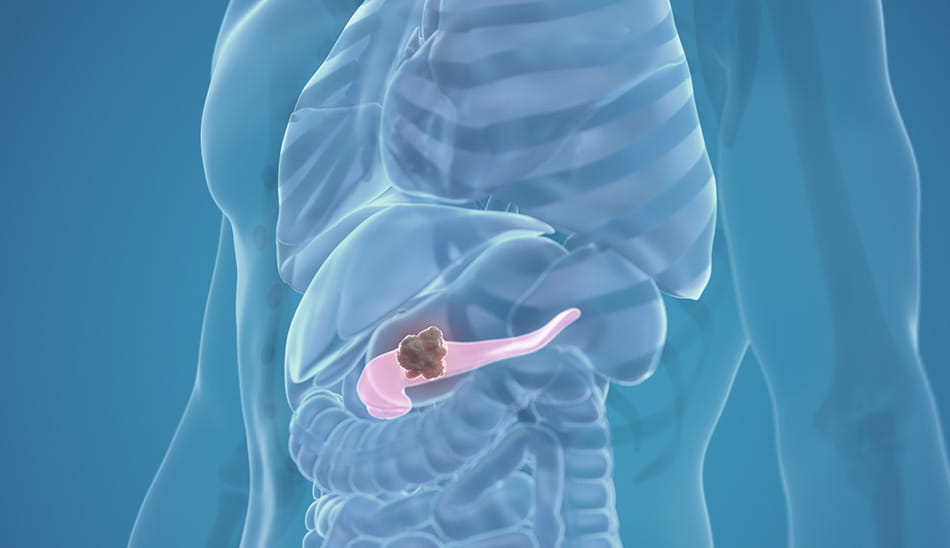
If you receive a pancreatic diagnosis, your oncologist will determine the stage to understand the cancer size, location and metastasis (spread). Cancer staging helps your health care team know what areas of the body are affected and in need of treatment:
- Stage 1 – Cancer is only located in the pancreas. It has not yet spread outside the pancreas.
- Stage 2 – Cancer has spread outside the pancreas, possibly to nearby lymph nodes. It has not yet moved into a major blood vessel.
- Stage 3 – Cancer has spread outside the pancreas and into nearby large blood vessels or major nerves.
- Stage 4 – Cancer has spread into parts of the body far from the pancreas, such as the liver, lungs or inner lining of the abdomen. It is typically at this stage you may notice some symptoms.
Treating Pancreatic Cancer
We are committed to superior outcomes from diagnosis through treatment and recovery. The board-certified pancreatic surgeons at Houston Methodist are specially trained with expertise in managing the full spectrum of diseases of the pancreas.
If you receive a pancreatic cancer diagnosis, your oncology care team tailors your specific treatment plan to the unique characteristics of your type and stage of pancreatic cancer. We also consider your individual needs and lifestyle.
Diseases of the pancreas can cause chronic issues that impact health for years. Our medical professionals strive to provide life-altering interventions. Our goal is to treat your cancer and manage your pain — all while preserving healthy tissue and cells. Your care team may use one or more of the following methods to treat and manage the cancer.
Surgery
The following surgical procedures may be conducted to remove the cancer from the pancreas:
- Whipple procedure (pancreaticoduodenectomy) – This surgery resects (removes) tumors located on the head (right side) of the pancreas. The first part of the small intestine (duodenum), gallbladder, part of the bile duct and nearby lymph nodes are typically removed as well.
- Removal of the pancreatic body and tail (distal pancreatectomy) – This surgery resects (removes) tumors located on the left side of the pancreas. The spleen may also be removed.
- Removal of the entire pancreas (pancreatectomy) – This is a total resection (removal) of the pancreas.
Chemotherapy
If your cancer is localized to the pancreas, chemotherapy may be combined with radiation therapy in a treatment called chemoradiation. This treatment is often administered before surgery to shrink the tumor and help make surgical removal more successful. It may be used after surgery to help ensure no cancer cells remain.
Radiation Therapy
For pancreatic cancer, radiation therapy may be used before or after surgery, or as an alternative treatment if surgery is not an option.
Radiation therapy uses high-energy X-rays or other types of radiation to kill cancer cells or keep them from growing in a targeted, specific area. Radiation works by targeting abnormal cells, damaging their DNA so they are unable to reproduce.
Targeted Therapy
Targeted therapy uses drugs that specifically recognize and target cancer cells to stop their growth without harming normal cells. Targeted therapeutic drugs often pinpoint specific mutations or proteins that are involved in the growth and survival of cancer cells.
Targeted therapy can be taken orally. Your doctor may use targeted therapy as an initial treatment or combined with other treatments.

Pancreatic Cancer Program Outcomes Among World’s Best

Pancreatic Cancer Clinical Trials