
Skin Cancer Symptoms

Skin cancer is the uncontrolled growth of abnormal skin cells. If left untreated, skin cancer cells can spread from the skin into other tissues and organs. Early detection of skin cancer — through a self-check or a professional screening examination — ensures the best outcomes.


Skin cancer can occur anywhere on the skin, but the neck and face are common sites. Melanoma, the most aggressive form of skin cancer, can be found in or under your skin, hair and nails. Melanomas are also commonly found on the chest and back in men and the legs in women.


If you have any signs of skin cancer, your physician may perform a biopsy or imaging exams to confirm a diagnosis. If you are diagnosed, your team will determine the type and specific features of your skin cancer and develop a treatment plan. If diagnosed early, it is one of the easiest cancers to treat.


Recognizing Skin Cancer Sooner

The most important sign of melanoma and other skin cancers is a new spot on the skin or a spot that has changed in size, shape or color. Skin cancer can also appear as a spot that looks different from other spots on your skin, such as a flat pink or red patch, a sore that looks crusty, a scaly lesion, or a sore that doesn’t heal or that heals and reappears.

Dermatologists recommend the following ABCDE screening guidelines when self-examining moles:


  • Asymmetry — One half of the mole does not match the other half.
  • Border — The border or edges of the mole are ragged, blurred or irregular.
  • Color — The color of the mole is not the same throughout or has different shades of tan, brown, black, blue, white or red.
  • Diameter — The diameter of a mole is larger than the eraser of a pencil.
  • Evolution — The mole changes in size, shape or color.

If a mole displays any of the signs listed above, or you are worried about a new mole or change in your skin, you should have it checked by a dermatologist.

Any of these symptoms may instead be caused by something other than cancer. The only way to know what is causing a particular symptom is to see your doctor. 

Pay Attention to Your Skin

You know your body — what is normal and what is not. It is important to stay vigilant about any skin changes. Consulting your physician when skin changes occur can lead to an earlier diagnosis and better outcomes. If something looks or feels “off,” schedule an appointment  with your health care provider as soon as possible.
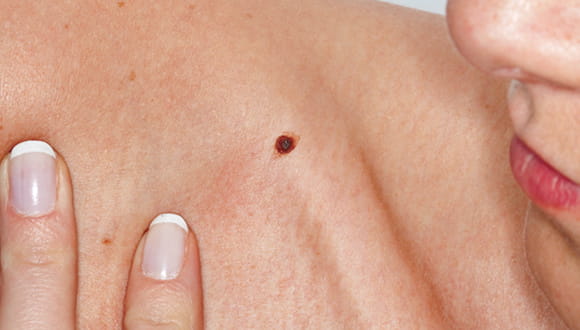
When Should I Worry About a Mole?

When Should I Worry About a Mole?

Skin moles come in a variety of shapes and sizes. The more exposure to sunlight and UV light, the more moles you’re likely to have. While most are safe, sometimes moles progress into skin cancer. Learn how to tell the difference.
Skin Cancer Diagnosis
Find information about the exams and tests used to diagnose skin cancer.
Doctor scanning patient
Skin Cancer Treatments
Find details about the cutting-edge treatment options for skin cancer.

Choose a Doctor at One of Our Locations

FILTERS:
    Clear All Filters
    No results were found that matched your search criteria. Please try removing filters or zooming out on the map.
    TOP