

Hypertrophic Cardiomyopathy (HCM)
Hypertrophic cardiomyopathy (HCM) is the most common inherited heart condition, affecting an estimated 1 in 500 people, though researchers believe it is significantly underdiagnosed. As a leading cause of sudden cardiac death in young athletes, HCM can go undetected until the condition advances to a life-threatening stage. Houston Methodist is the top choice for HCM care, ranked #10 in the nation and Best in Texas by U.S. News & World Report for Cardiology, Heart & Vascular surgery. If you or a loved one has been diagnosed with HCM, trust the experts at Houston Methodist to provide the world-class care you deserve.
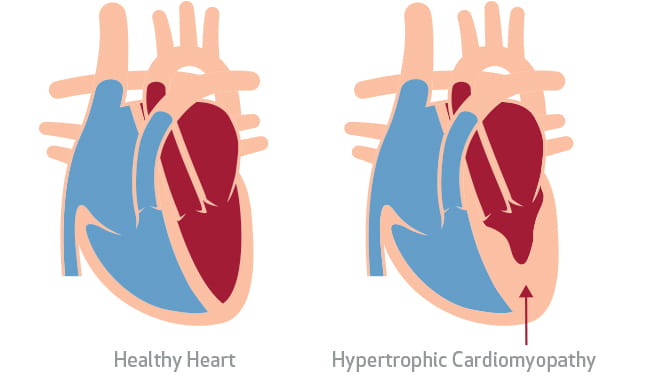
What Is Hypertrophic Cardiomyopathy?
HCM is a genetic heart disease in which the heart muscle becomes abnormally thick, especially in its middle section, disrupting the heart's normal structure and making it harder to pump blood effectively. In some cases, this thickening, which most commonly affects the septum (the wall between the heart's two lower chambers), can partially block the outflow of blood from the heart to the rest of the body. HCM is serious and often progressive, ranging from mild to life-threatening, but it can be managed through medication, medical devices and surgery.
Unlike dilated cardiomyopathy, in which the heart becomes enlarged and weakened, or restrictive cardiomyopathy, in which the heart becomes stiff and rigid, HCM is defined by this abnormal thickening of the heart muscle.
Why Choose Houston Methodist for Hypertrophic Cardiomyopathy Care
At Houston Methodist, our hypertrophic cardiomyopathy experts work as a team to provide a thorough evaluation and develop the most effective treatment plan for your specific condition. The team also works with you to help you make decisions best suited to your unique lifestyle needs.
Our specialists are experts in the nonsurgical and surgical techniques required to treat HCM, and cardiologists throughout the U.S. Gulf Coast refer patients to our team because of this expertise.
In addition, Houston Methodist was the first hospital in the U.S. to perform alcohol septal ablation, a minimally invasive procedure that has become an important treatment option for some HCM patients.
Common Causes of Hypertrophic Cardiomyopathy
HCM is primarily genetic, caused by inherited gene abnormalities (mutations) that only require one abnormal gene copy to trigger the condition. If you have one of the abnormal genes that lead to HCM, you can begin to have symptoms as young as 10 years old, as the heart usually thickens during puberty. This makes early diagnosis crucial. However, most people manifest the disease later in life.
Common causes and risk factors of HCM include:
- Inherited gene mutations: Passed down through an autosomal dominant pattern, meaning one copy of the altered gene is sufficient to cause the condition
- Family history: A personal or family history of HCM or sudden cardiac death that increases your risk
- Spontaneous gene mutations: A genetic change that occurs with no prior family history of the condition
- Metabolic and systemic conditions: Certain underlying conditions that affect the body's systems and can mimic the signs and symptoms of HCM
Types of Hypertrophic Cardiomyopathy
HCM presents in different forms depending on whether blood flow out of the heart is obstructed:
Obstructive HCM
Obstructive HCM is the most common form, in which the thickened muscle blocks or reduces blood flow leaving the heart.
Non-Obstructive HCM
Non-obstructive HCM is a form in which the heart muscle is still thickened, but blood flow out of the heart is not significantly blocked.
Apical HCM
Apical HCM is a less common variant that primarily affects the lower tip (apex) of the heart's left ventricle.
How Hypertrophic Cardiomyopathy Is Diagnosed
HCM is often detected through routine screening or after a family member is diagnosed. At Houston Methodist, our specialists conduct a comprehensive evaluation that may include any of the following:
- Physical exam: A physical exam that includes checking your pulse for a forceful or jerking quality, looking and feeling for a rise in the left side of your chest with your heartbeat, listening for a heart murmur or irregular heartbeat and checking your blood pressure while lying down, sitting, standing and after a brisk walk.
- Family medical history review: Your doctor will ask whether you have had shortness of breath or chest pain that worsens during exercise, whether anyone in your family has died at an early age from an unknown condition and whether anyone in your family has been diagnosed with HCM.
- Echocardiogram: An echo using echocardiography is the primary diagnostic tool for HCM, using sound waves to measure the thickness of the heart muscle and assess blood flow.
- Electrocardiogram (ECG/EKG): An EKG can detect electrical abnormalities commonly associated with HCM (even in patients with no symptoms), such as changes indicating heart enlargement (left ventricular hypertrophy) and arrhythmias.
- Cardiac MRI: An MRI uses magnetic fields and radio waves to measure the thickness of your heart muscle, how well the walls of the chambers of your heart move, how well your heart's valves are working and whether or not there is an obstruction of the blood going out of your heart to the rest of your body.
- Genetic testing: Genetic testing uses blood tests to confirm a diagnosis, show which gene abnormality is causing HCM and help identify family members who may be at risk by screening them for that particular gene.
- Holter monitoring: This wearable device records heart rhythm continuously over 24 hours to 30 days to detect arrhythmias.
- Cardiac stress test: A cardiac stress test measures your heart function under stress (exercise), usually done on a treadmill and often performed while wearing a mask during the test to measure how much oxygen you are using.
- Cardiac catheterization: A catheter-based procedure can show your coronary arteries and the pressure in your heart; however, this test is not often used when diagnosing HCM.

A Program Dedicated to Treating HCM
Specialists within the Houston Methodist Hypertrophic Cardiomyopathy Program are world-renowned experts in both diagnosing and treating HCM. Our program is recognized for our excellence by the Hypertrophic Cardiomyopathy Association (HCMA), the only one of its kind in Houston.
Signs & Symptoms of Hypertrophic Cardiomyopathy
Many people with HCM have no noticeable symptoms, and the condition may first be detected during a routine exam or after a cardiac event. Because HCM symptoms can mimic other common conditions such as asthma, anxiety, panic attacks, mitral valve prolapse (a common defect of the mitral valve leaflets) or simply being out of shape, it is frequently misdiagnosed or overlooked. The signs and symptoms of HCM can be so vague or unnoticeable that sudden death may be the only apparent indication of its presence, especially among young people. When symptoms do appear, they can worsen over time and require prompt medical attention.
Symptoms may include any of the following:
Shortness of Breath
Shortness of breath is the most common symptom of HCM, often triggered by physical exertion, and may also occur at rest or when lying flat.
Cough
Some HCM patients develop a persistent cough, particularly when lying down, related to fluid buildup in the lungs.
Heart Arrhythmia (Palpitations)
HCM frequently causes irregular heartbeats, which patients may describe as palpitations, fluttering or a racing heart. Arrhythmias in HCM can sometimes be dangerous and require treatment.
Dizziness and Fainting
Because HCM can restrict blood flow from the heart, patients may experience lightheadedness, vertigo or sudden fainting (syncope), particularly during exertion. This is a key warning sign that should not be ignored.
Fatigue
The heart's reduced pumping efficiency in HCM leads to persistent tiredness, which can limit a patient's ability to exercise or even perform everyday activities.
Swelling
In more advanced cases, fluid retention may cause swelling in the legs, ankles, feet and abdomen.
Chest Pain and Pressure
Chest pain is common in patients with HCM, typically occurring during or after physical activity. As the heart muscle thickens, it demands more oxygen than the blood supply can deliver, leading to discomfort or pressure in the chest.