
Ranked #14 in the Nation for Cardiology, Heart & Vascular Surgery and Ranked #8 in the Nation for Pulmonology & Lung Surgery
Houston Methodist Hospital is ranked Best in Texas and No. 14 in the nation by U.S. News & World Report for Cardiology, Heart & Vascular Surgery. Houston Methodist Hospital is ranked Best in Texas and No. 8 in the nation by U.S. News & World Report for Pulmonology & Lung Surgery. U.S. News & World Report has also named Houston Methodist Hospital one of the nation's best as a nationally ranked Honor Roll hospital.
Common Causes of Deep Vein Thrombosis
Deep vein thrombosis typically develops when blood flow slows, the blood becomes more prone to clotting or the vein wall is damaged. A personal history of blood clots or clotting disorders is the strongest risk factor for developing deep vein thrombosis. Other common risk factors include:
- Prolonged immobility (extended bed rest, hospitalization or long-distance travel)
- Recent surgery or major injury, especially involving the legs, hips or abdomen
- Cancer or cancer treatment
- Pregnancy or the postpartum period
- Blood clotting disorders or a personal or family history of blood clots
- Obesity, which can impair circulation and increase inflammation
- Hormone therapy or hormonal birth control, particularly in women with additional risk factors
- Smoking, which affects blood flow and clotting function
- Age, with risk increasing as you get older, particularly after age 40

Why Choose Houston Methodist for Deep Vein Thrombosis Care
If you experience symptoms of a blood clot, you need prompt evaluation and a clear plan for treatment. Houston Methodist DeBakey Heart & Vascular Center provides comprehensive care for deep vein thrombosis, focusing on early diagnosis and coordinated treatment to reduce complications, prevent recurrence and support long-term vein health.
Our multidisciplinary team works together to evaluate your condition, determine your risk and coordinate care across specialties. Your treatment plan is personalized and may include advanced imaging, minimally invasive procedures and access to clinical trials when appropriate.
Our goal is to treat the clot, protect long-term vein health and help you return to the activities that matter most to you.
Signs & Symptoms of Deep Vein Thrombosis
Deep vein thrombosis does not always cause obvious symptoms. While some people experience clear warning signs, others may have few or none.
Because some DVTs cause few or no symptoms, prompt evaluation is important for anyone with risk factors or unexplained leg swelling, pain or skin changes. Without treatment, a blood clot can damage the vein and increase the risk of serious heart or lung complications.
A blood clot can become life-threatening if it travels to the lungs. Call 911 or seek emergency care right away if you experience chest pain, sudden shortness of breath, coughing up blood or fainting.
If you notice swelling, pain or changes in one leg but do not have emergency symptoms, contact your doctor promptly for evaluation. Early evaluation can lead to earlier diagnosis and better outcomes.
Pain or Tenderness
Skin Changes
Swelling in One Leg
DVT Disease Progression
A deep vein thrombosis (DVT) can lead to additional health issues if not diagnosed and treated promptly. In some cases, a blood clot may affect the lungs or lead to long-term changes in the veins and circulation. Understanding how DVT can progress can help you recognize warning signs and seek care early.
Venous Thromboembolism (VTE)
Venous thromboembolism (VTE) is the broader term used to describe conditions involving blood clots in the veins, including both deep vein thrombosis (DVT) and pulmonary embolism (PE).
Because these conditions are closely connected, they are often evaluated and managed as part of the same process. Having one VTE event may increase your risk of developing another clot in the future.
Pulmonary Embolism (PE)
A pulmonary embolism (PE) is the most serious complication of DVT. It occurs when a blood clot breaks loose and travels to the lungs, blocking blood flow in a pulmonary artery.
PE is a life-threatening emergency. Symptoms may include sudden shortness of breath, chest pain, a rapid heartbeat, dizziness or coughing up blood. If you experience these symptoms, call 911 or seek emergency care right away.
Chronic Venous Insufficiency (CVI)
In some cases, a DVT can damage the valves inside the veins. When these valves do not work properly, blood can pool in the legs instead of flowing back to the heart. This condition is called chronic venous insufficiency (CVI).
Treatment focuses on improving circulation and relieving symptoms. Care may include compression therapy, regular movement, weight management or procedures to help restore blood flow.
Post-Thrombotic Syndrome
Post-thrombotic syndrome (PTS) can develop over time after a DVT, sometimes weeks or months later. It is not life-threatening, but it can affect your comfort and quality of life.
Symptoms may range from mild swelling to more persistent pain, heaviness, skin changes or, in some cases, ulcers. If symptoms worsen or interfere with daily life, your doctor can evaluate your condition and recommend treatment.
Care typically focuses on managing symptoms and supporting long-term vein health. This may include compression therapy, lifestyle changes or, in some cases, additional procedures.
How Deep Vein Thrombosis Is Diagnosed
To diagnose DVT, your doctor begins with a thorough physical exam and review of symptoms, medical history and risk factors. If DVT is suspected, we use advanced imaging and laboratory tools to confirm diagnosis quickly and accurately, including:
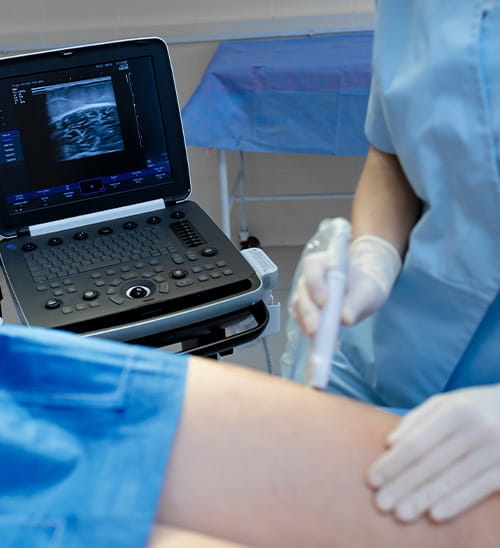
- Doppler ultrasound (a type of vascular ultrasound) – The primary imaging test used to identify DVT and evaluate blood flow in the veins
- D-dimer blood test – Measures substances released when a clot breaks down
- CT scan – Uses contrast dye to visualize veins when other tests are inconclusive
In many cases, evaluation for suspected DVT can be completed the same day. Imaging tests such as ultrasound are often performed quickly to confirm whether a clot is present. Your care team will guide you through the process and explain your results so you can move forward with a treatment plan right away.
Choose a Doctor at One of Our Locations