
- Home
- For Health Professionals
- Departments, Programs and Centers
- Ann Kimball & John W. Johnson Center for Cellular Therapeutics
- Home
- For Health Professionals
- Departments, Programs and Centers
- Ann Kimball & John W. Johnson Center for Cellular Therapeutics

The Johnson Center for Cellular Therapeutics is a state-of-the-art cGMP facility where cell therapies for a range of diseases can be developed and produced.
The Johnson Center for Cellular Therapeutics
Ann Kimball & John W. Johnson Center for Cellular Therapeutics

The Center for Cell Therapy was established by a generous gift from Anne Kimball and John W. Johnson to promote programs of excellence in Cell Therapy at Houston Methodist.
The Center brings transformative and restorative new treatments to patients through cell therapy, which is among the most promising treatment options in the new era of personalized medicine. The Center serves as the leading research and development lab for cell therapy at Houston Methodist. The Center consists of programs representing Houston Methodist Centers of Excellence: cancer, cardiovascular, neurology, transplant, and orthopedics.
Johnson Center for Cellular Therapeutics Menu
Cell Therapy Treatments
The Houston Methodist Dr. Mary and Ron Neal Cancer Center, led by Cancer Center Director, Dr. Jenny C. Chang, Emily Herrmann Presidential Distinguished Chair in Cancer Research, is a nationally acclaimed cancer research center and a pioneer in delivering cutting edge cancer therapies. The Neal Cancer Center has already launched several cellular and immunotherapy-based trials for the treatment of cancer. Dr. Siddhartha Ganguly, Carol Cockrell Curran Distinguished Centennial Chief of Hematology, oversees the clinical operations and is supported by dedicated faculty members, from both clinical and laboratory/translational divisions within the Cancer Center. This program is designed to support several industry-sponsored and investigator-initiated trials in cancer immunotherapy for patients in the Greater Houston area and beyond, ensuring patients regional access to this cutting-edge technology.
Related websites:
Advancing Regulatory T Lymphocyte (TREG) Extracellular Vesicles (EVS) for Amyotrophic Lateral Sclerosis (ALS Therapy)
Stanley H. Appel MD, Aaron Thome PhD, Weihua Zhao, MD PhD
Dysfunctional regulatory T (Treg) lymphocytes expanded in the GMP facility developed an enhanced ability to suppress neuroinflammation and formed the basis of two successful FDA-approved clinical trials in ALS patients. Progression of the disease slowed, but the Tregs gradually converted to Th17 and senescent cells, limiting the clinical benefit.
Exosomes produced during the expansion of Tregs appear to have most of the anti-inflammatory benefits of Treg lymphocytes, with the major advantage that they are end-stage differentiated and do not convert to either toxic Th17 cells or senescent cells.
Over the past year, Drs. Thome, Zhao, and Appel have made significant strides in developing regulatory T lymphocyte (Treg)-derived extracellular vesicles (EVs) as a potential therapeutic for amyotrophic lateral sclerosis (ALS). They are now optimizing and validating manufacturing processes and refining characterization of these potentially beneficial Treg-derived exosomes. This program is in preparation for the first in-human clinical applications, planned to follow in 2026-2027.
Johnson Center Neurology Team
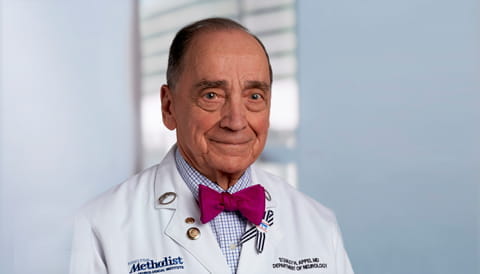
- Stanley H. Appel, MD – Director, Johnson Center
- Jason R. Thonhoff, MD, PhD – Treg Cell Therapy; ALS
- Aaron Thome, PhD – Exosomes; Parkinson’s Disease
- Alireza Faridar, MD – Alzheimer’s Disease; Cell Therapy and Biologics
- David R. Beers, PhD – Biomarkers; Acute Phase Proteins; Reactive Oxygen Species
- Weihua Zhao, MD, PhD – Cell Therapy Manufacturing
Related websites:
The Center for Musculoskeletal Regeneration is a multidisciplinary translational research laboratory that recognizes that the body has incredible healing capabilities and works to harness these to their fullest potential for cell therapy and tissue engineering applications. Under the leadership of Francesca Taraballi, PhD, the team combines expertise in many different, synergistic backgrounds including nanomedicine, engineering, chemistry, biology and materials science to develop cutting-edge research to facilitate technology translation to the clinic.
In orthopedics, inflammation comes before repair. Right after an injury or during surgery, the joint’s lining can become irritated and swollen. That early inflammation can delay healing, increase pain and complicate results. In this context, mesenchymal stem cells (MSCs) can help by calming the immune response, acting as a physiological reservoir to quiet inflammation. Rather than “turning into new tissue,” their key role here is to reduce irritation and create a healthier window for recovery.
Because MSCs live in many parts of the body, the source matters. Although bone marrow is the most familiar source, taking cells from there is invasive and often far from the surgical site. Our translational approach is straightforward: using closer, gentler sources without losing effectiveness.
Working side‑by‑side for years, Dr. Taraballi’s team and orthopedic surgeon Dr. McCulloch have mapped out less‑invasive, surgery‑friendly sources of MSCs that fit the routine arthroscopic workflow. This led to two complementary paths: infrapatellar fat‑pad MSCs for knee procedures and subacromial bursa MSCs for shoulder procedures. Both aim to settle perioperative inflammation around the time of surgery and support tissue integration, with GMP‑oriented protocols and an ongoing clinical pathway.
Translational Technology: Infrapatellar fat pad-derived MSC to support knee recovery
In the operating room, during anterior cruciate ligament reconstruction, the knee is ready to heal but inflammation holds it back. Our idea starts here: use MSCs derived from a fatty cushion resident in the joint as a surgical adjuvant to modulate early inflammation and support tissue integration. The source is minimally invasive, abundant, and the pathway is designed to fit seamlessly into the arthroscopic workflow. In Dr. Taraballi’s lab, we successfully confirmed feasibility, comparing FP‑MSCs against the gold-standard bone marrow‑MSCs. We subsequently translated the protocol to the KJCCT team, defining quality controls and release criteria, and we are now initiating the first-of-its-kind clinical study to assess safety of our product. We are measuring what matters to patients — pain and function — as well as imaging signs of repair and inflammation. Next steps include extending the approach to other critical points in the orthopedic scenarios.
Translational Technology: Subacromial bursa-derived MSC to protect the rotator cuff
Rotator‑cuff tendinopathy and impingement often trap patients in a loop of pain, inflammation, and reduced motion. During surgery, the surgeon encounters the subacromial bursa, rich in resident MSCs: a therapeutic reservoir that can be leveraged without changing the operative gesture. As per knee MSC, we apply a low‑risk bursal harvest during the surgical procedure, essential preparation, and local injection as a surgical adjuvant to repair or decompress the rotator cuff. We will then assess outcomes with functional scales, imaging, and local markers, while developing a clear procedural kit to support feasibility studies and a careful extension to other bursae and upper‑limb joints.
Related websites:
A major focus within the Department of Cardiovascular Sciences is mRNA-enhanced Cell Therapies. Working closely with our faculty in the Center for RNA Therapeutics (Drs. Dan Kiss, Kristopher Brannan, Ewan McRae, Murilo Bueno) we are generating new forms of cell therapy. One can deliver mRNA to cells to enhance their ability to replicate, to restore or enhance their function, and even to provide the cell with new capabilities. Working with our HMRI faculty colleagues with expertise in Nanomedicine (Biana Godin, Francesca Taraballi, Bruna Corradetti) we incorporate mRNA into lipid nanoparticles or collagen scaffolds for cellular delivery, or use electroporation.
We have acquired the equipment and skills, and refined the processes, necessary for us to make clinical grade mRNA and lipid nanoparticles. Thus, we have removed an obstacle for taking our science directly to the patient. Indeed, we intend to treat our first patient this year (with an mRNA vaccine against cancer) under an FDA-approved investigational new drug (IND) application. We have created a roadmap to the clinic for our RNA drugs, including RNA-enhanced or RNA-generated cell therapies.
Translational Technology: RNA therapeutic to reverse cellular senescence
We have developed a process that can enhance many different forms of cell therapy. Specifically, we have shown that in treating cells with mRNA encoding telomerase, we can extend the telomeres of senescent human cells to double the lifespan of human cells; reverse cellular signs of senescence; and restore normal cellular functioning. In one example, telomerase treatment normalized cell function in vascular cells from children with accelerated aging (Progeria), and extended lifespan in a murine model of Progeria (Mojiri et al, Eur Heart J, 2021; Qin et al, Aging Cell 2025). In another example, we are using this approach with colleagues at MD Anderson to improve the effect of a certain class of white blood cells (“natural killer” or NK cells) to destroy tumor cells. Similarly, we are using this technology to rejuvenate human adult stem cells (MSCs) to improve their anti-inflammatory and healing properties, working with our HMH colleagues in Orthopedic Surgery, Drs. Francesca Taraballi and Dominic Haudenschild.
Translational Technology: Nuclear reprogramming of cell fate
We were the first to describe a major process regulating cell fate: “Transflammation” (Lee et al, Cell 2012). Mammalian cells sense damage or pathogens (via pattern recognition receptors) activating inflammatory signaling pathways that increase DNA accessibility, to facilitate cellular plasticity and phenotypic changes in response to the cellular challenge. We have developed methods to activate these processes in cells for “therapeutic transdifferentiation”. In one example, we have transdifferentiated fibroblasts into endothelial cells so as to generate perfused tissue rather than scar tissue in the setting of an injury (Meng et al, Circulation 2020).
Translational Technology: mRNA-generated CAR T cell therapy for autoimmune disease
Using mRNA to modify T cells (a type of white blood cell) for treatment of autoimmune disorders, we are making great progress in generating chimeric antigen T cells (CAR T cells) against disease-causing B cells in patients with autoimmune disorders. In these patients, the B cells (a different type of white blood cell) make autoantibodies that attack the patient’s major organ systems. The T cells from that patient can be modified so that they attack these abnormal B cells, to prevent the generation of autoantibodies. We have used electroporation to get mRNA into T cells. In this case, the mRNA encodes a protein that helps the T cells recognize the abnormal B cells and then kill them. Because mRNA does not last longer than a few hours, and the protein produced only lasts a few days, the T cell can only recognize and destroy B cells for a few days. But just a few days is all that is necessary to clear the abnormal B cells, and to reset the body’s immune system so that it is no longer attacking itself. This is an exciting new development for patients with autoimmune disorders such as systemic lupus erythematosus, rheumatoid arthritis, or ankylosing spondylitis.
Related websites:
Our cellular therapy program has focused on stem cells as modulators of the immune system and translational studies with MSC transplantation in kidney transplant patients. Our second focus has been around cellular therapies for diabetes and insulin resistance. These efforts have produced significant work in transplantation and, in collaboration with the Nanotechnology group, are at the cusp of being translated beyond the primate model. In addition, our group has developed newer cellular-based therapies for metabolic overload and prediabetes.
Studies on the regulation of the immune response constitute a significant part of our activities. These projects are directed to identify the regulatory cells that modulate the immune response. Such studies are critical to the “Cell Therapy Initiative” by the Houston Methodist Research Institute that utilizes different types of cells to treat cancer, neurological disorders, and diabetes.
We are particularly excited about the cellular therapy approach to B cell sensitization and antibody production, that includes generation of specific T-cells that can treat highly sensitized patients and increase the transplantation rates. This collaborative project, started within the Johnson Center, promises to be the first large multi-center collaboration within the Johnson Center participants to create new cellular therapy in transplantation.
The Johnson Center Core Facility is a 5,000 sq. ft. facility that includes 1,710 sq. ft. of cleanroom space, a dedicated quality control laboratory, support spaces, and material, equipment and cryogenic storage required for GMP operations.
Six independent production rooms furnished with state-of-the-art equipment will allow investigators, with support from our expert personnel, to translate laboratory discoveries into cutting-edge cellular therapies for patient care.
Combined with a fully equipped, in-house quality control laboratory for comprehensive testing and release of products, KJCCT offers HM the ability to deliver new cellular therapies to our patients in the safest, most cost-efficient and rapid manner.
List of Services
Cell Processing/Manufacturing and Cryopreservation
- Method Development and Validation
- Cryostorage
- Cell Characterization
- Sterility testing
- Endotoxin testing
- Mycoplasma testing
- Autoclave Sterilization
- QC (batch release) and Raw Materials Testing
- Regulatory consultation
Cell Processing/Manufacturing and Cryopreservation Equipment
- Sepax C-Pro Cell Processing System
- CliniMACs PlusCell Depletion and Enrichment System
- CliniMACs ProdigyAutomated Cell Processing System
- VIA ThawCB1000
- Cook RegentecCellseal Automated Thawing DFS
- TSCD-II Sterile Tubing Welders
- Carl Zeiss™ Primo Vert™ Inverted Microscopes
- SEBRA 2380 Tube Sealer Kits
- NUAire 6ft Biological safety cabinets
- CO2 incubators
- ME1002TE Precision Balances
- VIA Freeze
- Cryomed Controlled Rate Freezer
- CryoPlus™ LN2 Vapor Freezers
Quality Control Equipment
- BioMerieux BACT/ALERT 3D
- Countess™ II FL Automated Cell Counter
- CliniMACs Quant Flow Cytometer
- Endosafe® nexgen-PTS™
- Synergy HTX Multi-mode Reader
- Lucetta 2 Luminometer
- Previ Color Gram
- BIOFIRE® Mycoplasma Nucleic Acid Amplification Technique (NAT)
- CFX Opus 96 Touch Real-Time PCR Detection System
- Mettler Toledo™ Excellence Plus XPE Analytical Balance
Autoclave Equipment
- AMSCO® 250LS Small Steam Sterilizer
Contact Information
Ann Kimball & John W. Johnson Center for Cellular Therapeutics
Houston Methodist Outpatient Center
6445 Main St, P3-C014
Houston, TX. 77030
713.208.0639
Center Director
Core Director
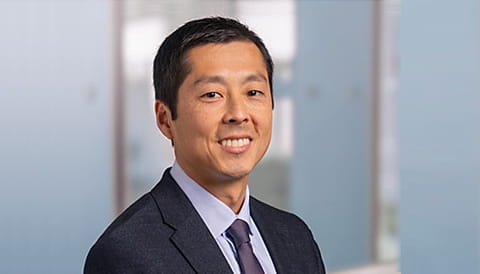
Daniel J. Kota, PhD
Director, ACM Core Laboratory
Cellular Therapeutics Facility
Building the Future of Medicine Cell by Cell
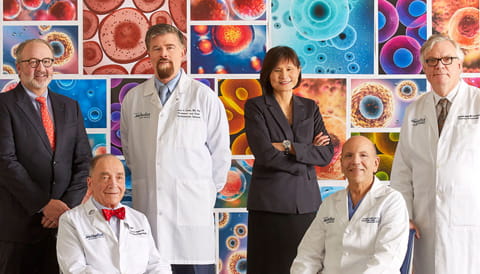
In 2019, Ann Kimball and John W. Johnson made a transformational gift to support the building and equipping of a 5,000-square-foot, state-of-the-art cellular therapeutics laboratory and fabrication facility located in the Houston Methodist Outpatient Center.
Read more (PDF) ➝
Combined with a fully equipped, in-house quality-control laboratory for comprehensive testing and release of products, the Johnson Center offers the ability to deliver new cellular therapies to our patients in the safest, most cost-efficient and rapid manner.
Watch video ➝
Contact Information
Ann Kimball & John W. Johnson Center for Cellular Therapeutics
Houston Methodist Outpatient Center
6445 Main St., P3-C014
Houston, TX 77030