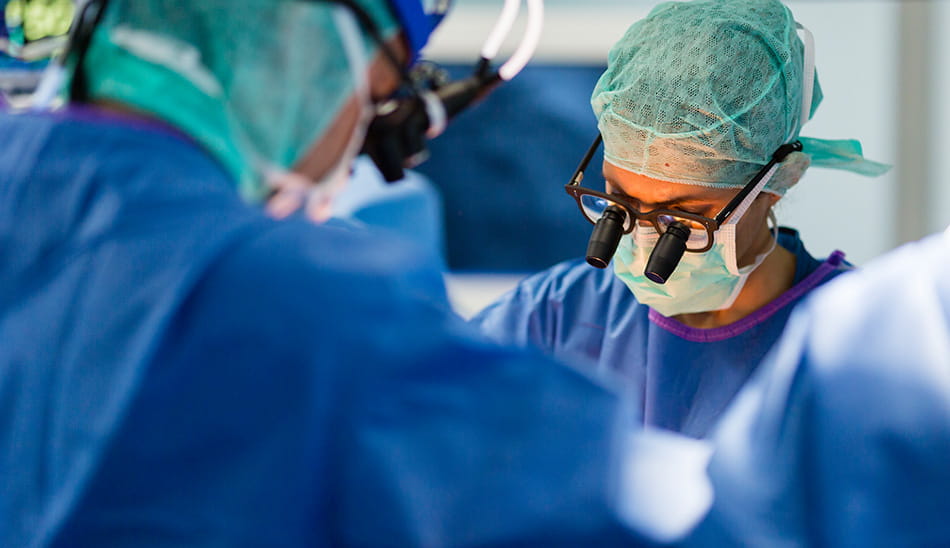
Minimally Invasive Spine Surgery
Houston Methodist spine surgeons use minimally invasive spine surgery (MISS) to treat a range of spinal conditions when surgery is appropriate. MISS refers to a set of surgical techniques that use smaller incisions and specialized instruments to reduce disruption to surrounding muscles and soft tissue compared to traditional open surgery.
While minimally invasive spine surgery is still considered a major surgery, this approach may offer benefits such as less blood loss, reduced postoperative pain and a faster return to daily activities for some patients. Our spine specialists and neurosurgeons work together to determine whether surgery is the right next step — and whether a minimally invasive approach is appropriate for your condition, body and goals.
What Is Minimally Invasive Spine Surgery?
Minimally invasive spine surgery is a surgical approach that uses small incisions, advanced imaging and specialized instruments to access and treat spinal conditions while minimizing muscle damage compared to traditional open procedures.
Several techniques fall under this umbrella, including robotic-assisted and endoscopic spine surgery. Minimally invasive techniques aren’t always better for every condition, and in some cases traditional open surgery provides safer or more effective access.

Why Choose Houston Methodist for Minimally Invasive Spine Surgery
Houston Methodist spine specialists combine advanced technology with thoughtful surgical decision‑making. Our orthopedic spine surgeons and neurosurgeons collaborate to determine when surgery is truly needed — and which approach best supports long‑term outcomes.
Our goal is to help you move with less pain and greater stability.

Ranked #13 in the Nation for Neurology & Neurosurgery
Houston Methodist Hospital is ranked Best in Texas and No. 13 in the nation by U.S. News & World Report for Neurology & Neurosurgery. U.S. News & World Report has also named Houston Methodist Hospital one of the nation's best as a nationally ranked Honor Roll hospital.
Learn More ➝

Ranked #21 in the Nation and Best in Texas for Orthopedics
Houston Methodist Hospital is ranked No. 21 in the nation by U.S. News & World Report for Orthopedics, receiving a high performing rating for back surgery. U.S. News & World Report has also named Houston Methodist Hospital one of the nation's best as a nationally ranked Honor Roll hospital.
How Does Minimally Invasive Spine Surgery Work?
Minimally invasive spine surgery is typically performed under general anesthesia. During the procedure, surgeons use specialized instruments inserted through small incisions to reach the affected area of the spine.
Depending on the condition being treated, surgeons may use tubular retractors, endoscopes or robotic guidance systems to visualize and address the problem without fully opening the surgical site. Advanced navigation and imaging during surgery help improve precision and support safer outcomes.
This approach aims to relieve nerve compression, stabilize the spine when needed and support recovery while preserving surrounding tissue.
Types of Minimally Invasive Surgery
Houston Methodist surgeons use minimally invasive techniques across a variety of spine procedures, selecting the approach that best fits each patient. The specific minimally invasive approach is chosen based on the condition being treated, spinal anatomy, stability and surgical goals — not all techniques are appropriate for every patient.
Endoscopic Spine Surgery
Endoscopic spine surgery is one of the least invasive spine surgery options. A small camera (endoscope) is inserted through a tiny incision, allowing surgeons to visualize and treat spinal conditions with minimal tissue disruption.
This approach may be used for endoscopic discectomy to treat herniated disks, or for endoscopic foraminotomy and decompression procedures to relieve nerve pressure. Some patients may experience less postoperative pain and quicker recovery compared to traditional techniques.
Robotic Spine Surgery
Robotic‑assisted spine surgery uses advanced guidance systems to improve accuracy during procedures such as spinal fusion and instrumented decompression. Robotic technology allows for detailed preoperative planning, real‑time guidance and precise placement of implants through smaller incisions.
Minimally Invasive Discectomy and Laminectomy
Minimally invasive techniques are also applied to procedures such as discectomy and laminectomy, where portions of a damaged disk or bone are removed to relieve pressure on spinal nerves. Smaller incisions and specialized tools help support faster healing.
Minimally Invasive Spinal Fusion (MISS-TLIF)
Minimally invasive transforaminal lumbar interbody fusion (MISS‑TLIF) is a variation of traditional fusion surgery performed through smaller incisions using tubular retractors. This technique stabilizes the spine while limiting muscle disruption and may allow for shorter hospital stays and quicker recovery for select patients.

Benefits of Minimally Invasive Spine Surgery
Compared to traditional open spine surgery, minimally invasive approaches may offer benefits such as:
- Smaller incisions
- Less muscle damage
- Reduced blood loss
- Decreased postoperative pain
- Shorter hospital stays
- Faster return to normal activities
Not every patient experiences the same benefits, and outcomes depend on the specific condition being treated, the type of procedure performed and overall health. While minimally invasive surgery may reduce certain risks, it still carries many of the same potential complications as open surgery, which your surgeon will review with you.
What Conditions Does Minimally Invasive Spine Surgery Treat?
Degenerative Disk Disease
Degenerative disk disease is a common, age‑related condition in which spinal disks change over time. When conservative treatments are no longer effective and symptoms are clearly linked to disk degeneration, minimally invasive fusion or decompression procedures may be considered.
Herniated Disk
A herniated disk occurs when disk material presses on nearby nerves, causing pain, numbness or weakness. Minimally invasive procedures such as discectomy can relieve pressure on the affected nerve.
Spinal Stenosis
Spinal stenosis is the narrowing of the spinal canal, which can compress the spinal cord or nerve roots. Minimally invasive decompression procedures can help relieve pressure and reduce symptoms.
Spondylolisthesis
Spondylolisthesis occurs when one vertebra slips over another, leading to instability and nerve compression. Minimally invasive fusion techniques can help stabilize the spine and relieve symptoms in select patients.
Who Qualifies for Minimally Invasive Spine Surgery?
Whenever possible, we use minimally invasive techniques to limit tissue disruption and support faster healing. However, minimally invasive spine surgery is not appropriate for every patient or every condition. Candidacy depends on factors such as the location and severity of the problem, spinal stability, alignment and overall health.
Your care team will review imaging tests such as MRI or CT scans, along with your symptoms and treatment history, to determine whether a minimally invasive approach or traditional open surgery is the best option. In some cases, open surgery provides better access or outcomes.
If a minimally invasive approach isn’t recommended, it’s often because another surgical method offers a safer or more durable result for your specific condition.
Preparing for Minimally Invasive Spine Surgery
Preparation begins before the procedure. Your doctor may recommend steps such as:
- Pre-surgical strengthening or conditioning exercises
- Avoiding smoking
- Adjusting medications, including blood thinners
- Preparing your home for recovery
- Planning for post‑surgical support
- Eating a healthy, protein‑rich diet
- Showering with antimicrobial soap before surgery
- Avoiding food and drink after midnight the night before
Recovering from Minimally Invasive Spine Surgery
Recovery varies by procedure and individual. While minimally invasive surgery often allows for a quicker recovery than open surgery, it is still surgery and healing takes time.
Some people notice improvement within weeks, while others experience gradual recovery over several months. Your doctor will guide you on activity restrictions, return‑to‑work timing, pain management and the role of physical therapy in your recovery plan.
Convenient Spine Care Locations Across the Greater Houston Area
Across Houston, our patients have access to our expert neck, back and spine specialists so that you can get the best possible care personalized for your needs — without traveling far from home. Explore our footprint of locations in the Greater Houston area and suburbs below.