

Interventional Pulmonology Services
Interventional pulmonology is the art and science of diagnosing and treating complex lung, chest and airway conditions with precision, efficiency and a focus on fast recovery — often without the need for major surgery. Unlike traditional surgery, interventional pulmonology is minimally invasive and allows access to the lungs and airways through natural openings or small entry points using advanced scopes, imaging and highly specialized tools.
Houston Methodist interventional pulmonology service and care are delivered by experts in the field of pulmonology. Our interventional pulmonologists work in close collaboration with multidisciplined specialists, including thoracic surgeons, otolaryngologists (ENT specialists), thoracic oncologists, radiation oncologists and other subspecialties — ensuring every patient benefits from comprehensive, coordinated care. This approach allows our team to diagnose airway and lung disorders, pleural diseases, and lung cancer earlier, treat conditions more precisely and even resolve complex problems during a single procedure.
Conditions We Treat Using Interventional Pulmonology
Many airway, lung and chest conditions are complex and traditionally require open surgery, but interventional pulmonology offers patients less invasive options with shorter recovery times and fewer complications.
Our interventional pulmonologists manage both benign and malignant conditions, including:
- Central airway obstruction – Benign airway narrowing (such as subglottic and tracheal stenosis, or malignant central airway obstruction caused by lung cancer or metastatic disease)
- Fistulas – Abnormal connections between the airway and esophagus, stomach or surrounding organs
- Lung cancer – Diagnosis, staging and airway relief related to primary or metastatic lung tumors; minimally invasive ablation of tumors via different modalities
- Mediastinal and lymph node abnormalities – Enlarged or suspicious lymph nodes requiring biopsy
- Pleural disease – Fluid buildup around the lungs (pleural effusion), pleural inflammation or thickening, pleural biopsies
- Pulmonary nodules and lung masses – Small or hard-to-reach lung nodules requiring advanced diagnostic techniques
- Tracheal and bronchial stenosis – Narrowing of the windpipe or major airways due to prior intubation, surgery or inflammation
Interventional Pulmonology Testing & Treatment
Houston Methodist offers one of the most comprehensive interventional pulmonology programs in the region, using advanced tools to both diagnose and treat disease, often during the same procedure.
Most procedures are performed on an outpatient basis, allowing patients to return home the same day. Recovery after interventional pulmonology is typically fast. In most cases, breathing improves quickly once the airway obstruction is relieved, and normal activities often can be resumed within a short time. Our team also provides close follow-up care and works with your referring physician to ensure continuity, monitoring and long-term success well after your treatment.
Advanced Diagnostic & Therapeutic Techniques
- Endobronchial ultrasound (EBUS) – Uses ultrasound-guided bronchoscopy to sample lymph nodes and stage lung cancer accurately
- Robotic-assisted bronchoscopy (RAB) with advanced imaging modalities – Enables precise navigation to small, peripheral lung nodules that are otherwise difficult to reach, offering improved detection of early stages of lung cancer in addition to therapeutic interventions like ablation
- Rigid bronchoscopy – Treats central airway obstruction for both benign and malignant disease
- Laser-assisted bronchoscopic resection – Removes airway blockages caused by tumors or scar tissue
- Cryotherapy (cryoablation) – Uses extreme cold to destroy abnormal tissue; includes cryobiopsy for interstitial lung disease
- Thermal bronchoscopic therapies
- Photodynamic therapy (non-thermal laser therapy) – Targets cancer cells while sparing surrounding tissue
- Endoluminal suturing and closure devices – Treats airway fistulas and complex structural problems
- Airway stenting – Keeps narrowed airways open using silicone or expandable stents
- Medical thoracoscopy/pleuroscopy – Allows direct evaluation of the chest cavity to diagnose pleural disease and manage fluid buildup, perform biopsies and prevent recurrent fluid accumulation with pleurodesis
- Chest ultrasound – Performed in clinic on an outpatient basis
- Thoracentesis (fluid drainage) – Performed in clinic on an outpatient basis
- Tunneled intra-pleural catheter – Placement allows for fluid drainage at home
Why Choose Houston Methodist for Interventional Pulmonology
At Houston Methodist, interventional pulmonology care is built on a combination of clinical excellence and forward-thinking innovation. Our program is designed to care for today’s patients while advancing the future of lung and airway medicine — ensuring every decision for your care is grounded in expertise, precision and compassion.
Specialized Care Where Precision Matters Most
Advancing Interventional Pulmonology Through Education & Innovation

Houston Methodist lung specialists are recognized for managing some of the most challenging interventional pulmonology cases, including complex benign airway disease that other centers are not equipped to treat.
What distinguishes our program is not a single technology or technique, but the depth, breadth and coordination of expertise behind every procedure. We offer:
- Advanced tools not widely available at other centers
- Expertise in both benign and malignant airway disease
- High-volume academic program with extensive procedural experience
- Seamless collaboration with ENT, thoracic surgery, oncology and radiation oncology
Years of specialized experience allow us to tailor treatment plans for each patient, even in rare or recurrent conditions.
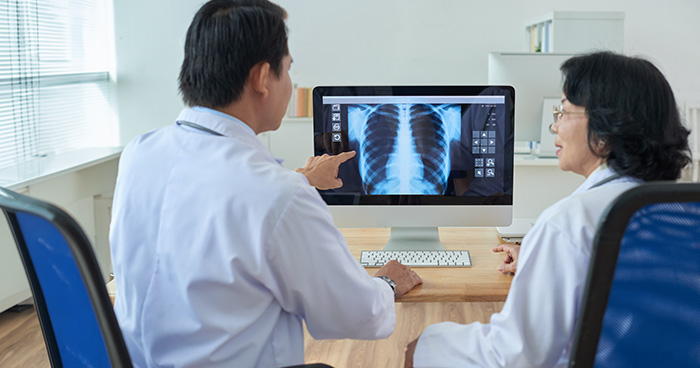
Our commitment to education and research ensures our patients benefit from the best health care and latest medical breakthroughs. As an academic medical center, Houston Methodist plays a national role in advancing interventional pulmonology.
This academic foundation allows us to translate new knowledge into meaningful improvements in patient outcomes while serving as a national education site for interventional pulmonology trainees. Our program:
- Hosts an advanced, intensive interventional pulmonology course — The RIGID and Robotics — that focuses on rigid bronchoscopy and robotic techniques, and involves hands-on training at MITIE, with a target audience, fellows in training, practicing pulmonologists, thoracic surgeons and ENT trainees
- Offers access to clinical trials that evaluate emerging technologies and treatments
- Participates in and leads innovative research exploring new diagnostic and therapeutic approaches
- Hosts the yearly American Association of Bronchology and Interventional Pulmonology (AABIP) training course for all interventional pulmonology fellows in the nation