Scoliosis (Spinal Curvature)
Houston Methodist spine specialists diagnose and treat scoliosis, a condition that causes an abnormal side‑to‑side curve of the spine. Scoliosis can affect children, adolescents and adults, and in many cases, it remains mild and doesn’t cause noticeable symptoms.
Most cases of scoliosis are mild and can be monitored over time without active treatment. When treatment is needed, the goal is to slow curve progression, support spinal function and reduce pain or posture concerns.
Our spine experts work as a team to recommend a personalized care plan based on your age, curve type, symptoms and overall health. When appropriate, eligible patients may also have access to clinical trials studying innovative approaches to scoliosis care.
What Is Scoliosis?
Scoliosis is a spinal deformity that involves an abnormal lateral (side‑to‑side) curvature of the spine, often forming an S‑ or C‑shape. This differs from the spine’s front‑to‑back curves (lordosis and kyphosis). In some people, the curve may also cause uneven shoulders, ribs or hips.
Scoliosis is most often diagnosed during childhood or adolescence, especially during growth spurts, but it can also develop or worsen in adulthood. Whether scoliosis changes over time depends on factors such as age, growth stage, curve size and overall spine health.

Ranked #13 in the Nation for Neurology & Neurosurgery
Houston Methodist Hospital is ranked Best in Texas and No. 13 in the nation by U.S. News & World Report for Neurology & Neurosurgery. U.S. News & World Report has also named Houston Methodist Hospital one of the nation's best as a nationally ranked Honor Roll hospital.
Learn More ➝

Ranked #21 in the Nation and Best in Texas for Orthopedics
Houston Methodist Hospital is ranked No. 21 in the nation by U.S. News & World Report for Orthopedics, receiving a high performing rating for back surgery. U.S. News & World Report has also named Houston Methodist Hospital one of the nation's best as a nationally ranked Honor Roll hospital.

Why Choose Houston Methodist for Scoliosis Care?
If scoliosis is affecting your daily life, our team can help. Houston Methodist spine specialists and neurosurgeons provide comprehensive care for scoliosis across all ages, from childhood through adulthood.
As one of Texas' top-ranked spine programs, we offer a full range of treatments for scoliosis, from non-surgical therapies to complex spine surgery. Your care plan is tailored to you and may include coordinated expertise across specialties, advanced imaging and access to innovative clinical trials when appropriate. Above all, our goal is to relieve pain, restore function and help you return to the activities you enjoy.
Common Causes & Types of Scoliosis
Scoliosis can develop for different reasons. There are primary types of scoliosis. Each type is based on its cause, and the type helps guide treatment decisions.
Idiopathic Scoliosis
Congenital Scoliosis
Degenerative Scoliosis
Neuromuscular Scoliosis
Signs & Symptoms of Scoliosis
Many people with scoliosis have no symptoms, especially in mild cases. Others may notice changes in posture or develop discomfort over time. Some schools conduct screenings to detect early signs of scoliosis among students.
Scoliosis is most often identified in children and adolescents between the ages of 10 and 15, particularly during periods of rapid growth. It is more common in females, and having a family history of scoliosis can increase risk.
Uneven Shoulders
One shoulder or hip may appear higher than the other, which can lead to an off balance or tilted posture.Lower Back or Leg Pain
Pain is more common in adults with scoliosis and may be related to degenerative changes that place pressure on nerves, leading to pain in the lower back, buttocks or legs.Protruding Ribs
A rib “hump” may become noticeable when bending forward. This is a classic sign used during screening exams such as the Adam’s Forward Bend Test.How Scoliosis Is Diagnosed
Diagnosis begins with a physical exam and review of medical history. While scoliosis is often detected in childhood, adults who notice posture changes or persistent back pain can also be evaluated.
Your doctor may use one or more of the following tools:
Adam’s Forward Bend Test
Adam’s Forward Bend Test is a simple exam in which you bend forward at the waist while your doctor looks for asymmetry in the shoulders, ribs or hips.
Imaging
One or more imaging tests may be conducted:
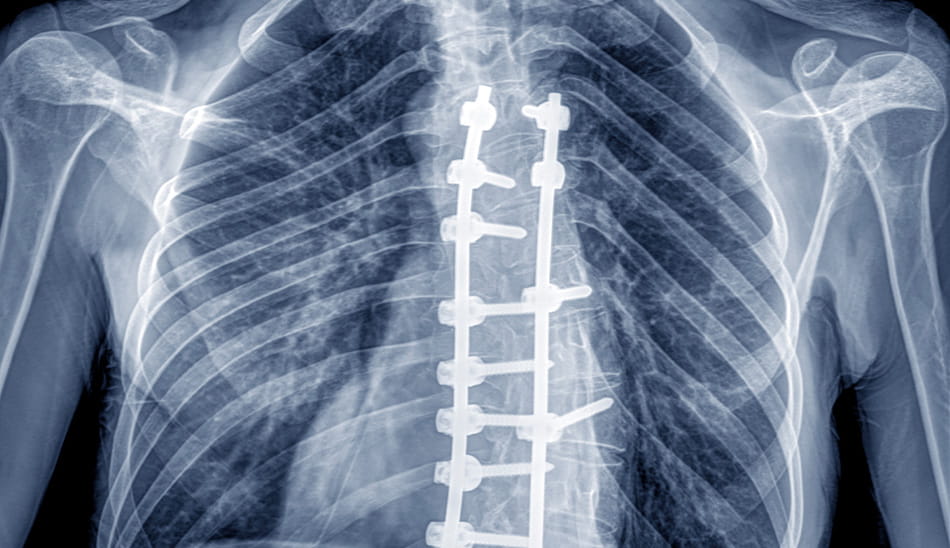
• X rays – the primary test used to confirm scoliosis and measure curve severity
• Magnetic resonance imaging (MRI) or computed tomography (CT scans) – may be used in certain cases to evaluate soft tissues, nerves or underlying structural concerns
Scoliometer
A scoliometer is a handheld device used during physical exams to measure spinal rotation.
Convenient Spine Care Locations Across the Greater Houston Area
Across Houston, our patients have access to our expert neck, back and spine specialists so that you can get the best possible care personalized for your needs — without traveling far from home. Explore our footprint of locations in the Greater Houston area and suburbs below.