
Pituitary adenomas are classified based on their size and hormone production. Microadenomas are smaller than 1 cm (less than half an inch) in diameter, while macroadenomas are larger than 1 cm in diameter.
Pituitary adenomas can become cancerous, particularly if they are fast-growing. Pituitary carcinomas are extremely rare malignant pituitary adenomas. Pituitary carcinomas look like pituitary adenomas under a microscope. The only way to distinguish them is by monitoring when the tumor spreads to another part of the body.
Endocrine-active Pituitary Adenomas (Non-Cancerous Tumors)
Endocrine-inactive (Nonfunctional) Tumors
These pituitary adenomas do not produce hormones, though some secrete a defective hormone that has no endocrine effects. Because they do not alter hormone levels, they are often found during a brain scan for some other reason, or after they have grown large enough to exert pressure on surrounding tissues or structures, producing symptoms.
Symptoms of nonfunctional pituitary tumors include:
- Headaches that get progressively worse
- Increased pressure in the brain
- Loss in peripheral vision (the extreme left or right sides of what you see) or double vision
- Problems with memory, weakness or numbness if the tumors are very large and press on other areas of the brain
- Severe vision loss, including blindness
Other Types of Pituitary Tumors
Treatment Options for Pituitary Adenomas
Most pituitary tumors can be successfully treated. Virtually all tumors can be removed surgically or reduced in size with other means, and prognosis for patients is excellent. Our specialists at Houston Methodist offer many treatment options to remove or shrink pituitary tumors, making it possible to devise the best options to treat your pituitary adenoma:
- Minimally invasive surgery
- Standard surgical removal of the pituitary tumor
- Precisely focused image-guided minimally invasive radiation therapy
- Hormone therapy
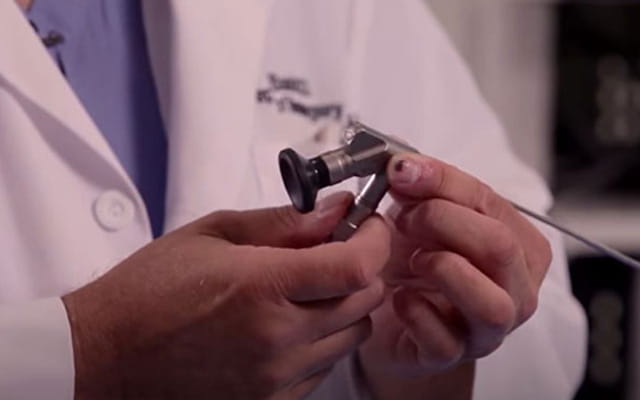
Removing Tumors Previously Out of Reach
We designed neurosurgical endoscopes 1/10 of an inch in diameter. Instead of a large incision, we place these endoscopes through tiny natural pathways to navigate through the nostrils and sinuses to the base of the brain. This allows us to remove tumors in areas that were previously inaccessible.