

Atherosclerosis 101: Facts to Know About this Preventable, Treatable Disease
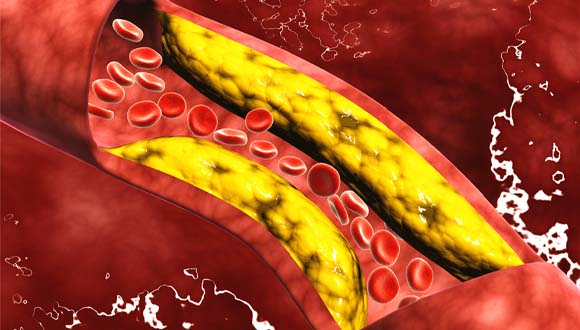
Jan. 28, 2026 - Katie McCallumAtherosclerosis is a condition in which plaque — deposits of cholesterol, calcium and fat — builds up inside your arteries, narrowing them and reducing blood flow.
Over time, this can lead to heart disease and serious complications like heart attack or stroke.
The good news? It’s treatable if detected early. Even better, it’s largely preventable with proven lifestyle and medical approaches, says Dr. Khurram Nasir, a preventive cardiologist at Houston Methodist.
“Prevention and treatment strategies work remarkably well to dramatically slow and even reverse disease progression,” Dr. Nasir says.
With today’s advanced imaging technology, atherosclerosis can be spotted in its earliest stages. But with this silent disease — the first symptom is a heart attack for many people — prevention is key.
By understanding your personal risk factors and acting early with your doctor, you can protect your heart for years to come.
Know the risk factors
Genetics play a role in atherosclerosis risk. But even if you have a family history of the disease, your daily lifestyle and health choices have a far bigger impact on whether you develop atherosclerosis.
“Most atherosclerosis risk factors are within our control,” Dr. Nasir says. “We can't change our genetic cards, but we can absolutely change how we play them.”
Your arteries “remember” the incremental risk factors in your daily lifestyle — your habits, stress levels, diet and environment — even when you are not actively focused on your heart health.
Some of these atherosclerosis risk factors include:
Tobacco use
Diabetes
These risk factors add up over time, creating inflammation that increases your chances of developing atherosclerosis.
Early symptoms are silent
In the early stages of heart disease, symptoms are often silent — usually not appearing until plaque has been building up for 10 or even 20 years. That means people don’t realize something is wrong until it’s very wrong.
“For many patients, the first sign of atherosclerosis is a heart attack,” warns Dr. Nasir. “That's why screening and prevention matter so much.”
Middle-stage disease symptoms are more noticeable, though, and Dr. Nasir urges that people should talk with a cardiologist if they experience:
Shortness of breath during daily activities, like sweeping the floor
Unusual fatigue that isn’t explained by illness
Chest, jaw, neck or upper abdominal discomfort with physical exertion
Erectile dysfunction, which can be a sign that small arteries are already blocked
“Listen to your body; if it’s giving you new signals, especially during routine activities, don't ignore them,” Dr. Nasir adds. “Subtle signs can be early whispers of blocked arteries.”
Prevention is key. With an accurate diagnosis and precise treatment, atherosclerosis is very treatable, and, in many cases, it can be reversed.
(Related: Can You Reverse Coronary Artery Disease?)
How screening and diagnosis work
Because symptoms develop over time, atherosclerosis screening needs to start before symptoms appear. The recommended age to begin screening is around 40 to 45, but Dr. Nasir recommends starting earlier if you have a family history of the disease, diabetes or multiple risk factors.
With advanced imaging technology, he said, Houston Methodist doctors can give you a personalized plan for screening and prevention.
“We can see atherosclerosis plaque directly,” explains Dr. Nasir. “We don't have to guess based on your health history alone. That allows us to customize your prevention or treatment plan and gives you more insight to make informed heart-health decisions.”
The main types of imaging are:
Coronary artery calcium scoring
Coronary artery calcium (CAC) scoring is one of the most reliable and widely used imaging technologies for atherosclerosis screening. It takes five minutes or less, with no need for contrast dye. The radiation is low and comparable to getting a mammogram. A score of zero means your risk is very low. Higher than 400 indicates a high risk of heart attack. (Related: Calcium Score: What Is a CAC Test & Do I Need One?)
“CAC also helps us see how fast your arteries are ‘aging’ compared to how you feel,” Dr. Nasir explains. “Getting this screening before symptoms start gives you more flexible choices for medication and lifestyle changes based on what your arteries look like inside.”
Coronary CT angiography
Coronary CT angiography (CTA) uses X-ray imaging to get a more detailed look at your arteries, including soft plaque and blockages. For the procedure, you get an injection of contrast dye, which helps the blood vessels show up better on the images we capture. Then you lie on a long table and slide into the short machine to get the scan. It's painless and takes just a few minutes.
“This test is very important when you’re having symptoms but don’t yet have a diagnosis of heart disease,” Dr. Nasir says. “CTA helps refine whether the symptoms are due to atherosclerosis and gives us a snapshot of your risk for the disease.”
Compared to stress testing, which measures blood flow before and after exercise, CTA offers better clarity for early detection of atherosclerosis.
(Related: 5 Commonly Ordered Heart Tests & What They Show)
Treatment options for atherosclerosis
Especially when it's caught early, atherosclerosis is very treatable.
You will have a range of treatment options depending on how much plaque has built up in your arteries:
Little to no plaque with other risk factors: Most people in this group can reduce their chances of plaque buildup by focusing on lifestyle. Your doctor can help you get on track with healthy eating, regular exercise, getting better sleep and managing stress. You may benefit from low-dose statins if your total cholesterol is high or if heart disease runs in your family.
Plaque detected with no symptoms: Cholesterol-lowering is very important at this stage to stop the disease from getting worse. Along with lifestyle updates, your doctor may recommend a medication or a combination of medications, such as statins or ezetimibe (pills) or evolocumab (biweekly injectable).
Moderate to severe plaque with symptoms: This stage requires more aggressive treatment to lower your cholesterol, control blood pressure and blood sugar and manage weight, if needed. If you have symptoms due to blockages, your doctor may recommend bypass surgery or a stent to open the artery.
(Related: Understanding Your Heart Attack Risk Profile)
Making heart-healthy habits in your daily life is the cornerstone of atherosclerosis prevention and treatment. You have the power to change your heart-health future — the earlier you start with prevention and screening, the better your outcomes can be.


