

10 Foods Surprisingly High in Sodium (and How to Cut Back)
March 3, 2026 - Josh DavisThe tricky thing about salt is that it tastes, well, salty. But you can’t always taste how salty a food really is. Chips, sure. But a one‑ounce bag of Doritos Nacho Cheese chips actually has less sodium than two slices of supermarket white bread — and if you’re making a sandwich, keep in mind that’s just the bread.
“Sodium adds up quickly, especially when more than 70 percent of what we eat comes from processed or restaurant foods,” says Kelly Gaines, a registered dietitian nutritionist at Houston Methodist. “People often think they’re cutting back by putting away the saltshaker, but that’s usually the smallest piece of the puzzle.”
Sodium hides in places you wouldn’t expect, which is one reason why most Americans take in far more than they realize.
Here, Gaines helps break down how much sodium experts recommend, how easily common foods can push you past that target and what you can do to limit your intake.
How much sodium should you not exceed per day?
National guidelines on daily sodium intake don’t all land on the same number, which is why sodium guidelines can be a little confusing (at first).
The CDC recommends keeping daily sodium intake under 2,300 milligrams for teens and adults, while the American Heart Association (AHA) takes a more conservative approach, calling 2,300 milligrams the upper limit and encouraging most adults to aim for an ideal limit of 1,500 milligrams per day.
The difference comes down to what each organization prioritizes. The CDC sets a realistic upper limit for the general population, but the AHA bases its lower target on cardiovascular outcomes with evidence showing that reducing sodium helps prevent and treat high blood pressure, heart disease and stroke.
If you have high blood pressure, kidney disease or heart failure, you may be more sensitive to sodium’s effects on fluid balance and blood pressure regulation. The AHA notes that people in these groups often benefit from stricter limits because excess sodium can make these conditions harder to control.
Gaines prefers AHA’s more conservative approach to sodium, especially if you have a heart condition like high blood pressure, but notes that even for those with normal blood pressure, it doesn't hurt to aim for a more conservative number.
How do I know if I need to cut back on my sodium intake?
It’s safe to say most Americans can stand to cut back on sodium. That likely includes you.
According to the CDC, most Americans consume more sodium than recommended: 3,300 milligrams of sodium per day on average — 1,000 more than the daily limit. Based on estimates from the AHA, 90 percent of Americans exceed their recommended levels.
Even without a diagnosis, you may notice certain signs when your sodium intake is regularly high. Swelling in the hands, feet or ankles can appear after sodium-heavy meals, as the body retains extra fluid. That extra fluid increases the amount of blood flowing through your vessels, which can raise your blood pressure. Over time, that added pressure forces the heart to work harder and strains the blood vessels that supply the brain, kidneys and other organs.
(Related: What Can Happen If You Eat Too Much Salt?)
For context, nearly half of all U.S. adults have high blood pressure, and 80 percent of those don’t have it under control, according to the CDC. The health agency also notes that a high sodium intake is strongly linked with a higher risk of heart disease and stroke, two of the nation’s leading causes of death.
(Related: What Is a Good Blood Pressure?)
The AHA also highlights that many packaged and restaurant foods contain enough sodium to push intake beyond recommended limits in a single meal, making it easy to exceed your target without realizing it.
“It doesn’t take much to hit your day’s worth of sodium,” Gaines says. “A couple of common foods can get you there fast, regardless if you follow the AHA or the CDC guidelines.”
10 foods that are surprisingly high in sodium
Understanding where sodium is coming from is often the first step in reducing your intake, but some of the biggest sodium contributors are foods we don’t even think of as being salty.
Here are 10 categories of foods where sodium can quietly add up, illustrated with examples and insights from Gaines.
1. Breads and rolls
Plain bread rarely tastes salty, which is why it can catch most people off guard when it comes to its sodium content. Gaines notes that even a single slice of white bread can carry more salt than a serving of chips — and because bread can show up potentially in all three of your daily meals (toast for breakfast, a sandwich for lunch and a roll with dinner), those numbers can climb quickly.
Examples: Mass-produced sandwich bread (most loaves in the bread aisle), buns, dinner rolls, English muffins
Why it’s high: Bread without salt is extremely bland, but salt also helps control yeast activity, improves texture and lengthens shelf life.
(Related: PODCAST: What Can You Trust in the Bread Aisle?)
2. Cold cuts and cured meats
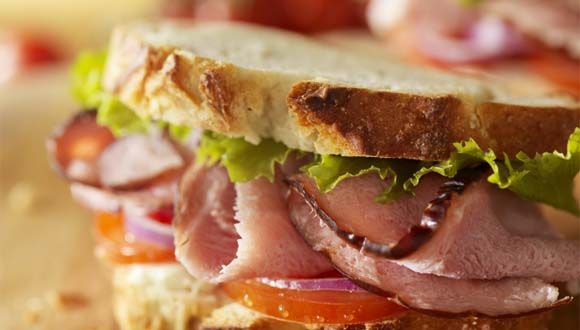
Salt is a key part of curing and preserving meat, so most deli slices are often laden with sodium. And it doesn’t matter if it’s pork-, beef- or poultry-based — they all have a ton of salt even if they don’t taste that salty.
Portions also matter. According to Gaines, some six-inch subs at sandwich shops can have more than 3,000 milligrams of sodium. That’s not including the side of chips or cookie, if you get them.
Examples: Turkey, bologna, pastrami, salami, ham, roast beef, pepperoni, mortadella
Why it’s high: Sodium is integral to curing, preserving and flavoring processed meats.
(Related: Should You Put That Hot Dog Down?)
3. Pizza
Pizza combines several salty components — cheese, dough, sauce and often processed meats — which makes it one of the most sodium dense foods people can eat, which is why it’s so tasty. It’s a literal flavor bomb for our taste buds!
Fresh pizza can have less sodium than frozen, but in almost all cases, pizza is generally high in sodium no matter how it’s stored. Homemade pizza, however, is one case where you can control the sodium content the most, opting for low-sodium ingredients such as no-salt-added tomato sauce, fresh meat instead of cured kinds and a limited use of cheese.
Examples: Frozen pizza, fresh pizza, most chain-restaurant pizza
Why it’s high: Cheese, cured meats and seasoned sauces can all have high amounts of sodium, and they’re all layered together.
4. Poultry (pre-cooked or pre-seasoned)
Plain chicken breast is naturally low in sodium, but many prepared versions are injected with salt solutions to stay moist, says Gaines. This includes rotisserie chicken you’ll find at most grocery stores, as well as the precooked and pre-seasoned raw fajita chicken, which can have nearly ten times the sodium as plain chicken, Gaines says.
Examples: Rotisserie chicken, precooked chicken, frozen chicken strips, pre-seasoned raw chicken
Why it’s high: Saline solutions improve juiciness, texture and shelf life.
5. Soup
Soup relies heavily on sodium for flavor — both the canned versions at stores and those you’ll find at restaurants. Even vegetable-based soups that feel wholesome can land near a thousand milligrams per bowl, per Gaines.
A bowl of chicken and gnocchi soup at Olive Garden — a favorite of many people — has 1,290 milligrams of sodium, while their minestrone soup contains 810 milligrams of sodium. A serving of their salad has 770 milligrams of sodium, while each breadstick offers 460 milligrams.
“If you pair a bowl of minestrone with a salad and a breadstick, you easily can hit your full day’s sodium limit in that one meal,” Gaines notes.
Examples: Canned soups, restaurant soups
Why it’s high: Sodium makes soup, which is mostly just water, taste good.
6. Condiments, sauces and dressings
Condiments pack intense flavor into small amounts, and sodium is a big part of that. Gaines mentions that just two tablespoons of a supermarket Caesar dressing can rival the sodium in a medium-sized order of fast food French fries.
Examples: Most premade dressings, ranch, soy sauce (regular and light), marinades, ketchup, store-bought salsas, barbeque sauce, queso
Why it’s high: Sodium enhances flavor, stabilizes emulsions and acts as a preservative.
(Related: Which Condiments are Bad for You?)
7. Sandwiches
Like pizza, sandwiches stack several sodium sources at once — bread, cheese, meat and condiments.
Examples: Club sandwiches, cold cut subs, paninis, breakfast sandwiches
Why it’s high: Each layer adds sodium, and together they create a concentrated total.
(Related: How to Build a Healthy Sandwich)
8. Canned and jarred foods
A lot of canned foods use salt to help prolong the shelf life of a product. This includes most canned vegetables like beans, corn, peas, tomatoes and fish like tuna.
The good news is that a lot of these have low-sodium or no-salt-added versions that can help control your sodium intake. In addition, rinsing most vegetables that come in a can can wash much of the salt off.
Examples: Canned beans, vegetables, tomato sauces and vegetables
Why it’s high: Sodium helps extend shelf life and boost flavor in processed foods.
9. Pickled foods
Pickles are clearly salty, but most people don’t realize just how much sodium goes into pickling and brining an item. Gaines references that a single large dill pickle can actually exceed the full daily recommended sodium limit on its own.
As an alternative, Gaines says to pay attention to the top or bottom shelves on the pickle aisle — these are most likely where supermarkets will house their low-sodium or “simple” varieties.
Examples: Most pickles at the store and in restaurants
Why it’s high: Salt is central to the pickling process for preservation and flavor development.
10. Sweets
You can’t always taste sodium in sweet foods, but salt can actually help enhance the sweetness of something, which is why food manufacturers often use it in sweets.
Gaines points to flavored instant oatmeal as a prime example — a food that tastes sweet but still contains a meaningful amount of sodium compared to the plain variety with no added flavors.
Examples: Instant oatmeal packets that are flavored, breakfast bars, sweetened cereals, pancake mixes
Why it’s high: Sodium improves sweetness perception and enhances texture, even when the food doesn’t taste salty.
10 tips for reducing your salt consumption
Reducing your intake by even 1,000 milligrams a day can improve blood pressure and overall heart health, even if you don’t reach the ideal limit right way, says the AHA.
Here are 10 practical ways to lower your sodium intake, complete with flavor-forward tips from Gaines.
1. Compare labels, not products
Sodium levels can vary widely between very similar items, like bread, soup and pasta sauces. The CDC recommends checking the nutrition facts label and comparing sodium per serving to help keep intake under control.
Gaines also cautions that labels of the front of foods can be misleading, which is why it’s so important to check the nutrition facts label on the back.
“Reduced sodium doesn’t mean low sodium,” Gaines says. “It just means it has at least 25 percent less than the regular version. And ‘unsalted’ or ‘no salt added’ means they didn’t add sodium during processing, but the food can still naturally contain sodium.”
She also notes that “organic” labels don’t guarantee lower sodium.
“Just because a broth says ‘organic’ doesn’t mean it’s lower in sodium. Sometimes the organic version actually has more,” she says.
2. Choose low sodium or no salt added versions
This matters most for pantry staples like canned vegetables, beans, tomatoes and broth. The AHA recommends choosing low sodium or no salt added versions when available.
3. Rinse canned foods
Canned vegetables, beans and even some proteins are packed in salty liquid. Draining and rinsing helps remove some of that sodium before it reaches your plate, a technique Gaines encourages because it’s easy and effective.
4. Cook more at home
Restaurant and packaged foods contribute the majority of sodium in the American diet. Cooking at home gives you control over how much salt is added.
5. Salt toward the end, not while cooking
When cooking at home, a lot of cookbooks will tell you to “season as you go” — meaning if you add something to the pot, you ought to season it with salt. However, this is when sodium levels can snowball and is one reason why restaurant food tastes so good.
Instead, Gaines recommends salting toward the very end of cooking. When salt hits your tongue directly, you need less of it to get the same effect. It’s a strategy that naturally reduces your total sodium without changing how your food tastes.
6. Add a splash of citrus or vinegar before adding salt
A squeeze of lemon or splash of vinegar can wake up a dish the same way salt does — by sharpening flavors — without adding sodium.
Gaines encourages people not to overthink the process. “You don’t have to change everything overnight. Even one or two small swaps can make a noticeable difference.”
7. Swap high sodium seasonings for salt free blends
In addition to having actual spices, lot of fan-favorite seasoning blends can have a lot of salt — Old Bay, Tony Chachere’s, Lawry’s Seasoned Salt, to name just a few.
“Some seasoning blends look harmless, but a quarter teaspoon can have over 300 milligrams of sodium,” Gaines warns. “If you’re trying to cut back, switching to salt free herb blends is a really easy swap.”
Salt-free blends are often built on herbs, garlic, onion and pepper.
8. Use fresh herbs and dried spices
Basil, rosemary, thyme and oregano build flavor naturally. Chili powder, crushed red pepper and smoked paprika add depth. Gaines often recommends experimenting to find combinations you like.
9. Be mindful of condiments and sauces
Soy sauce, dressings, marinades, flavored rice mixes and bottled sauces can be surprising sodium traps, even if they’re marketed as being lower in salt, says Gaines.
“The green‑lid soy sauce isn’t low sodium — it’s reduced sodium. It still has more than a third of your daily limit in one tablespoon,” Gaines says. “Coconut aminos is an alternative to soy sauce that tastes a little sweeter but cuts the sodium down significantly.”
10. Consider sodium free salt substitutes — but only if they’re safe for you
Potassium-based salt substitutes can provide salty flavor without any sodium at all. They’re often made with potassium chloride, which tastes similar to table salt and can help people cut back without feeling deprived.
Gaines notes that these can be useful tools for some people, especially while adjusting to a lower-sodium diet. They can offer the “saltiness” you’re used to without contributing to your daily sodium total.
However, Gaines also stresses that these substitutes aren’t safe for everyone. People with kidney disease, those who take certain blood pressure medications (like diuretics, ACE inhibitors or ARBs), or anyone with trouble regulating potassium should avoid potassium-based salts unless cleared by their doctor.
Ultimately, Gaines encourages people not to feel overwhelmed by the numbers.
“You don’t have to overhaul everything at once,” she says. “Even one small lower‑sodium swap this week can start to make a real difference.”


