
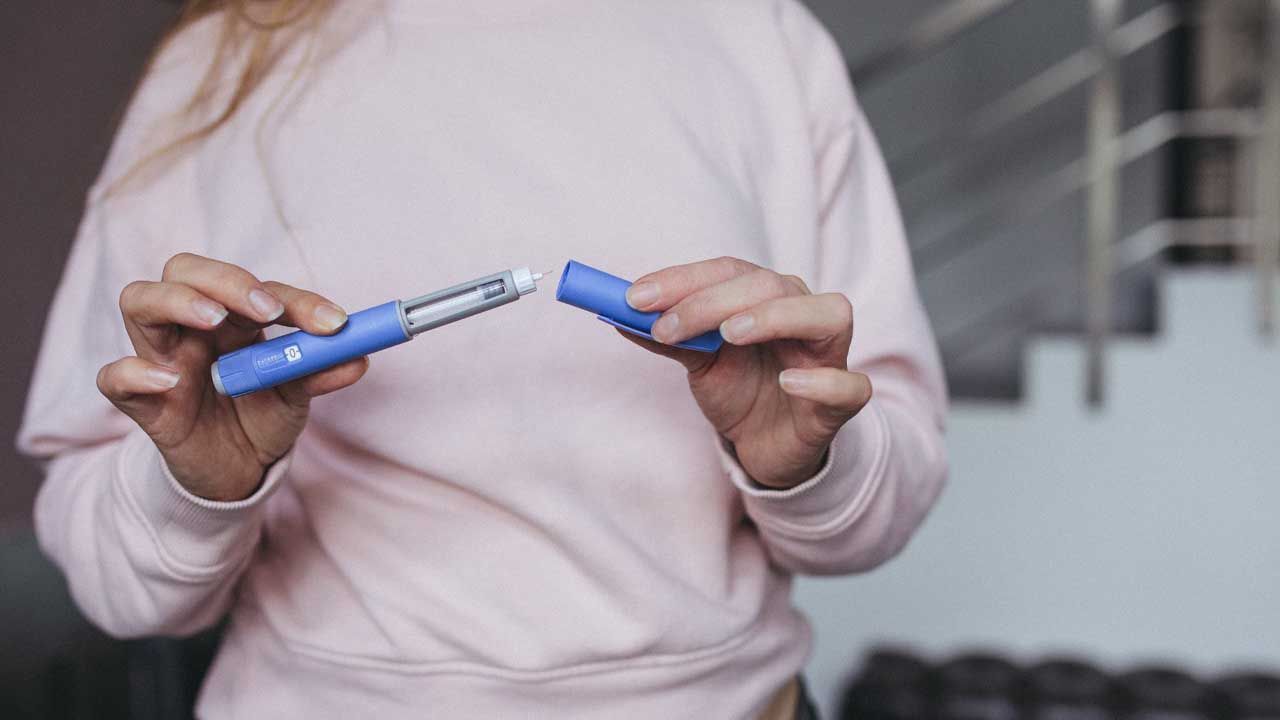

These medications can help turn down the volume on appetite, but they don’t erase the biology behind weight regulation. For many patients, that makes long-term planning just as important as the weight loss itself.
It’s a tale as old as time: Our modern lifestyles are not a good match for our biology.
Give a caveman a Twinkie, and the feeling he’d get wouldn’t be too far off from what you'd experience yourself — that immediate feeling of pleasure and satisfaction.
That’s also why the fundamental nature of weight loss — calories in, calories out — is technically true but fickle in nature. Your body’s ancient instincts kick in, quite literally seeing your calorie deficit as a threat to survival.
Weight-loss drugs have tried to counteract this biological battle for decades. Of the FDA-approved medications, most try to trick your brain into thinking you’re fuller than you are, while others help reduce the amount of fat you absorb from food.
It’s no secret that GLP-1 medications like semaglutide (Wegovy) and tirzepatide (Zepbound) have reshaped our understanding of weight management, but a common question remains across almost all the weight-loss drugs available today: Once I start taking them, do I really have to stay on them forever?
“The effect of these medications is only as long as you are taking them,” says Dr. Jason Balette, an obesity medicine-certified bariatric surgeon at Houston Methodist. “The moment that you stop, the effect starts to wear off.”
Weight-loss drugs can be effective, but they don’t change the biology driving weight regulation. Dr. Balette explains how these medications work, what could happen if you stop treatment and what long-term treatment could actually look like.
How weight-loss medications evolved from short-term tools to ongoing treatment
The short-term era
Before GLP-1s became the weight-loss drug du jour, there was fen-phen — a diet-drug craze whose name alone is enough to spark instant recognition, unease and a fair amount of “Wait, I can’t believe that was a thing.”
The off-label combination paired phentermine with fenfluramine, both stimulants, and became widely used in the '90s. In 1997, the FDA requested the withdrawal of fenfluramine and dexfenfluramine after reports linked them to potentially serious heart valve problems. However, phentermine’s story didn’t end there.
Today, phentermine is still used on its own as a short-term appetite suppressant, and it's also one-half of Qsymia, a combination weight-loss drug also containing topiramate.
(Related: Do Weight Loss Pills Work? & 5 More Questions, Answered)
Long-term options, with strings attached
Unlike phentermine alone, Qsymia is approved for chronic weight management, but it comes with strict safety rules.
For example, patients who can become pregnant need a negative pregnancy test before starting treatment, then monthly pregnancy tests during treatment. Additionally, if you haven’t lost at least 3% of your starting weight after 12 weeks on the recommended dose, you can either increase the amount or stop the medication. Then, if you haven’t lost at least 5% on the highest dose, you actually have to stop taking it.
Then there’s Contrave, another FDA-approved weight-loss medication that combines bupropion and naltrexone to affect appetite and the reward system tied to food simultaneously. But Contrave also has its limits. It’s not recommended for people with uncontrolled high blood pressure, and its overall weight-loss tends to be less than that seen with newer GLP-1 medications. For some patients, it’s a good option. For others, however, it may not be enough.
Orlistat is yet another drug that can be sold as both a prescription and over the counter. Instead of acting on the brain, it works in the gut by blocking the absorption of dietary fat. That can help with weight loss, but as you might imagine, blocking fat absorption in the gut can also cause bathroom-related side effects that make it hard for some people to stay on it.
(Related: Why Healthy Fats Are Important & Where to Get Them)
Thus, even before GLP-1s entered the conversation, weight-loss medications had already begun to move beyond the idea of a quick fix. Some are short-term because of safety concerns. Others are technically long-term but come with monitoring requirements, side effects, stopping rules or limits on how much weight patients could expect to lose.
How GLP-1s became the center of the weight-loss drug conversation
The short version? People were losing more weight.
The longer version: GLP-1s began offering more weight loss on average, a clearer biological target and a way to quiet hunger that, for many patients, felt dramatically different from the drugs of the past.
Originally developed to treat Type 2 diabetes, GLP-1 receptor agonists gained attention when clinicians noticed that patients taking them were also losing a meaningful amount of weight. That eventually led to higher-dose versions made specifically for obesity treatment, including liraglutide (Saxenda), semaglutide and tirzepatide.
And their rise has been hard to ignore. Roughly 1 in 8 U.S. adults now say they are currently taking a GLP-1 medication, and these drugs have grown fast enough to reshape how everyone talks about weight management — not just in doctors’ offices but among our friends, family and even coworkers.
Just think about how much is out there about GLP-1s compared to the other weight-loss drugs that have been out there for decades.
Why GLP-1s work so well for weight loss
“GLP-1 medications don't directly affect your weight loss,” says Dr. Balette. “They actually work by affecting your hunger and appetite.”
Your body already makes GLP-1. It's simply a gut hormone released after eating that helps regulate blood sugar, digestion and appetite. The catch is that natural GLP-1 disappears quickly, breaking down within minutes.
GLP-1 medications mimic that same hormone, but they are designed to last much longer. That gives the body a steadier, stronger version of a signal it already understands to slow digestion, feel full sooner and quiet the urge to keep eating.
These medications don't burn fat or "reset" your metabolism. Rather, they make it easier to eat less by changing the hunger and appetite signals running in the background while the medication is active.
(Related: How to Feel Full Longer: Which Foods Help Fill You Up?)
Furthermore, the amount of weight you could expect to lose varies by medication. Liraglutide was associated with an average loss of 8.4 kilograms over 56 weeks in a major clinical trial. Semaglutide led to an average bodyweight reduction of 14.9% over 68 weeks. Tirzepatide has shown the largest results so far, with average reductions ranging from 15% to nearly 21% over 72 weeks, depending on dose.
That progression reflects years of drug development aimed at making these medications last longer, work more effectively and, in the case of tirzepatide, act on more than one hormone pathway. Tirzepatide combines GLP-1 activity with GIP activity, another hormone involved in metabolic regulation, which may help explain why its weight-loss results have outpaced earlier medications in clinical trials.
That’s why GLP-1s have become such a major part of weight-loss treatment. They work with the body’s appetite biology in a way that older medications often did not. But they still work only while that biology is being managed.
And that brings us back to the central question: What happens when you stop?
What happens when you stop taking weight-loss medication?
Clinically, this is where things can get complicated.
“What we don’t have at this point is an effective, tried-and-true off ramp. People get on these medications, and there’s no plan where you reach a goal and come off. It doesn’t exist.”
Dr. Jason Balette, obesity medicine-certified bariatric surgeon
Major medical groups are also struggling with when to call it quits with GLP-1s. The World Health Organization now describes obesity as a chronic, relapsing disease and recommends GLP-1 therapies as part of long-term obesity treatment, alongside diet, physical activity and support from health professionals. The American Diabetes Association’s obesity guidance also frames anti-obesity medications as part of comprehensive care to help patients lose weight and maintain that loss over time.
That doesn’t mean you can’t stop — people quit taking them all the time for lots of reasons. However, stopping is rarely as simple as reaching your goal weight, canceling the prescription and managing your newfound weight loss with diet and exercise. These medications help quiet hunger while you’re taking them. Once you stop, that hunger can come back.
Is ‘microdosing’ GLP-1s a possible off-ramp?
Some patients are looking for something between staying on a full dose forever and stopping cold turkey.
Online, that conversation often gets wrapped up in the term “microdosing,” though what people mean by it can vary. Some use it to describe taking a smaller dose. Others mean spacing doses farther apart. Either way, the idea is usually: Can you keep just enough medication in your system to maintain the benefit without taking the full dose indefinitely?
Dr. Balette sees microdosing less as a trend and more as a way for patients and clinicians to avoid big swings when full-dose treatment is hard to tolerate or sustain.
“The whole microdosing concept, I don’t think it’s a bad thing,” he says. “What you do is keep your blood levels from huge peaks and drops.”
Microdosing may sound like an off-ramp, but the evidence has not yet caught up with the idea. It may be a strategy some clinicians and patients are experimenting with, but there is not yet a standardized, evidence-backed protocol showing that lower or less frequent dosing reliably preserves weight loss after treatment. Some early reports suggest that reducing dose frequency may help certain patients maintain weight loss, but experts also caution that “microdosing” itself is loosely defined and not supported by robust long-term data.
Ultimately, patients may be looking for a softer landing than stopping altogether. However, there still isn’t a proven playbook for what that should look like.
Why weight regain is so common
Data show that most people who start GLP-1s for weight loss eventually quit taking them.
[Related Content]
In a large real-world study of more than 125,000 adults published in JAMA Network Open, nearly two-thirds of patients using GLP-1s specifically for weight loss discontinued treatment within the first year. That rate was much higher than among patients using the medications for Type 2 diabetes, which makes sense: Diabetes is widely understood as a chronic condition, while many people still approach weight loss medication as something temporary.
Cost, insurance coverage, access issues and side effects all play a role. But regardless of why someone stops, the next part is often predictable: The weight tends to come back.
A 2026 analysis in eClinicalMedicine, part of The Lancet family of journals, found that patients regained about 60% of the weight they lost within the first year after stopping GLP-1 therapy. A separate 2026 systematic review in the medical journal, The BMJ, found that weight returned at an average rate of about 0.4 kilograms — roughly one pound — per month after stopping weight-management medication, putting many patients on track to return to their starting weight within about 1.5 to 2 years without ongoing treatment.
The scale is only part of the rebound. In a clinical trial of tirzepatide, patients who discontinued the medication and saw improvements in blood pressure and other markers began to reverse. In other words, that means someone who was able to reduce or even stop medication for conditions like high blood pressure or diabetes during treatment may see those conditions return if the underlying weight and metabolic drivers are no longer controlled.
Why body composition matters
Then there’s the body composition piece, which is where things get even more frustrating.
GLP-1–associated weight loss includes a mix of fat and lean mass. In major studies, roughly 25% to 40% of total weight lost has been classified as lean tissue, including muscle. When weight returns, the body does not necessarily rebuild that exact balance in reverse. Fat tends to come back more easily than muscle, especially without resistance training, adequate protein and a plan to preserve lean mass.
Doctors sometimes refer to that imbalance as sarcopenic obesity — a higher proportion of body fat paired with reduced muscle mass. This matters far beyond appearance. Muscle is metabolically active tissue, so losing it can cause the body to burn fewer calories at rest, which can make future weight loss harder and weight regain easier.
Why stopping and starting can be risky
For many patients, stopping is not really a choice. It happens because the medication becomes too expensive, insurance coverage changes, supply gets inconsistent or the side effects become too much to manage.
That creates a pattern Dr. Balette sees often: Patients go on, come off, try again, switch prescriptions or restart when weight begins to return.
“Starting and stopping is something that I certainly see in my clinic,” Dr. Balette says. “It’s tough to be consistent, and it’s tough to get a consistent medication repeatedly based on access and availability.”
That start-stop pattern matters because blood sugar, blood pressure and other metabolic markers can swing up and down, too.
“Those huge metabolic fluctuations aren’t good,” he adds. “What it does for your blood glucose, what it does for your hemoglobin A1C, what it does for your blood pressure. You could potentially have what we call end-organ damage.”
That’s the major part that Dr. Balette says can easily get lost in the broader cultural conversation about these drugs. A lot of the public discourse frames GLP-1s as new, fast-moving or even a kind of real-time experiment. And yes, there are still important questions researchers are actively studying, especially around how best to use these medications long term.
But GLP-1s themselves did not appear out of the blue. They've been built on decades of metabolic research, and a growing body of clinical data supports their effectiveness. The bigger question now is how they should be used over time, especially when real life makes sustained treatment difficult.
What does long-term treatment actually look like?
This is where the answer gets less tidy, because long-term treatment looks different for everyone.
Dr. Balette pushes back on the old ladder model: diet and exercise first, then medication, then surgery only if everything else fails.
[Engagement Card]
“I don’t think that it’s diet and exercise as modality number one, then weight-loss medications, and if all that fails, then you go to surgery,” Dr. Balette says. “I don’t think that’s the case at all.”
Instead, he says treatment should be tailored to the patient from the beginning.
“It’s diet, exercise, and then tailor your plan towards the patient, the patient’s ideas and goals,” Dr. Balette says. “That could be weight loss surgery, or that could be weight loss medications.”
And when Dr. Balette says "weight-loss medications," he does not mean only GLP-1s. Qsymia, Contrave and orlistat are still options for some patients, even if they are not driving the cultural conversation the way GLP-1s are. From there, the question becomes what the medication is actually doing for that patient.
“You have to consider, do I add more to my weight loss? Do I add different medications? Do I add surgery?” he adds.
That does not mean every patient eventually needs surgery. It means the next step should be based on response, goals and overall health — not a rigid sequence.
“Weight gain is multifactorial, so we should, as healthcare providers, expect weight loss to be multifactorial,” Dr. Balette says.