
A registered dietitian explains why exhaustion can make healthy eating harder — and shares the pantry staples, no-cook meals and simple strategies to nourish yourself easier.
Whether we’re tired, have a hard day or we’re going through a tough period in our lives, one thing remains true: We have to eat. And, when we’re feeling particularly taxed, it’s easy to find yourself scrolling through a food delivery app or considering hitting the drive-thru instead of stepping into the kitchen.
It's a familiar cycle that often appears during busy weeks juggling responsibilities and stressful stretches that accompany life transitions. But eating well on low-energy days and nights doesn't require much effort. Most of the time, it takes about 10 minutes and a handful of staples you may already have on hand.
We spoke with Kristen Wright, a registered dietitian with Houston Methodist, about how we can make nutritious meals for ourselves when you’d rather do literally anything else than make yourself a meal.
Why cooking feels so much harder when you’re exhausted or stressed
Fatigue, whether physical, mental or both, can take a toll on decision-making. When your body is using energy to recover from the day, deciding what to eat can feel like the task that would break the camel’s back.
“Food can be very stressful in general for a lot of people, even on good days,” says Wright. “If you add on top of that being more mentally or physically drained, it can feel like an even heavier task.”
Without a few default options to fall back on, dinner becomes another problem to solve at the exact point in the day when your brain is least equipped to handle it.
“Figuring out what to eat on a daily basis can be an additional stress, especially if you don't have a plan or you don't have go-to staples that always work for you in those moments,” Wright says. “You use more energy in thinking about the task, so it can feel even worse.”
How what you eat earlier in the day affects your evening energy
The exhaustion you feel at 6 p.m. may have roots in how you approach your meals and hydration earlier in the day.
Skipping meals, eating too few calories or eating meals high in simple carbohydrates and added sugars can set off a cycle of blood sugar spikes and dips that can leave you running on fumes by dinnertime. When blood sugar levels spike after a sugary snack or a meal high in fast-to-digest simple carbs, they eventually drop back down. That drop is what you’re feeling when your energy bottoms out mid-afternoon.
“If you’re consistently eating more nutrient-dense foods throughout the day — foods with fiber, higher protein content, complex carbohydrates that are going to last a little bit longer in your body — that often will really help” Wright says. “But when people are skipping meals, cutting carbohydrates or eating too low calorically throughout the whole day, you're going to feel extra tired in the afternoons."
Plus, caffeine, often used as a crutch to overcome the afternoon malaise, can make the problem worse. Caffeine masks the body’s hunger cues, and so your favorite coffee or energy drink can trick you into thinking you’re full when your body is craving fuel. By evening, the deficit catches up.
“When we’re masking our bodies’ needs by using something like an energy drink, which can make it so much harder by the time we get to the afternoon, because then we experience this crash,” Wright says. “If we would have eaten consistently, we would have realized that our body actually needed energy from food in the first place.”
Why your body reaches for convenience food when tired
When you're physically or mentally running on empty, do you find yourself craving your favorite not-so-great-for-you meals? While it could be a pull toward simple comfort, there is another factor at play. Our bodies crave simple carbohydrates, such as sugary foods, when they need the fastest energy hit possible.
“Our bodies are very smart, and they realize that simple carbohydrates, those fun-based foods that we crave, are typically going to digest really quickly and provide your body that energy source super-fast versus something nutrient dense that might not provide that quick hit," Wright says. "And a lot of it can be a lack of wanting to figure out what to eat that's nutrient dense. So, if we’re getting to the point where we're having that super heavy craving for easy convenience foods, it can be hard for us to ignore and then we almost always give into that craving.”
That pull toward convenience food isn't a failure of willpower. It's your body doing what it's designed to do: seek energy as efficiently as possible.
A simple dinner is still a good dinner
There's a perception, fueled partly by social media, that dinner needs to be elaborate. Scroll through social media and you’ll see beautifully plated, multi-step meals that are alleged to be weeknight dinners.
“We see all of these influencers online, and our whole entire media is flooded with food a lot of times,” Wright says. “We expect ourselves to have these fancy social media-style dinners every single day and that's just not the reality. They're not living like that either. That's their job.”
That standard can make simple dinners feel inadequate when it can be the better-for-you choice. We have to eat something, and sometimes what we have on hand are common ingredients. When making a balanced, easy dinner, Wright says that we should aim to have a protein, a vegetable, a complex carbohydrate and a healthy fat on our plate.
Any kind of simple meal, such as breakfast for dinner, can turn into that nutritionally balanced plate with a few small additions.
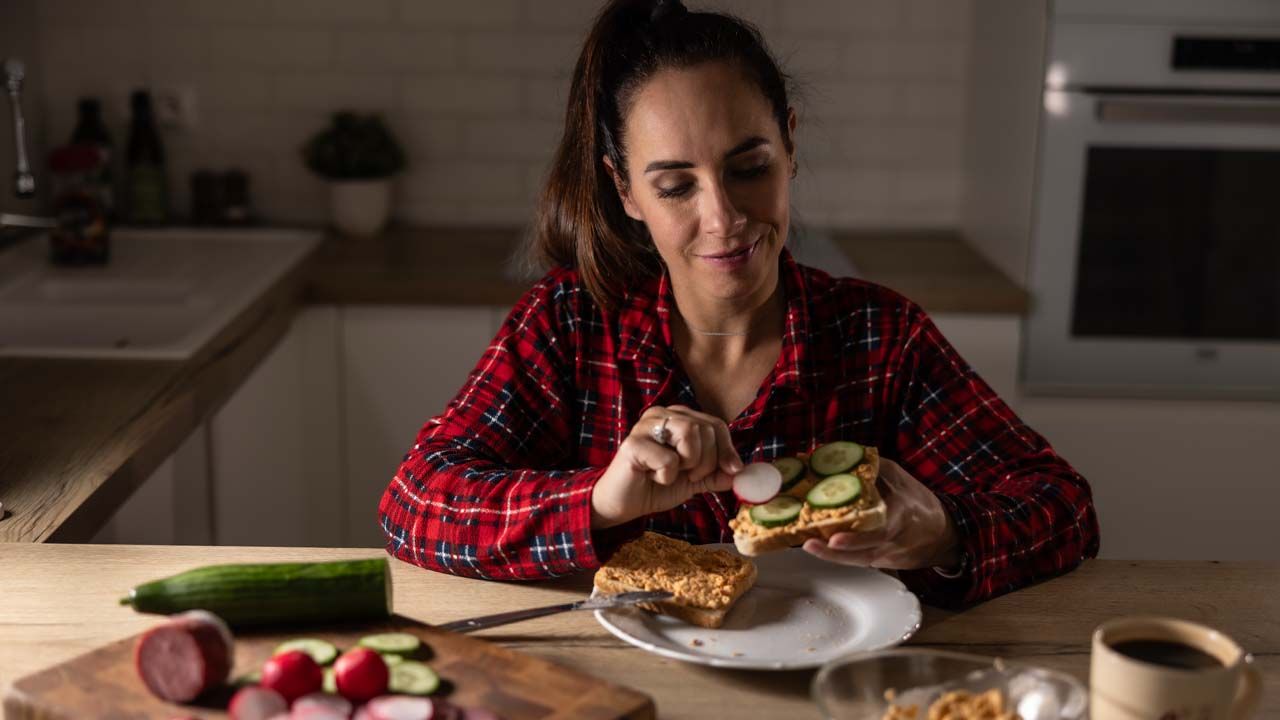
“If you're going to do a meal like eggs and toast, throw a little avocado and tomato on it,” Wright says. “You're hitting your veggies, you're getting some healthy fats, you're getting protein and you're getting carbs. If you make your toast with whole-grain bread, you're going to get a little bit of extra fiber from that too.”
Wright also says that tossing in extra veggies, such as spinach or mini sweet peppers, into the pan adds another layer of nutrition with almost no extra effort.
“It doesn't have to be a gourmet meal. It can be very simplistic but still be very nutrient dense at the end of the day,” Wright says. "It's better than going through a drive-thru and picking up whatever might be there because it's easy and convenient. If you can find something that takes five minutes at home, it's going to save you money and it's going to be a little bit better for you.”
Wright recommends planning ahead and stocking your pantry and freezer with ingredients you can easily throw together for easy low-energy meals.
Pantry and freezer staples that make low-energy dinners easier
The difference between eating well when you’re exhausted vs. falling prey to your takeout cravings usually comes down to the ingredients you have available. A stocked pantry and freezer can function like a backup plan for the weeks that go sideways.
Wright recommends keeping these categories covered at all times:
-
Protein: Frozen turkey patties, frozen pre-seasoned chicken breasts, canned tuna or chicken, canned beans and frozen meatballs are all options that require minimal prep. Beans, in particular, are a versatile pantry protein that can go into wraps, salads or burritos.
-
Vegetables: Frozen vegetable blends are one of the easiest staples to keep on hand. A bag of frozen Normandy blend or fajita-style peppers can go straight into an air fryer with a drizzle of olive oil and seasoning and be ready in about 10 minutes.
-
Complex carbohydrates: Microwaveable pouches or cups of brown rice, brown rice and quinoa blends, and whole grain pasta cook in minutes and round out a plate.
-
Healthy fats: Avocados, olive oil and nuts add nutrition and satisfaction without any cooking at all.
Wright cautions that when it comes to stacking your pantry with canned goods, sodium is the main thing to watch. She recommends looking for options with fewer than 300 milligrams of sodium per serving and choosing no-salt-added versions when available, especially for vegetables and beans.
On average, Americans consume 3,400 milligrams of sodium per day — far above the 2,300 milligrams recommended by the American Heart Association. Individuals with high blood pressure are recommended to limit their intake even further: no more than 1,500 milligrams, which is less than three-fourths a teaspoon of salt.
Grocery shortcuts that save time and energy
Even those of us who consider ourselves great cooks go through periods where the thought of prepping ingredients is what stands in the way of eating at home. Wright recommends quieting your inner Ina Garten — store-bought, pre-cut is just fine.
“Pre-cut vegetables, pre-peeled garlic, frozen fajita veggie mixes and rotisserie chicken are all fair game when energy is low. If you are in a busy season and even just the cutting of the veggies is too much, getting them pre-done is definitely an easy thing to do,” Wright says. “They cost a bit more, but the time savings can make the difference between cooking at home and ordering delivery.”
Rotisserie chicken, in particular, is a useful shortcut, but it's worth checking the sodium content. The same goes for ready-made meals from the grocery store’s deli or prepared food section.
“You have to be really cautious with sodium with premade meals,” Wright says. “Some of them can be up to 1,800, 1,900 milligrams for the whole item. And when we're trying to stick within that 2,300-milligram range, we're getting pretty close just with one meal."
[Engagement Card]
No-cook and nearly no-cook meals that still feel like dinner
On the lowest-energy nights, Wright recommends these meals that come together with little to no cooking:
-
Wraps or burritos: Fill a tortilla with canned beans, pre-cooked chicken or meatballs, lettuce, tomato, avocado and a sauce. A quick bean burrito with fajita veggies takes about two minutes.
-
Sandwiches: Keep bagel or sandwich thins or whole grain bread on hand with deli options, chicken salad or tuna salad. Add lettuce, tomato and avocado for a more complete meal.
-
Snack plates: Build a grazing-style dinner with whole grain crackers, turkey meatballs or cooked chicken, cheese, raw vegetables like carrots and radishes, hummus or guacamole and some nuts. It's balanced and requires zero cooking.
-
Breakfast for dinner: Scrambled eggs with avocado toast and a side of fruit or cherry tomatoes is a complete, nutrient-dense meal that comes together in under 10 minutes.
-
Loaded yogurt: Greek yogurt topped with nuts, seeds and fruit can work as a light dinner in a pinch — especially if you've eaten well throughout the day.
One-pan and one-pot dinners that do most of the work for you
On nights when you have a bit more energy in the proverbial tank, a single pan or pot can do most of the work for you. A few cooking methods and tools can turn a handful of ingredients into a full dinner with minimal prep and cleanup taking only 10 to 20 minutes, depending.
Searching recipe sites for balanced meals with the terms "sheet pan," "one pot," "Instant Pot," "wonder pot" or "slow cooker" is a quick way to find options designed exactly for this. Recipes with strong reviews tend to be the safest best when you don't have energy or you simply don’t know what sounds good.
Sheet pan and air fryer dinners
A sheet pan dinner is exactly what it sounds like: the entire meal cooks in one pan in the oven. The approach works for almost any combination of protein and vegetables. Cleanup can be as easy as lining your sheet pan with parchment paper or aluminum foil.
Meals like sheet pan shrimp fajitas with bell pepper and onion come together in about 20 minutes in the oven. Sheet pan salmon with potatoes and asparagus is another solid weeknight option. To avoid dry meat, an instant-read thermometer is worth the small investment. Cook poultry and casseroles to 165 F, ground meat to 160 F, and fish and pork to 145 F (pork needs a 3-minute rest).
A simple base easy sheet pan dinner recipe
-
Heat the oven to about 400 F.
-
Line a sheet pan with parchment paper or foil.
-
Add the longer-cooking proteins and vegetables first — potatoes, carrots, Brussels sprouts or bone-in chicken thighs.
-
Season with olive oil, salt, pepper and your preferred herbs and spices.
-
Add quicker-cooking proteins like white fish, salmon, shrimp, tempeh, tofu or chickpeas partway through.
-
Toss in thin-cut vegetables like green beans or asparagus near the end so they don't overcook.
-
Finish with a squeeze of lemon or lime juice and a sprinkle of herbs, cheese, nuts or seeds.
Air fryers can get a sheet pan dinner on the table faster
Like the idea of a sheet pan dinner but you’re short on time or simply don’t want to turn the oven on? (Hello, Houston summers.) Most sheet pan dinner recipes can be adjusted to the air fryer and cook in even less time.
"If you have a large enough air fryer, you could pretty much put all of the different components in there and let it cook together all at once," Wright says. “Anything that you're going to throw in an air fryer is usually going to take between about 10 to 12 minutes, even if we're talking about a piece of chicken or a protein.”
One-pot meals
When everything cooks together in one pot, dinner and cleanup both get simpler. Several types of meals can benefit from a one-pot format:
-
Stir-fries: Sauté frozen vegetables in a hot skillet with a little oil, then add microwaveable rice and pre-cooked rotisserie chicken. Season with soy sauce and sesame oil.
-
One-pot pasta: The starch from the pasta cooks into the sauce as it simmers, giving the dish a creamy texture without any added cream.
-
Soups and stews: Frozen diced onion or onion-carrot-celery mixes, canned tomatoes and canned beans cut prep down to almost nothing.
Slow cooker meals
A slow cooker turns 10 minutes of morning prep into a full, warm dinner waiting at the end of the day. Using a slow cooker is a particularly good tool for making less-tender cuts of meat, soups, stews, bean dishes and so much more.
“Slow cookers are great because you can prep a dish for maybe 10 minutes and let them cook all day, and then you have a delicious meal in the evening,” Wright says. “So exploring and looking for fun, balanced slow cooker recipes can potentially help get dinner on the table with minimal prep.”
Freezer-friendly slow cooker meals are another option worth considering. Many slow cooker recipes can be pre-prepped and frozen, meaning you assemble the pre-portioned ingredients and place them in a bag and freeze. Then, when you’re ready, simply put the bag’s contents in your slow cooker and turn it on.
“All of these cooking types and meal styles use and maybe utilize some of those unique convenience tools can be really helpful,” Wright says.
When a smoothie beats a protein shake
When exhaustion wins and even assembling a plate feels like too much, reaching for a protein shake or bar might seem like the simplest option. But most protein shakes focus almost entirely on protein and skip other important nutrients, including carbohydrates and fiber.
"Typically, with your protein bars or protein shakes, you are not getting a full balance," Wright says. "Many of these are simply isolated protein additions paired with other processed ingredients. Not only do they lack balance, but they also fall short in providing the overall nutrient density that comes from more natural, whole-food protein sources. "
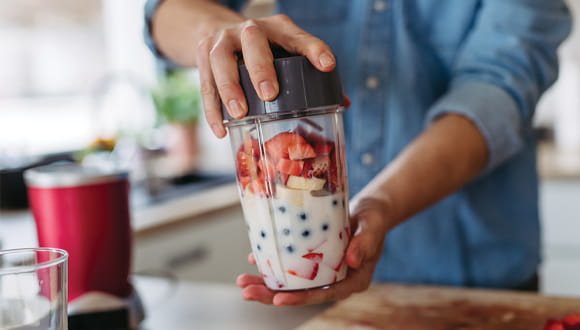
A homemade smoothie takes only a few minutes longer and can cover more nutritional ground. Wright suggests blending fruit, a handful of spinach, oats for fiber and a protein source like Greek yogurt, milk or tofu. Adding avocado thickens the texture and contributes healthy fats.
"If you could take that extra two or three minutes, just throw some things in a blender, it's going to make all the difference and give you that sort of well balance that you want," Wright says.
[Related Content]
A realistic approach to meal prep to get ahead for low-energy days
The idea of spending an entire weekend afternoon prepping meals for the week can feel almost as overwhelming as the problem it’s supposed to solve. Wright recommends identifying a few go-to staples for each meal and keeping the ingredients for those meals stocked.
“It really comes down to finding what meals are going to be your staple go-to options,” Wright says. “Think about meals that you enjoy and really work for breakfast, lunches and dinners, and give yourself options. Having ingredients on hand for some of your easier meals and knowing the timeframe to make them helps you go, ‘OK, this is what I can kind of pick from. This is how long it takes.’ So, you have a loose meal prep, but you also have variety and less of a time commitment.”
On nights when you do have a bit more energy, Wright suggests using the time strategically. While your air fryer runs for 10 minutes, cut up vegetables for the rest of the week — peppers, green onions, carrots — and store them in containers so they're ready when you need them.
“We never want to waste energy, especially if we're in the kitchen already, we might as well utilize that time,” Wright says. “I put on a show or podcast, and I'll just sit there and zone out and prep stuff.”
Cooking a slightly larger batch of a one-pan pasta or chicken salad also creates built-in leftovers that work as easy dinners or lunches for the next few days. You could also plan to prep some simple stapes that you can use across multiple dishes. For example, one batch of cooked chicken can become a salad topping, a wrap filling, a taco or a dip.
“Versatility is really important whenever you're picking ingredients," Wright says.
Should you ever just skip dinner?
It might be tempting to simply skip dinner on nights where you get home late, and you just want to go to bed. However, skipping meals works against your body’s needs.
“We should be eating every three to four hours," Wright says. "And when we hit that late-night time, we should at least be giving our body between one to two hours to digest before we go to sleep."
If it's late and you're not very hungry — maybe you had a solid snack a few hours earlier — something small is still better than nothing. A yogurt, a handful of nuts or a piece of toast with peanut butter can bridge the gap without requiring much effort.
“If you're physically feeling hungry, then you should never cut out a meal,” Wright says.
Wright also advises that digestion may be slower than usual for those taking GLP-1 medications, so allowing a little extra time between dinner and sleep can help give the GI system the break it needs.
Give yourself some grace during these busy or stressful seasons
If you give in to food delivery or the drive-thru on a stressful day every once and awhile, Wright reminds us that it’s just food. However, we need to stay in touch with our bodies and how often we’re reaching for comfort foods, as it can be easy to enter a cycle with stress or emotional eating.
“Foods can serve as a source of comfort, and they can give us a serotonin boost, which me might be what we’re looking for after a hard day,” Wright says. “But stress eating often makes us feel worse because it doesn’t fix the underlying problem and then we might feel guilty because we’re eating in a way that doesn’t respect our bodies or our overall health goals.”
Wright is quick to remind us that it’s not food or lack of self-control that is the issue; it’s emotions.
“If you find yourself struggling in a cycle where you’re stressed and don’t have energy to cook, or you’re leaning on comfort foods often, you may want to talk with a mental health clinician or a dietitian,” Wright says. “Food itself isn’t the issue, again, it’s about finding ways to deal with our stress and emotions in healthy ways.”