

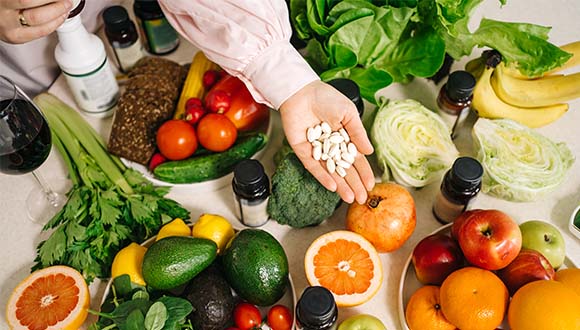
Fibermaxxing: Should You Try the High-Fiber Diet Trend?
Jan. 21, 2026 - Katie McCallumIf you’ve been on TikTok or Instagram lately, chances are you’ve seen people talking about fibermaxxing — loading up on fiber-rich foods for better health. Is this just another wellness fad, or does this trend truly live up to the hype?
"The recommended daily intake of fiber is between 25 and 30 grams of fiber per day," says Dr. Sophie Lin, a primary care physician at Houston Methodist.
Here’s the kicker — most people only get 10 to 15 grams. That gap is what’s fueling the fibermaxxing trend.
What exactly is fibermaxxing and does it really make a difference?
“Fibermaxxing is a practice that focuses on increasing your fiber intake in order to promote digestive health and your overall well-being,” says Dr. Lin. "Done correctly, it can definitely add benefit to your lifestyle."
That's because a high-fiber diet can help:
Support digestion
Promote regular bowel movements
Regulate blood pressure
Balance cholesterol levels
Prevent blood sugar spikes
In other words, yes, the science of fibermaxxing checks out.
Can you have too much fiber?
Technically, there’s no official upper limit, but Dr. Lin warns that going overboard can come with some uncomfortable side effects.
“If you're going as high as 50 grams of fiber per day, don't be surprised if you start to feel GI symptoms, like gas and bloating,” she explains. "Additionally, if you ramp up your intake too quickly, you run the risk of experiencing diarrhea and even reduced nutrient absorption since fiber speeds up digestion."
How to increase fiber safely
If you currently eat a low-fiber diet, increasing your intake is certainly a worthy goal. Just keep in mind that slow and steady wins the race, and don't forget to stay hydrated.
“I recommend increasing fiber by about three to five grams every couple of days,” says Dr. Lin. “And since fiber absorbs water — which is how it helps keeps your stool soft — you definitely need to increase your water intake as well.”
A good rule of thumb is to drink one fluid ounce per kilogram of body weight every day, assuming you’re healthy and don’t have fluid restrictions. (Related: How Much Water Should You Drink In a Day?)
Whole foods vs. supplements
Supplements might seem like an easy shortcut, but Dr. Lin advises caution. And packaging labels that say "High Fiber" don’t have to be the answer either. (QUIZ: Are These Health Claims On Food Labels Actually Healthy?)
“Supplements are not regulated by the FDA, so there may be varying degrees of safety and effectiveness," she says. "The more fiber you can get through real food — which also provide vitamins and minerals — the better.”
Keep in mind that some of the best sources of fiber are whole foods that don't always come with a nutrition label, such as:
Veggies, like squashes, collard greens, kale, broccoli, carrots, spinach, Brussels sprouts, okra, asparagus, mushrooms
Fruits, particularly avocado, raspberries, blackberries, persimmon, pears, oranges, apricots and apples
Nuts, especially almonds and pistachios, chia seeds, flax seeds, pumpkin seeds
Beans and lentils, such as black beans, white beans, split peas, lentils, pinto beans, mung beans, chickpeas, black-eyed peas and edamame
Whole grains, including bulgur, kamut, barley, quinoa, whole wheat pasta, oatmeal, whole wheat bread
(Related: High-Fiber Foods: How to Get More Fiber In Your Diet)
Who should skip fibermaxxing?
Avoid fibermaxxing if you have or have had:
A recent abdominal surgery
Gastroparesis
A recent inflammatory bowel disease flare-up
An upcoming colonoscopy
In other words, this trend isn’t for everyone. If you're not sure whether fibermaxxing is safe for you, consult your primary care doctor.


