
Blood in your stool isn't always an emergency, but its color, amount and accompanying symptoms can signal when you need care.
Seeing blood in your stool is certainly alarming. The good news, though, is that this is often a minor, treatable problem.
“Blood in the stool is a common problem,” says Dr. Adolat Mirzaeva, a primary care physician at Houston Methodist. “But it’s still important to understand exactly what you’re seeing and notice whether other symptoms are present. This helps us determine when rectal bleeding is more concerning and requires further evaluation.”
“We tend to overlook these things or hope they’ll go away. But your body gives you signals for a reason. It’s important to pay attention and not ignore them.”
Dr. Adolat Mirzaeva
Primary care physician at Houston Methodist
What does rectal bleeding look like?
Not all blood in the stool looks the same, and differences in color and consistency are key to accurately diagnosing the potential cause.
“People often expect it to look one specific way, but there are actually several different presentations,” Dr. Mirzaeva says.
Blood in your stool can look like:
- Bright red blood on your toilet paper when you wipe
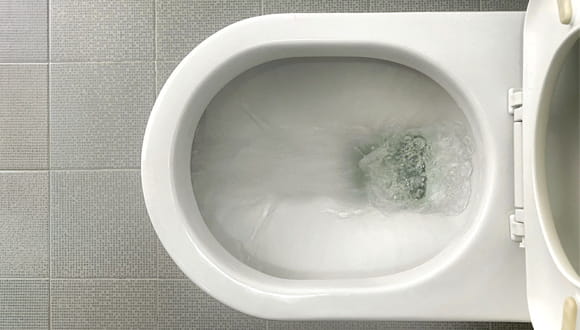
- Red-tinged water in the toilet bowl
- Blood coating the outside of your stool
- Blood mixed into the stool
The color of the blood can help indicate the source:
- Bright red blood often comes from the lower colon, rectum or anus
- Dark red or maroon blood suggests bleeding higher up in the digestive tract
- Black stool may indicate bleeding in your stomach
Your doctor can help you understand the differences in these visual presentations.
8 causes of blood in stool
Blood in stool can result from many medical conditions, ranging from mild to serious.
Most common (and often less serious) causes of blood in stool:
- Hemorrhoids – Hemorrhoids are swollen veins, also called piles, that form in the anus and rectum. If a hemorrhoid becomes irritated or damaged, it can rupture and bleed. This blood appears bright red and usually can be seen on toilet paper or in the toilet bowl water.
- Anal fissures – An anal fissure is a small, painful tear in the lining of the anus. Most will heal on their own, but some may require medication or further treatment.
“By far, the most common cause we see is hemorrhoids,” Dr. Mirzaeva says. “These can be external or internal, and they’re often related to things like constipation or straining. They’re uncomfortable, but they’re usually not dangerous.”
Other possible causes of bloody stool:
- Inflammatory bowel disease – IBD is an umbrella term for a group of conditions that cause swelling and inflammation in the lining of your small and large intestines. Types of IBD include Crohn’s disease and ulcerative colitis.
- Diverticulitis – This condition occurs when small pouches in the colon, known as diverticula, become infected or inflamed. Inflammation can rupture the blood vessels in the pouches, leading to rectal bleeding.
- Infections – Certain bacterial infections, like E.coli and C. diff, and sexually transmitted infections, such as gonorrhea, chlamydia and syphilis, can cause bloody diarrhea or bleeding in the anal or rectal lining.
- Colon polyps and colorectal cancer – Colon polyps are small growths in the lining of the colon. While polyps are common, they can turn into colorectal cancer, and cancerous polyps are more likely to bleed.
- Angiodysplasia, angioectasia or other vascular malformations can cause recurrent painless bleeding episodes as well, especially in patients who are older than 60.
- Ischemic colitis – While rare, this condition can cause bloody diarrhea followed by acute abdominal pain, particularly in patients with a history of heart disease
“While cancer is not the most common cause of blood in the stool, it’s something we always keep in mind,” Dr. Mirzaeva says. “Polyps or colorectal cancer can sometimes present with bleeding, which is why we don’t ignore this symptom — even if it turns out to be something benign.”
[Related Content]
When should you call a doctor about bloody stool?
Occasional, small amounts of blood in your stool may not be urgent — especially if you already know the cause, like if it’s due to hemorrhoids. But there are times when you shouldn’t wait.
Your doctor will ask important questions, like:
- How much blood are you seeing?
- How often is this happening?
- How long has the issue been going on?
- Does the bleeding occur after a bowel movement?
- Are there any changes in bowel habits?
- Have you traveled recently? Or eaten something new or unusual?
He or she will also assess your health history — such as other health conditions you may have or medications you’re taking — as well as to rule out serious issues that require urgent evaluation, such as profuse rectal bleeding with low blood pressure.
Call your doctor if you experience:
- Repeated or ongoing bleeding
- Heavy bleeding
- Black, tarry stool
- Rectal pain
- Abdominal pain
- Diarrhea with blood
- Unintentional weight loss
- Changes in bowel habits
- A family history of colorectal cancer
“When bleeding happens more than once or is accompanied by one or most of the other symptoms above, that’s when we start to worry more,” Dr. Mirzaeva says. “Things like rectal pain, abdominal discomfort, ongoing diarrhea or unexplained weight loss are all red flags that should be evaluated.”
She also emphasizes the importance of personal and family history in deciding whether to talk with a doctor about blood in your stool.
“If you have a family history of colon cancer or other gastrointestinal conditions, don’t ignore these symptoms,” stresses Dr. Mirzaeva. “Get checked sooner rather than later.”
Your doctor may recommend further testing, such as blood or stool sample testing. You may also get a referral to see a gastroenterologist for an endoscopy, colonoscopy or other type of imaging exam.
[Engagement Card]
How to help prevent blood in your stool
While not all causes of blood in the stool are preventable, healthy habits can lower your risk of more common issues, such as hemorrhoids and fissures.
Dr. Mirzaeva recommends:
- Eating a high-fiber diet
- Drinking plenty of fluids
- Avoiding straining during bowel movements
- Maintaining regular bowel habits
- Managing chronic conditions like IBD
“Diet and lifestyle play a huge role in preventing many of these issues,” Dr. Mirzaeva says. “A high-fiber diet, staying hydrated and making sure you’re having regular bowel movements can make all the difference.”
She adds that consistency matters: “A lot of people ignore changes in their bowel habits, but regularity is important. If you’re frequently constipated or straining, that increases your risk for problems like hemorrhoids and fissures.”
Listen to your body
It can be easy to ignore symptoms, especially when they’re uncomfortable to talk about. But paying attention matters.
If something doesn’t seem right, it’s always worth asking your doctor. It may be nothing serious, though if it is, catching it early can make all the difference.