
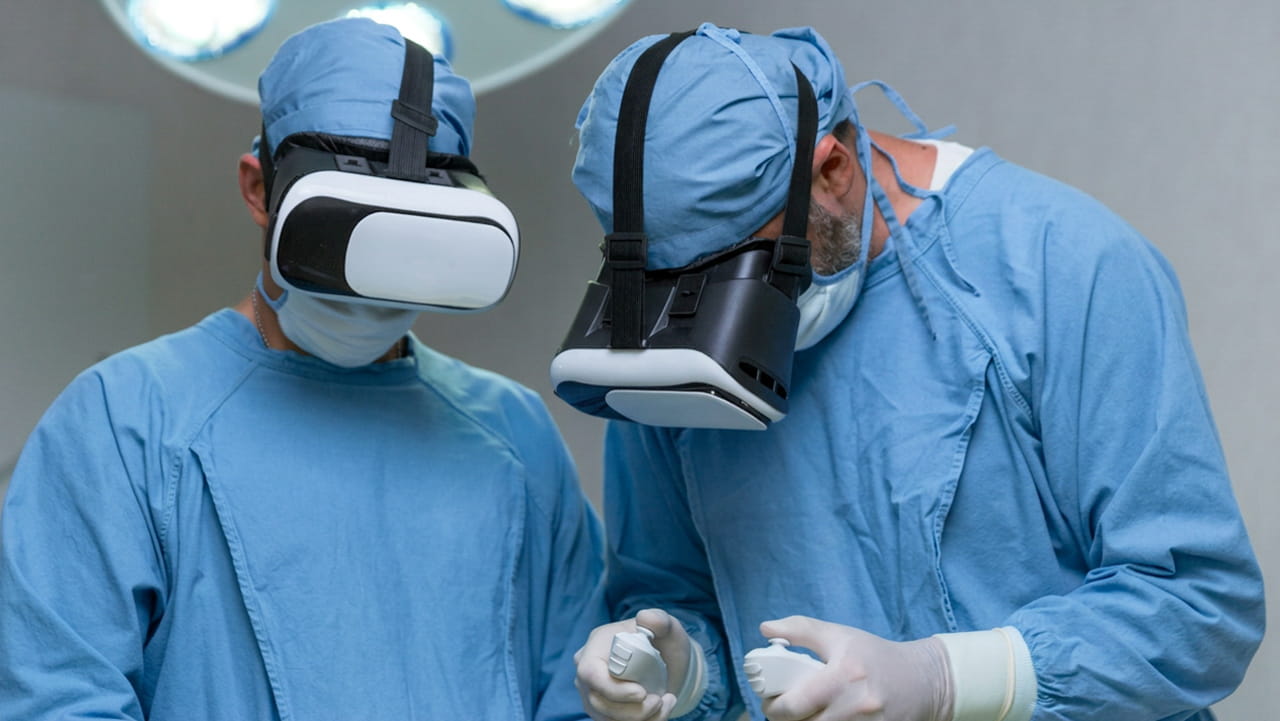

Spatial computing may help surgeons view laparoscopic images, imaging studies and clinical data within the operating field during minimally invasive procedures.
Key Highlights
- Virtual monitors replace fixed screens: A head‑mounted computer projects the laparoscopic image as a virtual monitor in front of the surgeon, allowing placement at any size and in any position within the visual field.
- Image quality is a primary focus of evaluation: The system delivers a high‑resolution 4K image, with the goal of providing clarity and brightness that meet or exceed conventional OR monitors.
- Ergonomics are central to the clinical rationale: Unlike traditional setups that require surgeons to rotate their head and shoulders away from the operative field, the virtual monitor remains aligned with the surgeon’s natural posture.
- Reduced physical strain during prolonged cases: By allowing surgeons to maintain a comfortable head and body position, the technology addresses the cumulative ergonomic burden associated with long laparoscopic procedures.
- Real‑time access to clinical data within the sterile field: Surgeons can call up the electronic medical record, imaging studies and other decision‑support information without leaving the operating field.
- Integration of imaging into surgical decision‑making: X‑rays, CT scans and MRIs used to guide operative decisions can be viewed virtually during the procedure, rather than on external screens.
- Enhanced information density without visual compromise: The approach supports the idea that surgeons benefit from both maximal image clarity and increased access to relevant clinical information.
- Lower cognitive and technical burden for surgeons: Clear, bright 3D imaging reduces the need for compensatory techniques developed to work around 2D limitations.
In the early 1990s, the transition to laparoscopic surgery marked a fundamental shift in how surgeons operated, viewed anatomy and interacted with technology in the operating room.
Now, decades later, another potential inflection point is emerging: the use of head‑mounted computers that project a virtual surgical monitor directly into the surgeon’s field of view.
In this video, Dr. Patrick R. Reardon, division chief of minimally invasive surgery at Houston Methodist, reflects on witnessing the first laparoscopic cholecystectomy and demonstrates what may represent the next evolution — operating with a virtual monitor positioned in space rather than fixed on a wall. The clinical focus of this demonstration is not novelty, but function: image quality, ergonomics and information access during live surgery.