

Rising grocery prices don't have to push healthy food out of your cart. These tips help you plan, shop and cook on a tight budget.
Somewhere between the produce aisle and the checkout line, a lot of grocery trips these days turn into math problems. According to a CNN poll conducted earlier this year, 61% of respondents said they have changed what groceries they purchase to stay within their budget.
When beef, fresh fruits and vegetables can feel like a splurge, it’s fair to wonder whether healthy eating is realistic when prices keep climbing.
You can eat well on a tighter budget, according to Kristen Wright, a registered dietitian with Houston Methodist. Planning around your pantry and your schedule, relying on frozen and canned foods, shopping strategically and buying only what you’ll eat can all stretch a grocery budget without sacrificing nutrition.
Food prices are high and continuing to rise
If your grocery bill seems higher, you’re not imagining it. According to the USDA Economic Research Service analysis of Consumer Price Index data, fresh foods, including fruits and vegetables, and proteins such as beef and fish, are among the categories leading grocery inflation. Even the prices of carbonated and noncarbonated beverages, including coffee and tea, are rising.
“It’s absolutely not just a perception. I wish it were,” says Wright. “Food in general is just becoming more expensive.”
While there have been positive shifts (egg, milk and cheese prices are down), the USDA’s Economic Research Service estimates food prices will rise by 2% in 2027, with a prediction interval between -2.7% and 7%.
Is it cheaper to eat at home than eat out?
Yes. Not only is cooking at home nutritious, but it also remains the more affordable option. The gap between eating at home vs. going out (or ordering in) is also expected to grow. Restaurant prices increased by 3.5% through September 2026, which was down from the 4.1% hike experienced in 2025. And next year, restaurant prices are projected to rise 2.6% according to the USDA.
We all have low-effort days when we can’t be bothered to cook. But the convenience of food delivery comes at much steeper prices: a 2025 LendingTree study shows that food delivery now costs nearly 80% more than pickup orders. That’s an average of $9.30 more when factoring in fees and tips.
A meal out still has its place now and then, but for everyday eating, cooking at home makes a food budget go further.
“How much you can save at the grocery store varies,” says Wright. “It’s really based on what your budget is, what your family size is, and how much food you’re actually eating.”
1. Know your pantry
Do you “accidentally” have three unopened bottles of ketchup in the pantry because you forgot you already had them? If this sounds like you, being aware of your pantry staples is often step one in shaping both a weekly food budget and meal plan. Knowing your staples makes it easier to plan and harder to overspend on ingredients you won’t use.
“I think it’s important whether you're by yourself or with a family, to understand what foods are going to be rotating staples in your pantry at all times,” Wright says. “Once you have those staples, you can start adding things like produce or proteins to make full meals.”
Wright says this also prevents the dilemma of “What am I going to make with all of these random ingredients?” which can lead to food waste. Staples are often shelf-stable foods, such as grains, pasta, canned proteins, veggies and fruits and more.
While shopping for deals can be alluring, your taste buds and those of your household still come into play when it comes to staples (and any other groceries, for that matter). If there’s a deep discount on a giant bag of quinoa but your kids hate quinoa, you may be better off spending your dollars elsewhere.
“Kids can be a bit pickier, which makes things a little bit more challenging, especially if you're looking for some of these nutrient-dense options on a budget,” says Wright. “I will always keep pasta in my pantry. That’s a staple for me, whereas other people feel that way about rice.”
2. Be realistic about your time and recipes
Time plays a big role, too. A cool, nutritious Instagram recipe only saves money if you have time to make it.
“You might want to make something, but your schedule is super busy that week. Well, is it really realistic then to make that?” says Wright. “Because if you can’t, all of that produce that you bought for that one single recipe has now gone bad, and all of that money.”
Before shopping, it helps to think about how much time you have to make dinner and whether you can prepare lunches and breakfasts ahead. Wright suggests setting aside one day a week for planning.
Cooking in batches can help on busy weeks. Wright started making breakfast ahead in college, when early classes left her no time to cook in the morning.
“Breakfast sandwiches, breakfast burritos are really easy to make in bulk all at once,” says Wright. “It takes about an hour; you wrap it up and put it in the freezer.”
Homemade versions usually cost less than premade breakfast sandwiches or anything you’d get from a drive-thru. They also tend to have less sodium because you decide what goes in them, and they reheat just as easily on the way to work.
Planning meals that share ingredients also keeps food from going unused. Using the same foods in different dishes helps you finish everything you buy, and the variety keeps you from getting tired of eating the same thing. Some subscription meal-planning services build a week of dinners around a grocery store’s sale ads and create a shopping list you can use for curbside pickup.
Having dependable backup pantry meals can also fill in when plans fall apart.
“Canned tuna is always my backup,” says Wright. “If I have nothing to eat or I have not planned what I’m eating for the week, I know I can always make some type of tuna-style salad and get a good amount of protein.”
Foods that keep for weeks or months take some of the pressure off meal planning when you’re busy or simply too tired to cook.
3. Stock up on budget-friendly proteins and whole grains
Value varies by food, but some staples reliably offer good nutrition for the price.
Beans and other budget-friendly proteins
“I would have to say the number one food is going to be beans,” says Wright. “Beans are so incredibly versatile. They are full of fiber. They have a lot of good, healthy proteins, and you can really add them into lots of different things.”
Beans can go into stews and tacos, on top of a salad or into a bean salad of their own. Dried beans cost the least, and canned beans are still a good option.
Other affordable proteins include:
Eggs, which have gone up in price but still usually cost less than chicken or turkey
Lentils
Cottage cheese and Greek yogurt
Edamame
Tofu, especially when it’s on sale
Canned tuna, sardines or chicken packed in water (check the sodium)
[Related Content]
Whole grains
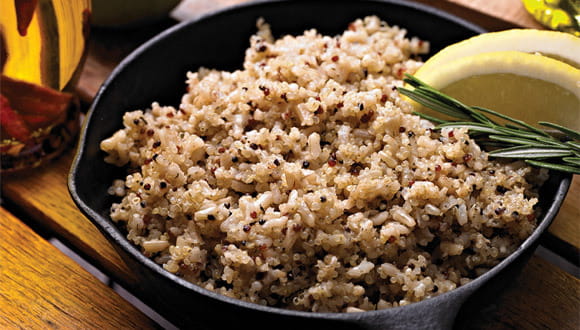
Whole grains are some of the easiest pantry staples to buy in bulk. Oats work for oatmeal or overnight oats. Brown rice, whole-grain pasta and quinoa make it easy to cook larger batches and freeze for future you to microwave and reheat.
4. Don’t overlook frozen and canned produce
Are frozen vegetables as healthy as fresh?
Wright says frozen vegetables are as nutritious as fresh ones and are often fresher than what’s in the produce aisle. Canned produce can also be part of a healthy diet if you pay attention to sodium and added sugar.
“Frozen and canned vegetables get a lot of bad raps,” says Wright. “But frozen veggies, I always love because they are actually fresher than the produce you find in the produce aisle. When they pick that produce, they immediately take it into processing to be flash-frozen, so it is frozen at its peak freshness.”
According to Wright, freezing doesn’t reduce the nutrient content of produce, so you get the same nutrition in a product that keeps much longer.
Some people avoid frozen vegetables because they worry about taste, freezer burn or a soggy texture. An air fryer can roast frozen vegetables quickly with good results. Frozen green beans are a freezer regular for Wright. One large bag gives her dinner sides for about two weeks.
What to look for in canned vegetables and fruit
“When it comes to canned goods, we have to be a little bit more careful, just because in the canning process, a lot of additives may be added,” says Wright. “We know salt specifically is a shelf stabilizer, and so a lot of those canned veggies will have some sodium in them.”
There are two ways to keep sodium down:
Choose no-salt-added versions. These are a good option for people watching their sodium intake.
Buy lower-sodium options and rinse them. Draining canned vegetables in a strainer and rinsing them removes some of the extra sodium.
For canned fruit, look for fruit packed in its own juice to limit added sugar. Fiber is another consideration. Canned fruit is often peeled, and some of its soluble fiber can dissolve into the packing liquid. Frozen fruit, or fresh fruit you freeze yourself, keeps more of that fiber.
“Fruit, regardless of its form, can provide valuable vitamins and minerals,” says Wright.
RELATED: 4 Tips to Make a Heart-Healthy Diet Taste Great
5. Be a savvy shopper
Consider where (and how much) you shop
What you’re shopping for and where you shop can factor into how pricey your food bill will be. Consumer Reports compared the total prices of packaged goods, produce and meat at dozens of national and regional grocery retailers to see which were more expensive. Knowing which groceries or retailers closest to you may be pricier can help you make an informed choice. Additionally, some retailers and grocery delivery apps participate in dynamic pricing, a practice where an item may go up or down in price as determined by algorithms using factors such as supply, demand or how much the retailer has in stock. Some retailers may use other AI-assisted pricing tools that can affect pricing.
And while doing one big shop per week is alluring simply for the time it can save, sometimes you may be better served by going to different grocers. Some of your favorite staples may cost much less at a dollar or budget grocery store. Others, especially the ones your household goes through quickly, may be worth buying in bulk at a wholesale club. Retailers often carry different products that others don’t, meaning more trips to achieve different deals on your favorites.
However, Wright suggests keeping it to only a few stores. Frequent small trips spread across several places can end up costing you more both financially and timewise.
“Sometimes it’s necessary to go to multiple places,” says Wright. “I would say limit it to only a few.”
Embrace coupons, money-saving apps and shopping strategies
Long gone are the days of having to keep an accordion folder of coupons. There are many coupon-clipping apps, and many retailers have their own apps which let you keep an eye on sales and “clip” their coupons.
"A lot of times you do have to shop and look around to see what's on sale. When it comes to produce, things that are in season are going to be a better option. You can buy it cheaper when it is in season,” Wright says. “So taking the time just to look up what fruits and veggies are in season during that time of the year and stock up on those. If you have freezer space to make it last, then that's always a good option too.”
When you’re perusing the aisles of your preferred grocery store, don’t be afraid to comparison shop. Stores often place the same products in different parts of the store, and the product may be cheaper in one area than another. Brands still pay retailers for primo placement in their stores, so just be aware that just because an item is highly visible and accessible does not mean that it is the best price for that item.
And for the extroverts and the brave among us, many grocery stores and big-box retailers still offer price matching or price adjustments if items go on sale after you buy them. This means if you find your favorite splurge peanut butter on sale at another retailer, you can take it back to the store you bought it from with your receipt and proof of the competitor’s price or the new sale price at that retailer and get the difference back. This is when keeping an eye on various sales comes into play.
6. Waste less food by buying only what you’ll eat or freeze
Sometimes our better angels are the ones who plan our meals and food budget for the week. Then life throws you for a loop: plans or schedules change, and that beautiful produce you bought with good intentions sadly spoils in the fridge.
“For a lot of people, they’ll buy all of this food, and it might be really nutrient-dense foods. But then maybe somebody at work decides, ‘Oh, let’s order in today,’ and then they don’t end up eating what they brought,” says Wright. “The same thing can happen at dinner. Let’s go out to eat because it’s a little bit easier. It’s faster. It’s more convenient on the way home. And then all of this food that’s been purchased tends to go to waste.”
No one wants to feel like they’re burning money. If you’re trying to stretch your dollars as far as they will go, Wright advises buying only what you know you’ll absolutely use.
“I think the first thing it boils down to is don’t buy more than what you can eat,” says Wright. “If you are trying to buy something in bulk, make sure that you have room in your freezer to freeze it or store it. If you don’t, then realistically think, am I going to be able to eat this?”
Most household food waste involves fresh fruits and vegetables, meat and dairy, the foods that spoil fastest. Wright doesn’t recommend freezing milk or yogurt. Depending on your family size and how often you eat them, smaller containers may be the better buy.
Meat, fruits and vegetables freeze easily, so they’re better choices for bulk buying. Wright says she often buys a large pack of fresh chicken tenders that comes already divided into four portions. The $21 pack covers four weeks of lunches. She freezes the portions and thaws one at the start of each week.
“It’s easy to pop in the freezer, thaw it out for the week, and then I have lunches for the whole week from one little pack,” says Wright. “And I have a solid protein that is lean, and that is nutrient-dense, which is important.”
She does the same with fruit. Buying a larger quantity and dividing it herself gives her enough for 10 to 12 smoothies. Pre-portioned smoothie bags often hold less fruit and can cost just as much or more. Large bags of frozen vegetables work the same way and can make for easy side dishes.
7. Build balanced meals from the lowest-cost options
Ultra-processed foods are often some of the cheapest options in the store. Unfortunately, whether it’s TV dinners, hot dogs, deli meat, chicken nuggets or fish sticks, research shows that when eaten frequently and in excess, these foods can harm our health.
If using these foods can help you stay within your budget, Wright suggests being mindful of three nutrients on the label: sodium, added sugars and saturated fat.
“Sodium is going to affect blood pressure. Saturated fat can affect your heart health,” Wright says. “And then the added sugars are going to be those simple sugars that spike your blood glucose, which could lead down the road to some insulin resistance.”
Wright says the percent daily value on the Nutrition Facts label is a fast way to compare products. It’s based on a 2,000-calorie diet, so your needs may be different, but it shows how much of a nutrient one serving contains. For saturated fat and added sugar, Wright looks for a percent daily value near 5%. A value close to 20% is high. For sodium, 300 milligrams is high, 140-300 is moderate, and under 140 milligrams is low.
RELATED: 5 Nutrition Label Red Flags to Watch Out For
Another strategy is thinking about what you can add to these foods to boost the nutritional value of the meal. Can you add a can of tuna and some frozen peas to a box of macaroni and cheese? Can you add a side salad to a frozen pizza for more fiber and better portioning? Can you use less ham to make bean soup? It can be hard to eat with an abundance mindset with a smaller budget, but Wright says that it’s possible.
A good place to start is by aiming for balance at each meal. Try to include naturally colored foods, such as fruits and vegetables, because they provide important vitamins, minerals and fiber that can help you feel satisfied and support overall health. In addition, Wright says to focus on including a lean protein source. Plant-based proteins such as beans can be an excellent and budget-friendly option. Complex carbohydrates are another important part of a balanced plate and can come easily from whole grains.
"There is no need to purchase specialty 'protein added' grains," Wright says. "Instead, look for 100% whole-grain options when possible, as they typically provide more fiber and are less processed than refined grains. Together, these foods can help create a nutritious, satisfying meal without stretching your budget."
Where to find help affording food
Unfortunately, food insecurity is a reality for many. Nearly 40% of households in Houston and Harris County experience food insecurity, according to 2025 data from the Rice University Kinder Institute for Urban Research. That’s 2 in 5 families, and higher than the national average.
“At the end of the day, food is food,” says Wright. “It’s important to make sure that we’re eating, and there are resources out there. It’s important for people to know it’s OK to ask for help.”
The Houston Food Bank offers a variety of meal programs and can help individuals find community assistance, including how to apply for and use benefit programs such as the Supplemental Nutrition Assistance Program (SNAP). Use the Houston Food Bank’s Find Food Map to view hours, locations and information for Houston Food Bank pantries, meal programs, the Emergency Food Assistance Program (TEFAP) products and distribution partners.
Wright says that food banks often have registered dietitians on staff and offer fresh produce and recipes to help people use the ingredients.
“They're not just handing out canned goods,” Wright says. “They do offer fresh produce. There are definitely ways to get nutrient-dense options and eat tasty food even on a limited budget.”