

Baseball players don't just stop when a long season ends. They rest with a plan, and the same approach works for anyone who runs, lifts or plays on weekends.
Cleveland Guardians closer Cade Smith reflected on both the weather and length of the Major League Baseball (MLB) season in an interview during this year’s American League Championship Series:
“Playing in the cold at the start of the year, it sucks. It’s an obligation. Playing in the cold at the end of the year is a privilege.”
By the time playoff baseball heats up in October, a player has been through spring training and a 162-game regular season. This includes months of travel, daily practice and games, usually with only a single day off per week, which often doubles as a travel day, not a true day off. And while having baseball nearly every day of spring and summer is great for fans, that kind of physical and mental workload leaves a mark on these athletes.
We spoke with Corbin Hedt, a physical therapist specializing in orthopedics and sports medicine at Houston Methodist, about how baseball players approach offseason recovery and how everyday athletes training for life can use those lessons to stay active for decades.
What a long baseball season does to the body
While it might not always be considered as such, baseball is truly an endurance sport. The MLB season is one of the longest in professional sports, and the six-month competitive season challenges and changes the body in measurable ways, according to Hedt.
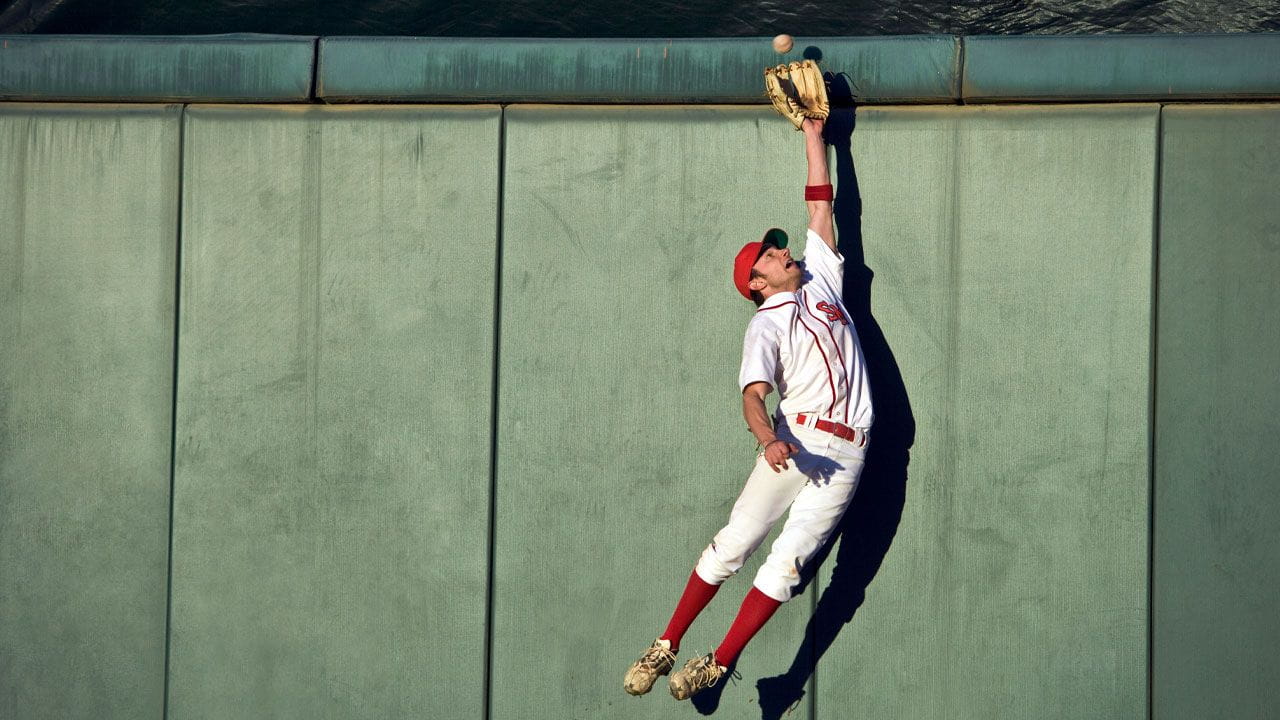
The physical demands of pitchers are clear. While throwing a baseball over 90+ mph is a full-body movement, the shoulders and elbows absorb most of the torque. Catchers absorb the momentum of roughly 140 to 150 pitches per game, all while in a position that places significant load on the hips and knees. Infielders make high-intensity, quick-decision plays from a multitude of positions, including jumping, diving and throwing. Outfielders sprint, sometimes making leaping grabs or making contact with the wall at full speed.
All this, almost daily, along with practice, bullpen work, travel, time zone changes and the potential for inconsistent sleep.
“There have been a number of studies out there on the actual biological, physical changes that can happen over the course of a long season like that. Ligaments thicken and motion changes,” Hedt says. “By October, almost nobody is healthy, really, in baseball. They're primarily just managing things and just trying to keep it all together. A lot of times they end up finishing weaker than where they started, as you would imagine.”
What baseball players do after the season ends
The offseason is often pictured as a straight shot to the golf course or the beach. Ideally, Hedt says the goal should be relative rest in the first few weeks after a player’s season ends.
"You want to unload what's beat up in you and keep the rest moving," says Hedt. "Let the shoulder take a break from throwing a projectile 100 miles an hour."
For a pitcher, that means shutting down the throwing but keeping up light conditioning and easy aerobic activity. It's also when players get treatment for any potential lingering issues and the tightness that built up over the season.
“Some guys are good at doing that,” Hedt says. “If they leave the team immediately when the season finishes and head home, they usually have a partner in a physical therapy clinic or trainers that can help them for those first few weeks before they head off on vacation or to the Bahamas or wherever they're going.”
Some of that care is guided by the team, according to Hedt, and he says veterans often handle it on their own because they know what works and who they trust.
By midwinter, with spring training on the horizon, the focus shifts to getting back in shape. Pitchers start throwing again, albeit not at full speed. Position players head to performance gyms to build strength, add muscle or drop weight, depending on what they need.
"This is that recalibration period where they hone in on what they know needs to be honed in on," says Hedt.
Why pushing through the offseason can backfire
It can be tempting for some players, especially younger ones newer to the big leagues, to skip the downtime and carry on training straight into the next season. Biology doesn't cooperate, Hedt says.
"You can't really build and recover max load at the same time," says Hedt. "Tendon, muscle, bone, they all remodel slowly. They have their own time frames for that, down to the cellular level, and you can't really speed some of that up in as many ways as we wish we could."
Younger players often feel they can handle anything. Hedt says experience tends to change that view.
"If you just push through and ignore some of the warning signs, that's usually what sets you up for injury," says Hedt. "That's why some of the veterans get it. They've been through that cycle before. They've pushed through something that they know maybe they shouldn't have, and they got hurt because of that."
Do everyday athletes need an offseason?
Yes, Hedt says, though for most people it doesn't mean stopping altogether.
"It's more of a means of changing the stimulus," says Hedt. "It's more so just changing the mode at which you do things or which you train."
In practice, that might look like:
-
Runners can follow a big race with easy cross-training, then rebuild their base.
-
Lifters can rotate their goals among building muscle size, building strength and increasing volume.
-
Rec league players can switch to different activities between seasons.
Planning your year in blocks with different goals gives your body the variety it needs.
“It's more about varying activity versus just completely shutting it down and then just restarting back over,” Hedt says.
How many rest days you need each week
Hedt says that most people do well with one or two true rest days a week, along with some genuinely easy days. However, there's no single “right” number. Your age, training history, workout intensity, stress, hormonal shifts and sleep all play a role in what you might need in a given week.
"The biggest mistake that we see is somebody's really gung-ho about working out or accomplishing a goal, so they make every single day medium to hard," says Hedt. "The hard days themselves should be hard. Easy days should be easy."
RELATED: How Your Workouts Should Change as You Age (Podcast)
What active recovery looks like
Active recovery is movement easy enough that you finish feeling better than when you started, Hedt says. On a sore morning after a tough game or heavy workout, moving may be the last thing you want to do.
"But I think we've all felt that where you get going, get things warmed up, grease the gears, so to speak, and then you feel better," Hedt says.
Good options for active recovery include:
Hedt says the best choice for active recovery is movement you'll actually want to do — it shouldn't feel like another workout to get through.
What is a deload week?
A deload is a planned stretch of lighter training, usually about a week. It can also last a few days or a couple of weeks. During that time, you cut training volume and intensity substantially. The key word is “planned.” A deload works best when it's scheduled ahead of time, before fatigue forces the issue.
Many athletes, including baseball players, use periodized training to continually improve and reach their performance goals. The various periods, or cycles, break up exercise routines and focus on different long-term or short-term goals. The deload is crucial to this periodization process.
“Pitchers who are rehabbing from injury are often given super long throwing programs because that's what they need to build back their arm,” Hedt says. “But it is very long and arduous. And so, we purposefully construct weeks in there where they're either not throwing entirely, or we change the volume and the intensity in such a way that it completely allows them to rest their arm, their body, their brain.”
Hedt says cutting the volume and intensity during deload allows individuals to either transition seamlessly to the next training phase or let the body heal and catch up, preventing them from getting stuck in a constant up-and-down cycle of recovery and training and instead moving on a more positive, forward trajectory.
For everyday athletes, Hedt uses the example of someone chasing a personal best on their squat. They've trained hard and they're most of the way there, but their progress is stalling.
"The deload is a means of saying, let's preserve the knees, the hips, the back. Let's take a week off from squatting and do some other stuff that will still keep you productive," says Hedt. "It'll allow you to hit the ground running again in a recuperated state, where you can still continue that climb to your goal."
How sleep affects recovery
We all have nights when we may not sleep the best, and whether we like it or not, it reflects in how we approach the following day. Hedt says that poor sleep is linked to subpar performance, stalled progress, increased soreness and mood swings, and even a higher risk of injury.
“One study shows that adolescent athletes were at like 1.7, 1.8 times at risk of injury when they get under 8 hours of sleep,” Hedt says. “And how many people do you know who actually get 8 hours of sleep, right?”
While burning the candle at both ends is often glamorized as a way to get ahead in life, the impact of poor sleep can be disastrous for professional athletes.
Research shows that there is a significant connection between sleep and a player’s career length in the big leagues. The study showed that as self-reported scores on the Epworth Sleepiness Scale — a questionnaire that measures the level of daytime sleepiness — increased, the likelihood that a player would remain in the league three seasons later decreased. Additionally, research bears out that plate discipline, the judgment that hitters use to choose their pitches to hit in the strike zone, decreases during the length of the season, with 24 of 30 teams experiencing this phenomenon.
"Sleep is the one recovery tool that everybody has at their disposal and that we can build everything else off of. If you don't get it, no matter how many recovery tools you have, it's probably not going to get you what you want as much as sleep can."
Corbin Hedt, a physical therapist specializing in orthopedics and sports medicine
How burnout affects recovery
Recovery isn't only physical. Like anyone, players must manage their personal and professional lives, all with the added pressure of being under the microscope of sports media and fan discourse. Players need strong emotional resilience to cope, adapt and recover from stressful situations on and off the field to prevent burnout.
Hedt sees the phenomenon most clearly in young athletes who specialize early.
"We've gotten baseball players who literally have been playing year-round since they were 5, and I'm seeing them at 15," says Hedt. "I've asked the question straight up before, ‘Do you even like baseball anymore?’ And I've been shocked to hear several of them say, ‘Not really. I just do it because that's all I know. It's what I'm good at.’"
We’re all susceptible to burnout. Hedt says that it often shows up as a flat mood, going through the motions or dreading an activity you used to enjoy.
Professional teams may have sports psychiatrists, sport and performance psychologists, therapists or mental performance coaches to help players build resilience and manage stress. Most of us don’t have access to (or need) such resources, but the core concepts are things anyone can learn and implement. Whether it’s working on resilience, mindfulness, self-compassion, workload management or mental decompression, we can all train to weather the various seasons of life.
Hedt points to planned rest to give the mind and body a break. He emphasizes that it helps bring back a sense of choice to our lives. For everyday athletes, that matters because an exercise routine you dread is hard, if not impossible, to keep.
Common overuse injuries and early warning signs
Overuse injuries develop when tissues don't get enough time to recover between bouts of stress. In baseball, the shoulder and the ulnar collateral ligament (UCL) in the elbow take the brunt.
Everyday athletes tend to see:
-
Tendinitis and bursitis
-
Tennis elbow and golfer's elbow
-
Achilles tendinitis and patellar tendinitis in runners
Cross-training helps by spreading the load so the same elbow, knee or ankle isn't absorbing every workout.
"Usually the warning signs are all pretty prototypical," says Hedt. "There's pain that sometimes fades when you get going and get warmed up during the activity, but it usually will come back after and linger, and it just doesn't go away and starts to get frustrating."
Will you lose strength if you take a week off?
Probably less than you think. Muscle mass and strength tend to stick around longer than people expect. Even three weeks to a month off usually doesn't cause as much strength loss as people fear. Hedt emphasizes that experienced athletes tend to hold onto their gains longer than people who are newer to training.
"I think a lot of people are just worried about losing ground and then having to start over," says Hedt. "But in reality, you may gain more ground in the long run because you're giving your body time to adapt and recover."
With patients in long rehab programs, such as ACL recovery, Hedt says some early weeks will mean time off or a full change in training. Hearing that ahead of time helps patients trust the process.
"Just knowing your body isn't going to completely disintegrate after a week is a powerful tool," says Hedt.
Recovery habits worth borrowing from the pros
"In baseball, we hear the term 'the best ability is availability,'" says Hedt. "You're not going to help your team if you're hurt or if you're constantly in this up-and-down cyclical state."
A few habits from the pro side that translate well:
-
Ramp up after a break. Ease back in rather than picking up right where you left off.
-
Keep strength training year-round. Pro players lift during the season, too. They just structure it differently.
-
Build a short maintenance routine. Pitchers rely on daily arm care, and a 10-minute routine you like can go a long way.
-
Track your training load. Watches and phones can log sleep, steps and activity. That data can serve as a barometer for when to ease off.
-
Create a “pregame” routine. You hear about pitchers having espresso or a routine they follow to prepare for a game mentally. A few set habits can help you shift your focus to your body and the workout you want to complete.
Hedt says that trying periodization training can help folks training for longevity focus on different goals throughout the year, while giving themselves time to transition and recover to stay “available.”
You don't need the gadgets pros use to get the benefit.
"A routine should simply be something that you know you can do effectively and you know you want to do," says Hedt.
Plan rest before your body forces it
The most valuable lesson from baseball may be treating rest as part of the plan rather than a setback.
"Schedule down periods before your body schedules them for you," says Hedt. "It's always good to have goals and to train to achieve them. Just know that it's never going to be a linear process, and you're often going to have to adjust because of that."
That might mean marking a lighter week on the calendar every six weeks or so, or easing off for a while after a big race or after your rec league season ends. Pro players get a built-in offseason every fall. For everyday athletes, it has to go on the calendar on purpose.
[Engagement Card]
