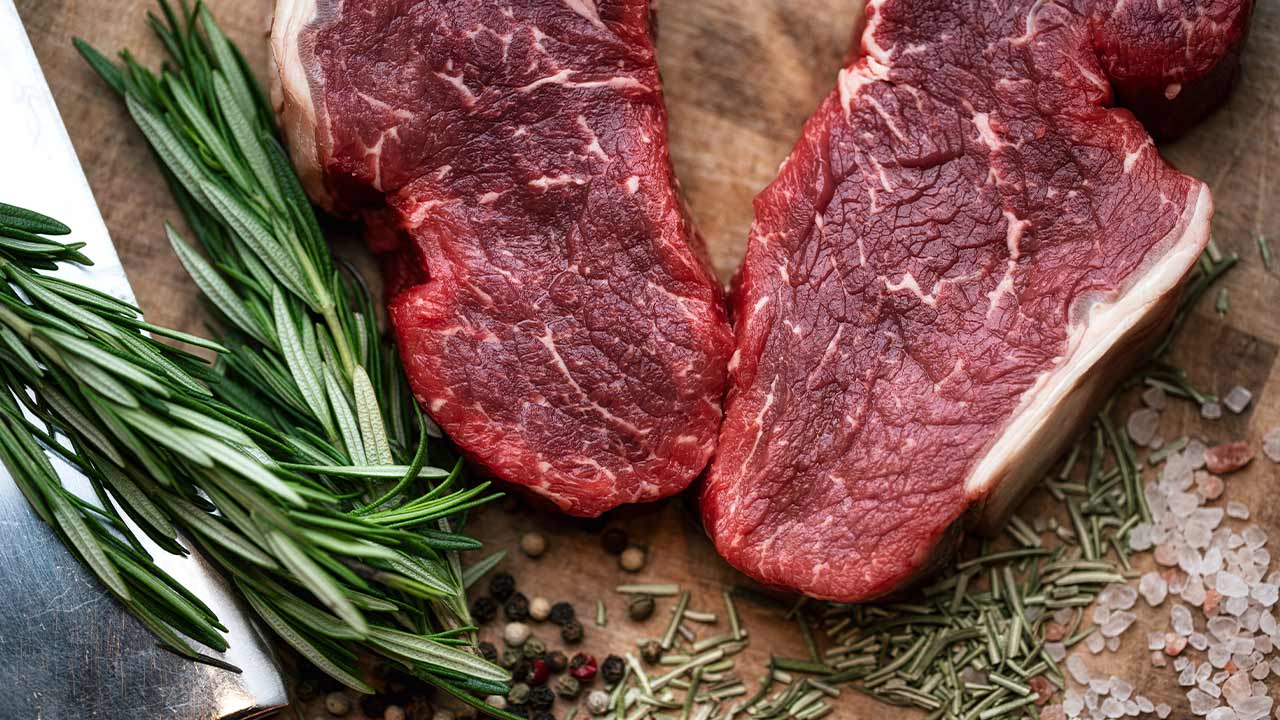
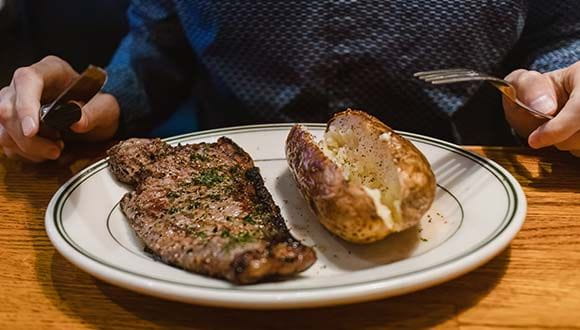

Houston steak night doesn't have to derail a healthy diet when you choose a leaner cut, sensible portion and smarter sides.
If you partake in Houston’s amazing dining scene, you’ve likely come across “steak night.” The special is practically an institution in bars and restaurants across the city. And with good reason: steak night is an affordable way to turn any random Monday or Tuesday into a date night or make a weeknight friend catch-up or small celebration feel incredibly special.
But if you’re trying to eat in a way that supports your long-term health, you may wonder if that weekly steak night is good for you. We spoke with Amanda Beaver, registered dietitian with Houston Methodist, about steak night and how it might fit into a balanced eating pattern.
What is steak night?
Steak night is exactly what it sounds like: an affordable steak dinner promotion offered on a slower night for a restaurant or bar, usually a weeknight.
While no one quite knows the origins of this Houston special, it’s been part of the city’s culinary scene for decades. The Houston Public Library Digital Archive has newspapers from the mid-1970s that include bar advertisements listing a “steak night.”
Houstonia Magazine reported in 2024 that the steak night special could have emerged from an economic climate much like we have now, when beef prices were historically high. The U.S. inflation rate was 12% in the mid-to-late 1970s, and beef prices more than doubled during that decade. (Do you remember the meat boycott of 1973?)
Steak prices have risen more than 50% since 2020, according to the Bureau of Labor Statistics. With the prices of the steak you might make at home high, the allure of steak night emerges: Why not treat yourself to a full meal made by a professional for just over a similar price point?
The actual meal will vary depending on the location, but the traditional steak night plate usually includes the aforementioned steak, a baked potato or mashed potatoes, a side salad and/or a non-starchy vegetable. And because Houston has one of the most diverse food scenes in the U.S., you can find steak nights that evoke Cajun, Filipino, Korean, Mexican and Brazilian cuisines (and so many more!). There are even steak-for-two specials that allow for sharing. There is a wide variety to choose from if you just look!
[Related Content]
Can steak night fit into an overall healthy eating pattern?
The overall answer is: “Yes.” However, Beaver says there are two questions to keep in mind: “How often are you eating out?” and “How much red meat are you eating across the week?”
Steak night should feel special, because it is
“I think it is good to think of steak night as something special, such as a once-a-week date night where you can make an event out of it, rather than getting run-of-the-mill takeout or delivery,” Beaver says. “The other nights, try to eat at home. Eating out more than three times per week is linked with higher health risks.”
A 2021 study in the Journal of the Academy of Nutrition and Dietetics found that frequent consumption of meals prepared away from home (two or more meals per day) was associated with an increased risk of all-cause mortality. Other studies have shown that eating meals prepared outside the home also increases the risk of type 2 diabetes and weight gain.
“We have more control over nutrition when we prepare our food at home,” Beaver says. “That doesn’t mean we can’t go out; but going out only once or twice a week makes it more special and is better for our health.”
Try to limit red meat to 18 ounces per week
Beaver recommends following the guidelines from the American Institute of Cancer Research to limit cooked red meat intake to a maximum of 18 ounces per week.
“Consuming more than 18 ounces of red meat a week is linked with increased cancer risk, particularly colorectal cancer,” Beaver says. “The guideline gives us flexibility to enjoy red meat a few times per week.”
People with certain heart disease risk factors, such as high cholesterol or high blood pressure, may want to further limit their meat intake. Red meat has more saturated fat than other animal proteins — 3 ounces of tenderloin steak, trimmed, has 5.7 ounces of saturated fat, for example. The American Heart Association (AHA) recommendations suggest limiting red meat and opting for healthier protein options, including fish, chicken and plant-based proteins.
When thinking about how steak night could fit into your meal plan, remember that restaurant portions are usually bigger than you think. A portion of cooked meat should be about 3 ounces, or a deck of cards, according to the AHA. Keep this in mind as steak night could take up most of your weekly red meat goal.
“Steak portions can be large,” Beaver says. “I recommend patients pay attention to how many ounces their steak is if they eat out and compare this to the 18-ounce recommendation.”
Does the cut you choose really matter?
Steak cuts can vary in size and fat profile, which changes the nutritional value, including calories, protein and saturated fat.
“NY strip and filet will be leaner cuts than the popular ‘steak night’ cut, ribeye, meaning they have more protein and less fat,” Beaver says.
“Ribeye has more saturated fat as it is more marbled, so when it comes to steak cuts, top sirloin, flank steak, filet mignon and tri-tip are all leaner options someone can choose from.”
Amanda Beaver
Registered dietitian with Houston Methodist
While a leaner cut is a healthier option, it doesn’t mean you can ignore your overall intake. Beaver notes that lean cuts still count toward the same weekly recommendation.
“Lean cuts should still be kept under the 18-ounce recommendation because they still contain other aspects of red meat, including heme iron and heterocyclic amines, that confer the increased health risks,” she says.
Heme iron, a type of dietary iron, isn’t necessarily bad for you, but can increase the risk of cancer, diabetes and heart disease when consumed too much. Heterocyclic amines are chemical compounds created when meat is cooked at high temperatures. These compounds are linked to increased cancer risk.
So, if you want your steak night to feel slightly healthier and you can choose a cut, selecting a leaner cut with more protein and less fat can be a way to go.
Consider the ‘extras’ that might make the meal heavier
Let’s not mince words: butter can elevate the simplest of foods, adding a rich, creamy umami flavor. Steak, especially more affordable cuts, may be finished and served with this delicious dairy to make it juicier, richer and look appetizing. That said, butter or compound butter will change the dish’s overall nutritional profile, adding more saturated fat. For those looking for a fresher option, Beaver suggests a Mediterranean-style alternative finish.
“Try a restaurant or steakhouse that offers the steak with chimichurri, an olive oil sauce with fresh garlic and herbs,” Beaver says.
Alternatively, if you’re watching your cholesterol levels, you could ask your server how the steak is finished and see if they could hold the butter. That said, it’s OK to enjoy a steak dinner as the chef intended, especially if it’s a rare occasion (pun intended). But if you’re a steak night regular, these finishers can add up, so keep that in mind.
Choose sides that help make steak night a balanced plate
Steak night is often associated with classic sides like mashed potatoes, loaded baked potatoes, green beans and/or a side salad. But Houston chefs are putting their spin on the institution, offering sides that highlight diverse culinary traditions. It’s not uncommon to see options like roasted chimichurri vegetables, grilled vegetables with house-made salsa, miso eggplant and much more on steak night menus.
Beaver is enthusiastic about exploring steak nights that offer fresh takes on sides, as well as always doubling down on a vegetable option.
“I love how these sides celebrate how delicious veggies can be,” Beaver says. “Lean into specials that offer vegetables, as they will offer benefits in terms of antioxidants from fresh herbs in the chimichurri to the vitamin C in the salsa to the fiber in eggplant.”
Her advice for a balanced steak night plate is simple:
“Aim to pair your steak dinner with a veggie option that sounds good to you, and skip the boring steamed broccoli seen on some menus if you’re not interested,” Beaver says. “Also, consider pairing the steak with a carbohydrate such as sweet potatoes, a pilaf or mashed potatoes.”
What should you drink with steak night?
Since steak night usually falls on slower nights for bars and restaurants, there is a likelihood that drink specials will also be on offer. Some spots may offer wine or drink pairings to enhance the experience of the special meal. Beaver suggests asking yourself what you want from the meal.
“Consider a mocktail — they are showing up on more and more restaurant menus, and some are really good,” she says. “This will allow you to go into work without having a headache the next day.”
But if you’re feeling celebratory or simply want to enjoy the suggested pairing, consider going easy on it.
“Otherwise, pair your steak night with one glass of red wine, max, as this tends to pair well with red meat,” Beaver says. “Note that alcohol does increase our risk of cancer, even red wine, so we always want to drink moderately and responsibly.”
(Related: 7 Tips for Moderating Your Liquid Calorie Intake)
[Engagement Card]
Follow your hunger cues
Going out for a special meal like steak night can be a great way to practice mindful eating. Put your phone away, enjoy the company at your table and really slow down and pay attention to your food. Not only can it help you enjoy your food more, but it can also help you get more in touch with your body and its natural cues.
“Notice when you start to feel full and satisfied and honor your fullness cues,” Beaver says. “You can always save the leftovers and repurpose them.”
That can look like boxing half the steak or sharing sides. And if you have leftovers, you can continue to enjoy steak night the following day. Beaver gives multiple examples of how you can stretch your steak night:
- Steak bowl – Add black beans, microgreens, rice and dressing.
- Steak taco salad – Add pinto beans, corn, shredded lettuce, sliced tomato and cheese.
- Stir fry – Use the steak and a frozen stir fry veggie blend and/or cabbage for an “egg roll in a bowl”-style meal.
Don’t be afraid to simply enjoy steak night
Food isn’t just fuel, Beaver reminds us. Steak night doesn’t need to be framed as a “bad choice” you have to justify. It can be a meaningful, enjoyable meal that fits into a balanced pattern, especially when you pay attention to portion size across the week, choose satisfying sides and keep the bigger rhythm in mind.
“Food is a cornerstone of culture, celebration and how we show love for each other. Celebrating milestones, date nights, et cetera, with a nice meal makes it special and intentional,” Beaver says. “In today’s go-go-go lifestyle, it is nice to go out to eat and have a slow meal with someone or people you love. It also makes eating out really special when you are going to try something new or a dish from the other side of the world as it is a means of exploring and learning.”
So why not try a Houston tradition?