

Short bursts of movement throughout the day can help break up sitting, support heart and metabolic health and make exercise feel more doable.
Working out is hard, but finding time to work out can sometimes be even harder. Between cooking, cleaning, going to work and, for many, raising a family, exercise is often the thing that gets thrown by the wayside.
However, it’s often the very thing that can enhance our lives by reducing stress, promoting better sleep, increasing energy levels and supporting long-term health. Still, the challenge of actually working out remains.
According to Dr. Megan Arthur, a primary care sports medicine physician at Houston Methodist, that starts with rethinking what “counts” as exercise.
“If you can shift your mindset from viewing exercise as something that only ‘counts’ at the gym, staying consistent becomes much more achievable,” Dr. Arthur says.
In essence, that’s what exercise snacking is: a practical approach to movement that helps you fit physical activity into your day without needing a long, dedicated workout window. Dr. Arthur explains what exercise snacks are, why these small bursts matter and what to consider before trying them yourself.
What is exercise snacking?
“Exercise snacking means doing short, intentional bursts of movement throughout the day instead of relying solely on a traditional 30- to 60-minute workout,” Dr. Arthur says. “These mini sessions might last anywhere from one to five minutes. The idea is simple: small amounts of movement, done consistently, add up in a meaningful way.”
An exercise snack might be walking briskly around the office, taking the stairs, doing a few squats between meetings or marching in place during a phone call. According to Dr. Arthur, the best exercise snacks are those that require no equipment and minimal setup. Think of them less as shortened workouts and more as an expanded definition of what counts as active time.
“Structured workouts are only one way to be active,” adds Dr. Arthur. “Small, consistent bursts of activity throughout the day can significantly benefit your health.”
(Related: Are You Sitting Too Much?)
Why snacking is better than nothing when it comes to exercise
Adults are encouraged to get at least 150 minutes of moderate-intensity cardio each week, plus two days of strength training, but federal health data shows only about one in four U.S. adults meet those guidelines. That gap matters because more sitting and less moving affects the body in ways that go beyond stiffness or low energy.
“Prolonged sitting is associated with increased cardiometabolic risk,” Dr. Arthur says. “Remaining sedentary for long periods of time leads to a decrease in muscle activity, glucose regulation and lipid metabolism, all of which contribute to a higher risk of insulin resistance, cardiovascular disease and metabolic dysfunction.”
A large meta-analysis published in Annals of Internal Medicine found that prolonged inactivity was associated with a higher risk of all-cause mortality, cardiovascular disease, cancer and type 2 diabetes, even after accounting for physical activity. The risks were generally higher among people who were less physically active overall.
In other words, when you sit for long stretches, your muscles are less active, which makes it harder for your body to regulate blood sugar and slows the processes that help break down fats, Dr. Arthur says. Over time, those changes can affect your metabolic and heart health.
That means getting up every 30 to 60 minutes, according to Dr. Arthur, and, if possible, interrupting that sitting time with an exercise snack. While these short bursts might not replace all the benefits of a longer workout, they can help you be more active throughout the day rather than waiting for a workout window that may never show up.
Just be clear on the goal: Exercise snacking is not really a weight-loss hack. Dr. Arthur says it’s more useful as a tool for improving energy, blood sugar stability and cardiovascular fitness over time. Nutrition, sleep and your overall activity level still play a role in weight management and long-term health.
[Related Content]
How intense should exercise snacks be?
One of the bigger misconceptions about exercise snacking is that your movements need to leave you breathing hard. Fortunately, that's not the case.
"For beginners, it doesn't have to feel intense," Dr. Arthur says. "A moderate effort, where breathing is elevated but conversation is still possible, is a great starting point."
She adds that even light activity can provide metabolic benefits, particularly when the goal is to break up long periods of sitting. That means your exercise snack doesn't need to be a set of burpees or a sprint around the office parking lot. A brisk walk down the hallway, a few flights of stairs or a set of bodyweight squats can be enough to get your body moving. However, according to Dr. Arthur, the goal at first isn't to increase intensity — it's more about consistency.
"For progression, I suggest increasing frequency first, making movement more routine, and then increasing intensity or adding resistance once the habit is established," Dr. Arthur says. "Sustainability is more important than intensity early on."
In other words, focus on making exercise snacks a regular part of your day before worrying about making them harder. Once the habit sticks, you can gradually increase your pace, add more repetitions or incorporate resistance exercises as your fitness improves.
Exercise snack examples you can do throughout the day
Like Dr. Arthur says, the best exercise snacks are simple, easy to start and require little planning. The good news? That leaves plenty of options. Here are a few ways to build more movement into your day, whether you're at the office, working from home or simply going about your day.
During a phone call
If your camera is off or you're taking a personal call, use the opportunity to move instead of sitting
-
Walk around your office or home
-
March in place
-
Do a set of sit-to-stands from your chair
-
Do a few lunges in-place
-
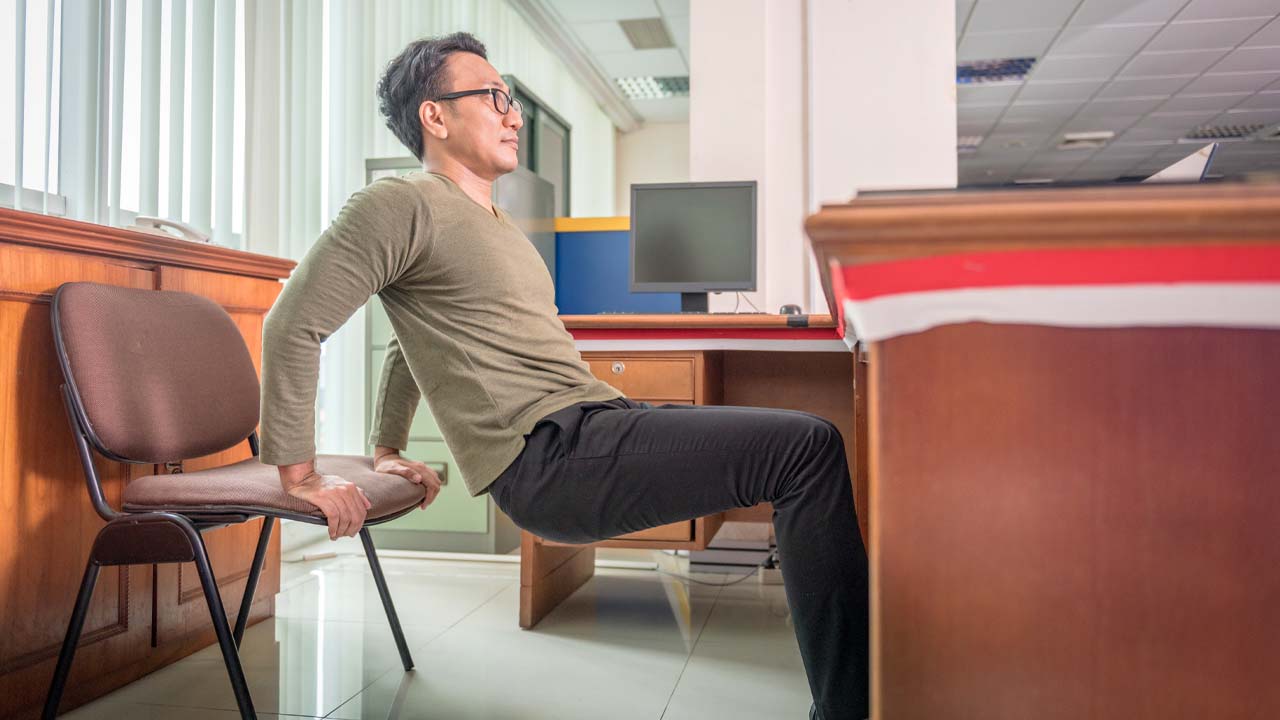
Try a few chair dips from a sturdy chair (like the article photo), if comfortable for your shoulders and wrists
-
If your camera is on, get up after the call and walk around
Between meetings
Even a few minutes between appointments can be enough time for an exercise snack.
-
Do a set of sit-to-stands from your chair
-
Try a few bodyweight squats
-
Walk a lap around the office
-
Do wall or countertop push-ups
-
Do a few jumping jacks if you want to up the intensity
While waiting
Waiting for your coffee to brew, lunch to heat up or a meeting to start? Those small pockets of time can add up.
-
Do calf raises while standing
-
Walk around the room
-
Take the stairs instead of the elevator
-
Walk the long way to the break room or restroom
When you need an energy boost
Feeling stuck on a project or battling the afternoon slump? A short burst of movement can help break up both the sitting and the mental fog.
-
Take a brisk three- to five-minute walk
-
Climb a few flights of stairs
-
Do a quick circuit of squats, wall push-ups and calf raises
-
Walk around the block at a faster pace than usual
If you have equipment, use it
Exercise snacks don't have to be limited to bodyweight exercises. If you have access to fitness equipment at home or work, you can use it to add more movement throughout the day.
Some options include:
-
Walking on a desk treadmill while answering emails or attending meetings
-
Using an under-desk bike during longer periods of seated work
-
Riding a stationary bike for a few minutes between tasks
-
Using resistance bands at your desk
-
Performing a few sets of dumbbell exercises during breaks or while taking phone calls
-
Doing step-ups using a sturdy step or staircase
The same principle applies: Keep it simple and make it easy to repeat. An exercise snack doesn't need to feel like a full workout to count.
(Related: How To Sit Less and Move More)
[Engagement Card]
Are exercise snacks safe for everyone?
For most healthy adults, exercise snacks are an easy way to add more movement into the day, especially for busy people who may feel overwhelmed by the time commitment or intensity of traditional exercise programs. But some people should be more cautious than others.
“Patients with unstable cardiac disease, significant mobility limitations or advanced complications of chronic illness should have intensity and progression carefully individualized based on their medical status and functional capacity,” Dr. Arthur says.
That doesn’t mean movement is off the table. It just means your starting point may look different depending on your health, fitness level and mobility. If you’re unsure what level of activity is safe for you, talk with a healthcare provider before increasing intensity.
“You do not need a perfectly scheduled workout for movement to count,” Dr. Arthur says. “The most effective exercise plan is the one you can realistically sustain, and sometimes that starts with just a few minutes at a time.”