
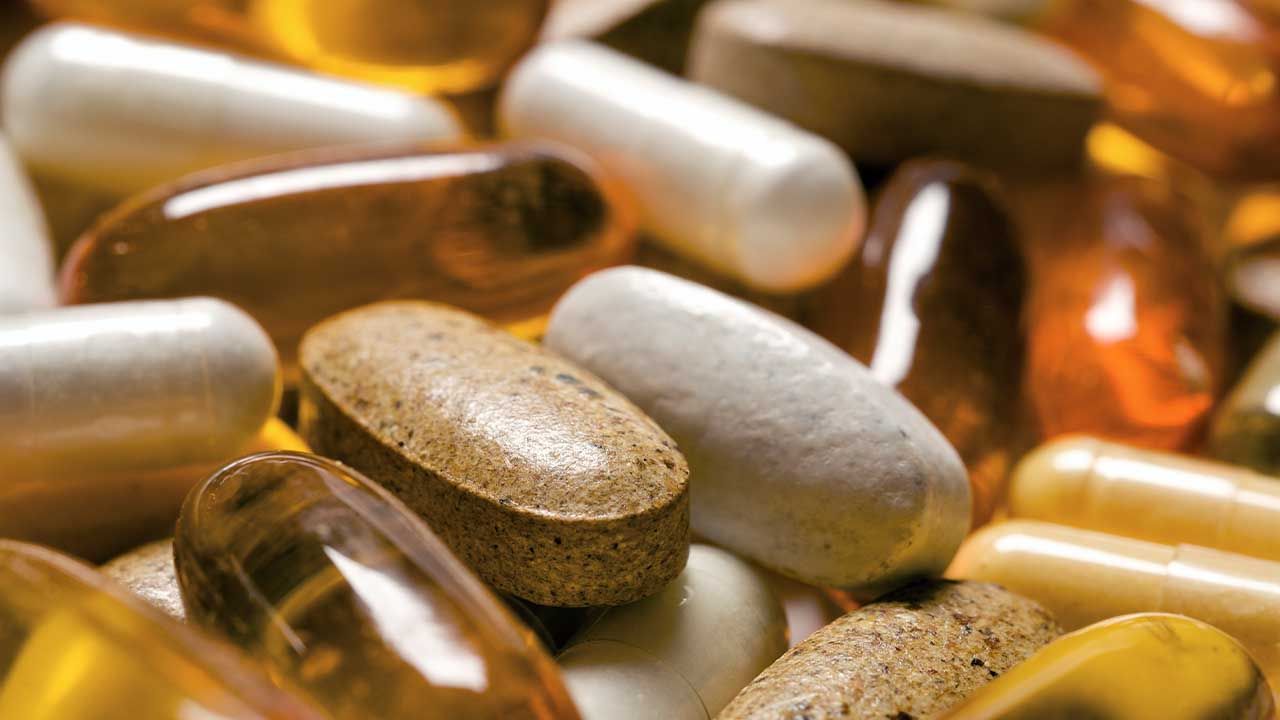

Millions of Americans take supplements to support their health. But when it comes to slowing aging, what's backed by evidence and what's still just a theory?
Remember scurvy? For centuries, the disease plagued sailors on long ocean voyages before researchers discovered its cause: a vitamin C deficiency. Today, scurvy is rare in the U.S., and people are more likely to reach for vitamin C to support their immune system or brighten dark spots than to prevent a deficiency.
That’s just one example of how dramatically the role of supplements has evolved — from filling nutritional gaps to supporting broader wellness goals. Today, companies market them for everything from heart health and gut health to longevity and healthy aging.
In fact, supplement use is now so widespread that more than 60% of U.S. adults take at least one dietary supplement, nearly 39% take two or more, and usage rises significantly with age, according to the CDC.
But while correcting a vitamin deficiency is relatively straightforward, taking a supplement to enhance or prolong our lives is another challenge entirely. That's because aging itself isn't a single process, according to Dr. John P. Cooke, chair of cardiovascular sciences at the Houston Methodist Academic Institute.
"The process of aging, what we're learning, is not a single thing," Dr. Cooke says. "There are multiple processes that contribute to aging. And they're often different in different people."
We all want to stay healthy as we age. That's what makes anti-aging supplements so appealing. If aging could be slowed, halted or even reversed by taking a pill each day, the solution would seem remarkably simple.
But according to Dr. Cooke, the science is far more complicated than that.
Aging is more than meets the eye
Fine lines, gray hair and achy joints are what most people think of when it comes to aging, but according to the National Institute on Aging (NIA), aging actually involves gradual changes at the cellular and molecular level. Over time, these microscopic changes add up to eventually affect the body as a whole, which then leads to the physical signs of aging.
To make sense of those changes, researchers have developed a framework known as the hallmarks of aging — interconnected biological processes believed to drive aging and age-related disease. Several of those hallmarks align closely with Dr. Cooke's research, including mitochondrial dysfunction.
If you remember anything from high school biology, it's probably that mitochondria are the "powerhouses" of our cells. They generate the energy needed to perform essential functions throughout the body.
But as people age, our mitochondria can become less efficient, producing less energy and more harmful byproducts called reactive oxygen species. Dr. Cooke says these unstable molecules, also known as free radicals, can damage important cellular structures when they accumulate in excess.
"If you start spewing out too much of these free radicals, you start damaging your own proteins," he says.
Fortunately, cells have systems designed to identify and remove damaged proteins. But that process becomes less efficient with age, allowing cellular "junk" to accumulate over time. Dr. Cooke points to this process, known as proteostasis, as another important hallmark of aging.
Damage can accumulate elsewhere, too — including in our DNA. Every day, cells sustain damage from normal metabolic activity and environmental exposures such as sunlight and pollution. Fortunately, cells also contain complex repair systems that help correct much of that damage.
"The cell has to repair DNA damage every day, thousands of times," Dr. Cooke says.
But not all of that damage gets repaired. Over time, the accumulation of DNA damage can contribute to age-related decline.
"That damage leads to dysfunctions of the cell that accelerate aging," Dr. Cooke says.
Dr. Cooke believes DNA damage may be one of the “most profound drivers of aging.” The reason is that DNA serves as the blueprint for our cells.
"We're actually changing as we age, and that's a change in our physical identity. It's due to damage to the template of who we are."
Dr. John P. Cooke, chair of cardiovascular sciences
He also points to cellular senescence — the accumulation of aging cells that no longer function normally — as another important piece of the puzzle.
Overall, scientists have identified more than a dozen hallmarks of aging, many of which interact with one another. And that’s often why researchers caution against viewing aging as a problem with a single cause — or a single solution — like a supplement.
Why anti-aging claims can sound so convincing
One reason anti-aging supplements have gained traction is that many of them are built around legitimate biological concepts. The idea is that if a certain biological process contributes to aging, then influencing that process should theoretically slow aging as well.
But Dr. Cooke says that's often where things get complicated.
"If we are to stall aging, or even reverse it, we have to deal with a lot of different processes," he says. "One intervention is not going to be sufficient."
Many anti-aging supplements focus on a specific pathway. Antioxidants, such as vitamin C, vitamin E and lycopene, for example, aim to counter oxidative stress.
The challenge is that a supplement can make sense biologically and still fail to deliver meaningful benefits in people. To illustrate the point, he recalls a lesson from early in his medical career.
When Dr. Cooke was a young physician, researchers were uncovering evidence that oxidation contributed to atherosclerosis, the buildup of plaque in the arteries. Around the same time, data from the Framingham Heart Study — a landmark and decades-long research project that helped identify many of the major risk factors for heart disease — suggested people with higher levels of vitamin E were less likely to experience heart attacks.
Researchers thought they had found a promising solution. If oxidation contributed to heart disease and vitamin E acted as an antioxidant, then supplementing with vitamin E should help reduce cardiovascular risk.
"So, we as cardiologists, based on the clinical data from the Framingham study, started giving people the vitamin E, thinking that we were helping them," he says.
Researchers eventually tested the theory in large randomized clinical trials, including the Heart Outcomes Prevention Evaluation (HOPE) trial, which examined whether vitamin E supplementation reduced cardiovascular events in high-risk patients.
"We all thought, of course the clinical trial is going to show a benefit," Dr. Cooke says. "Guess what? There was no benefit of vitamin E supplements at all. It was everything else that they were doing."
Many of the participants taking vitamin E were already engaging in other healthy habits, such as exercising regularly, eating healthier diets and seeking preventive medical care. Those behaviors may have contributed to their lower cardiovascular risk rather than the supplement itself.
For Dr. Cooke, the vitamin E story illustrates the gap between plausibility and clinical proof. A theory may sound convincing, and findings may look promising, but it takes rigorous clinical trials to determine whether a supplement actually improves health outcomes.
"Sometimes these observational studies can be misleading, and you actually really need a controlled clinical trial," he says.
Are any supplements actually helpful?
Dr. Cooke is careful not to dismiss supplements entirely. In fact, he says some products have demonstrated benefits for specific health conditions.
"There are supplements that can have beneficial effects,” he says.
The key distinction is that many supplements are supported for targeted uses rather than for slowing aging itself.
Fish oil and heart health
Fish oil is one example.
"Fish oil does reduce high triglycerides," he says.
Triglycerides are a type of fat in the blood that can increase the risk of heart disease when elevated. Research has consistently shown that fish oil can help lower them.
Dr. Cooke also notes that eating more fish may offer cardiovascular benefits beyond supplementation.
"Eating more fish seems to be associated with fewer cardiovascular events."
Fish and fish oil are among the most important sources of omega-3 fatty acids. The nutrient may be particularly relevant given findings from the CDC's 2026 National Nutrition Report, which found that more than half of Americans had low levels of omega-3 fatty acids. Omega-3s play an important role in heart and vascular health and may help lower triglycerides and inflammation.
That's one reason he recommends a Mediterranean-style diet, which emphasizes fish, vegetables, legumes and other nutrient-rich foods.
[Related Content]
Beets and blood pressure
Another supplement with promising evidence is beetroot.
Dr. Cooke says beet juice and beet supplements may help support healthy blood pressure and vascular function because they're rich in dietary nitrates, compounds the body can convert into nitric oxide.
"Nitric oxide is a strong relaxant of blood vessels," he says.
According to Dr. Cooke, vascular nitric oxide may also help suppress inflammation, blood clot formation and plaque buildup in the arteries.
Still, he notes that supplements aren't the only way to get these beneficial compounds.
"A diet rich in leafy green vegetables, such as spinach and kale, as well as root vegetables like beets, carrots and turnips, is good for heart health," he says.
For people who don't regularly eat those foods, beetroot supplements may offer another way to increase their intake.
CoQ10 and heart failure
Some supplements may also help people with specific medical conditions.
"Coenzyme Q does seem to improve cardiac function in those patients that have heart failure," Dr. Cooke says.
CoQ10 is a naturally occurring compound involved in cellular energy production and is found in especially high concentrations in the heart. Researchers have studied it for decades as a potential therapy for heart failure, though the evidence remains mixed. Some analyses suggest it may reduce hospitalizations and improve outcomes in certain patients, while other experts say more research is needed.
Unlike many products marketed for longevity, however, CoQ10 has been studied for a specific purpose in a specific patient population. That distinction is an important one when evaluating supplement claims.
Antioxidants and eye health
Dr. Cooke says evidence also supports certain antioxidant vitamins in specific situations.
"There are some good controlled clinical trials that support the use of antioxidant vitamins in certain indications," he says.
One example is age-related macular degeneration, an eye disease that can affect vision later in life. Researchers have found that certain antioxidant formulations may help slow disease progression in some patients.
(Related: 3 Tips for Protecting Your Vision)
Vitamin D and bone health
Vitamin D is another example of a supplement that may benefit certain people, particularly older adults at risk for osteoporosis.
The CDC notes that vitamin D is essential for bone health and that vitamin D levels have improved over time, especially among people who take supplements.
But Dr. Cooke cautions that even potentially beneficial supplements can create risks when taken unnecessarily or in excessive amounts.
"Vitamin D in high doses can cause what we call ectopic calcification, calcification where it doesn't belong," Dr. Cooke says.
For him, evidence that a supplement helps address a specific deficiency or medical condition is very different from evidence that it slows aging itself.
And even when supplements have demonstrated benefits, they shouldn't be viewed as a replacement for proven medical care.
"None of them replace medical therapy," Dr. Cooke says.
(Related: How Vitamin D Deficiency Affects the Body)
Why researchers are still excited about aging science
While anti-aging supplements have yet to prove they can reverse aging, researchers continue making progress in understanding the biological processes that drive it.
One of the most promising areas of study involves cellular senescence. As Dr. Cooke mentioned earlier, senescent cells are aging cells that stop functioning normally. They're sometimes referred to as "zombie cells" because they linger in tissues instead of dying off when their work is done.
Instead, these cells continue releasing inflammatory molecules that can negatively affect nearby cells and tissues, potentially contributing to age-related decline.
Researchers are now studying whether selectively removing these cells could improve health and potentially slow some aspects of biological aging. The approach, known as senolytics, is currently being tested in clinical trials.
Similar work is taking place in Dr. Cooke's own lab. His team is exploring regenerative approaches designed to repair cellular damage associated with aging, including damage to both mitochondrial DNA and the DNA stored in the nucleus of our cells.
"We're going to start seeing some data from those trials," he says.
[Engagement Card]
What has the strongest evidence for healthy aging?
If you're searching for the next longevity breakthrough, you may want to revisit the basics first.
While researchers continue studying therapies that target the biology of aging itself, the NIA says several lifestyle habits continue to offer the strongest evidence for supporting healthy aging, including:
-
Staying physically active
-
Eating a nutritious diet
-
Getting enough sleep
-
Managing chronic health conditions and cardiovascular risk factors, such as high blood pressure and high cholesterol
-
Keeping up with regular preventive medical care
These recommendations may not sound as exciting as the latest longevity supplement, but they remain some of the most effective ways to support long-term health and reduce the risk of age-related disease.
That said, Dr. Cooke remains optimistic about what the future may bring.
"The good news is that by really understanding the mechanisms of aging, we are going to be able to develop therapies that are based on reversing those processes," Dr. Cooke says.
But until that evidence arrives, he's sticking with the same scientific standard he applies to every longevity claim.
"When there's data to support it, I will," he says.