
Red meat doesn't have to leave your menu. Portion size, weekly intake and cooking method all affect how it fits a healthy diet.
I’ll be honest: Few things make me happier than a medium‑rare ribeye with a side of fries and creamed spinach. But lately, every headline I’ve seen about red meat seems to contradict the last. One minute, it’s a dietary villain; the next, it’s part of a protein‑forward eating pattern.
If you’ve been feeling equally confused, you’re in good company. I turned to Amanda Beaver, a registered dietitian at Houston Methodist, to help me understand where red meat actually fits into a healthy lifestyle. In short: It’s much more nuanced than I thought.
What’s the ‘beef’ with red meat lately?
Depending on what you read, red meat is either a flavorful source of protein and nutrients or a food to limit because of cancer and heart-health concerns.
Part of the confusion comes from the fact that red meat isn’t just “one thing.” It spans many animals and cuts of meat — each with its own nutrient profile and fat content. A lean pork loin is much different in nutrients and fat content than, say, a heavily marbled beef ribeye or brisket.
Then there’s the way red meat is cooked: grilled, charred, pan-seared, slow roasted. Per Beaver, how you cook a protein can significantly impact how the body responds to it. And of course, not all red meat is fresh meat; processed and preserved options like bacon, sausage and deli meats come with their own set of concerns.
Add in the new 2025-2030 Dietary Guidelines for Americans, which place a greater emphasis on animal protein like red meat and full-fat dairy even as long-standing research has continually urged moderation, and it’s easy to see why people feel pulled in two directions.
So yes, there’s a lot of chatter about red meat, but the good news is that the research gives us clear guidance on how much is healthy and what choices make the biggest difference.
[Related Content]
So, is red meat actually bad for you?
Red meat can fit into a healthy diet, according to Beaver, but there are some important risks worth understanding.
In 2015, the World Health Organization’s International Agency for Research on Cancer IARC reviewed more than 800 studies and classified red meat as “probably carcinogenic to humans” (Group 2A) and processed meat like bacon, sausage and deli meats as “carcinogenic to humans” (Group 1).
The strongest evidence links high red‑meat intake to colorectal cancer, with additional associations for prostate and pancreatic cancers. Researchers point to two main culprits: compounds formed during high‑heat cooking (like grilling or charring), and heme iron, the natural form of iron in red meat that can promote the formation of carcinogenic compounds in the gut.
And here’s where things get even more nuanced: that same heme iron that can contribute to cancer‑forming compounds is also the form of iron your body absorbs most easily. Humans absorb about 15 to 35% of the iron in meat — far more than the 2 to 20% absorbed from plant foods — which is why red meat is often praised for its nutritional value.
And although many people hear “eat more red meat” when they’re low in iron, that’s more of a myth than modern nutrition advice — there are plenty of ways to correct iron deficiency, from supplements to plant‑forward meals paired with vitamin C, without needing to increase red meat intake.
None of this means you have to stop eating red meat, Beaver emphasizes. It just shows why moderation — and how you cook it — really are key.
How much red meat is actually OK?
Several major cancer‑prevention organizations, including the American Institute for Cancer Research, the American Cancer Society and the American Society of Clinical Oncology, recommend keeping red meat intake to no more than 18 ounces per week.
In practical terms, that usually means enjoying red meat two to three times a week, depending on how much ends up on your plate. However, portion size is key, and it’s one of the easiest places to unintentionally overdo it.
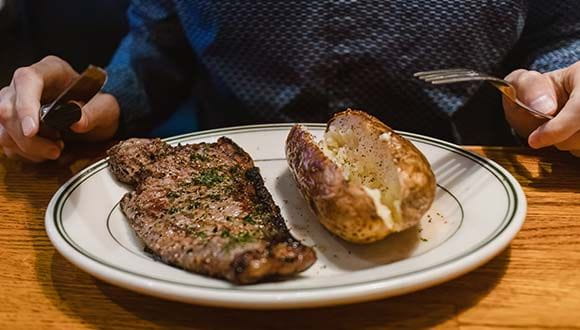
In reality, a standard serving of cooked meat is about 3 to 4 ounces, and visually, that’s roughly the size of a deck of playing cards or the palm of your hand. If you’re thinking that sounds tiny, it is — especially compared with the steaks most restaurants proudly plop in front of you.
A restaurant ribeye can easily clock in at 10 to 14 ounces on its own — nearly your entire weekly limit in one sitting. Even at home, it’s easy to underestimate how much you’re eating unless you're familiar with portion sizes.
Beaver often encourages patients to measure their usual portion once or twice with a food scale — not to track obsessively, but to build a visual reference point. After that, it becomes much easier to plan a week that honors your health and your appetite.
It’s also important to remember that the 18‑ounce mark is a limit, not a recommended goal, and how you choose to stay under it can be flexible. Some people may choose to eat less red meat for their personal health, while others might spend their weekly portion on one splurge meal or stretch it across several smaller dishes.
(Related: How Much Protein is Too Much? A Dietitian Weighs In)
Who should be more careful with their red meat intake?
While the 18‑ounce weekly limit is helpful for most people, some may want to be even more mindful about how often red meat lands on their plate. According to Beaver, certain health markers and family histories can raise someone’s risk profile — and in those cases, moderation becomes especially important.
“If someone has a strong family history of cardiovascular disease, elevated lipoprotein(a) or apolipoprotein B, a family history of colorectal cancer, elevated LDL, or elevated small dense LDL, I recommend being especially mindful of red meat intake,” she says.
That advice arrives at the perfect time. In March 2026, the American Heart Association AHA and American College of Cardiology ACC released updated cholesterol guidelines — the first major overhaul since 2018 — which place much more emphasis on two markers many people have never heard of: lipoprotein(a) and apolipoprotein B (apoB).
Lp(a) is an inherited type of cholesterol — you’re born with your level, and it doesn’t really budge with diet or exercise. When Lp(a) is high, it can make your blood “stickier,” which increases the likelihood of plaque forming in the arteries. The new guidelines now recommend that every adult have their Lp(a) tested at least once, since high levels can dramatically raise heart‑disease risk even when regular LDL looks normal.
ApoB, on the other hand, is a measure of the number of cholesterol‑carrying particles in your blood. If LDL cholesterol tells you how much cholesterol is there, apoB tells you how many delivery trucks are on the road — and more trucks mean more chances for cholesterol to get deposited in artery walls.
That’s why Beaver tells her patients to keep an eye on these numbers, especially with the new guidelines. If yours are high or if heart disease runs in your family, you may just need to be a bit more mindful about how often you eat it.
Plus, it’s not just about what you cut out — it’s about what you add in. Beaver encourages people at higher risk to load up on fiber‑rich foods like fruits, veggies, beans and nuts. Those foods help support heart health, improve cholesterol and even offset some of the risks tied to eating red meat.
How to cut back on red meat without feeling deprived
Cutting back on red meat can be easier than it sounds. Beaver suggests thinking about red meat as one part of the plate rather than the centerpiece, which helps keep portions moderate without losing the taste and satisfaction it brings.
Some of her go‑to ideas include:
- A steak bowl with black beans, microgreens and rice
- A steak taco salad with pinto beans, corn, shredded lettuce, sliced tomato and cheese
- A veggie‑heavy stir‑fry using a frozen stir‑fry blend
- “Egg roll in a bowl” – a cabbage‑forward dish that uses just a small amount of beef for flavor
These meals still deliver the flavor you're craving, just in portions that are more aligned with long‑term health.
If you’re curious about plant‑based meat lookalikes, Beaver says they can play a role when chosen thoughtfully.
“Faux meats do have drawbacks in that they’re highly processed, but generally they carry a reduced risk from a colorectal cancer or heart‑disease perspective, especially options higher in fiber, ‘lean’ versions and those without heme iron,” she says.
(Related: First Eggs, Now Beef: 9 Cheaper Protein Alternatives to Consider)
Some cuts of red meat are healthier than others
Not all red meat is the same. Some cuts naturally come with more saturated fat, while others are much leaner. Beaver says choosing leaner cuts is an easy way to enjoy red meat while keeping saturated fat in check — something that matters for both heart health and long‑term cancer risk.
Some of the options Beaver recommends include:
- Top round
- Eye of round
- Sirloin
- Tenderloin or filet mignon
- Flank steak
- Tri‑tip
- 93/7 or 95/5 ground beef (look for the lean percentage on the label)
The USDA also grades beef based on marbling, which reflects its fat content. “Prime” is the fattiest grade with the most marbling, “choice” has less, and “select” is leaner with much less visible fat. There are also standard and commercial grades, often sold as ungraded or store‑brand meat. If you’re trying to watch your saturated‑fat intake, opting for select, choice or standard cuts instead of prime can help keep things lighter. Note, however, that this grading is voluntary; some packages may not show any grade at all.
“These options will have higher protein and less saturated fat, but they should still be kept within the 18‑ounce weekly recommendation,” Beaver says.
“Lean cuts can still contribute to health risks because it’s not just the fat that matters — heme iron and harmful compounds formed during high‑heat cooking also play a role.”
Amanda Beaver
Registered dietitian at Houston Methodist
(Related: Why Healthy Fats Are Important & Where to Get Them)
Healthier ways to cook red meat
According to Beaver, how you cook red meat can be just as important as how much you eat. And, ironically, it’s the very thing that makes red meat so delicious that creates the biggest problem.
That deep brown crust, sizzling sear and charred edges from the grill — all the things that give steak its incredible flavor — come with a catch.
“When meat is cooked to high temperatures and forms those charred, crisp brown edges, that’s where heterocyclic amines form,” she explains. “These compounds are carcinogenic, meaning they increase our risk of cancer.”
The hotter and longer the meat cooks, the more these compounds form. Flare‑ups on the grill can add to the problem: when fat drips and causes flames, the smoke coats the meat with polycyclic aromatic hydrocarbons, another carcinogenic compound.
The good news? You don’t have to give up grilling or searing entirely — you just have to cook a little smarter.
(Related: PODCAST: Are Air Fryers a Healthier Way to Cook?)
Marinate before you cook
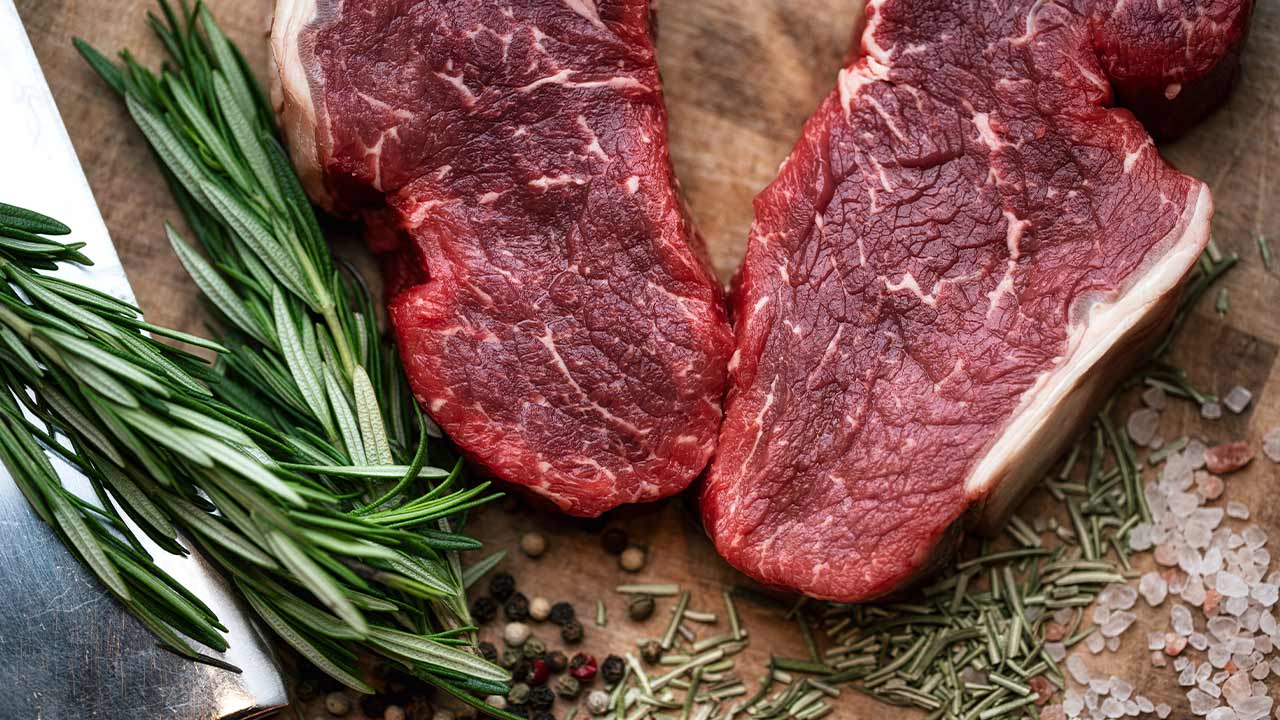
Marinating meat ahead of time can significantly reduce the formation of heterocyclic amines. Beaver suggests choosing marinades made with antioxidant‑rich herbs and spices like garlic, turmeric, rosemary or oregano, which help protect the meat from high‑heat reactions.
Skip the sugary sauces during cooking
“Using sugar‑heavy sauces like barbecue sauce during cooking can actually increase the formation of those compounds,” Beaver says. The solution? Just wait until after the meat is cooked to brush it on.
Use lower heat when you can
Slow cookers, pressure cookers, braises, stews and sous vide all minimize high‑heat exposure. These gentler methods dramatically cut down on harmful compounds while still giving you tender, flavorful meat.
Trim off charred bits
Accidentally overdid it? Just cut off the blackened edges before eating — an easy way to reduce your exposure.
Reduce flare‑ups on the grill
Reducing the amount of fat dripping onto the flames helps cut down on flare‑ups and the carcinogenic compounds that come with them.
[Engagement Card]
Processed meat: where ‘less is better’ truly applies
While the conversation around red meat is nuanced, Beaver says the guidance around processed meats is much more straightforward: the less, the better.
Processed meats — like bacon, sausage, hot dogs, pepperoni and deli slices — fall into a different category because of the way they’re preserved. Curing, smoking and adding nitrates or nitrites can create compounds that significantly increase the risk of colorectal cancer. Unlike fresh red meat, which depends on cooking method and portion size, these risks are inherent to the processing itself.
Beaver notes that even the labels can be confusing. Some brands claim “no added nitrates,” but use ingredients like celery powder, which still convert into the same compounds in the body.
“The label can be misleading,” she says. “It may not list added nitrates or nitrites, but those natural sources work the same way once you eat them.”
There are a few exceptions. Some frozen breakfast sausages, for example, are often nitrate‑free simply because freezing preserves the meat without needing added chemicals. But Beaver emphasizes that’s the exception, not the rule.
If you’re going to eat processed meat, she says there’s an easy way to lower the cancer‑forming compounds that can develop: pair them with vitamin‑C‑rich foods. Simple additions like broccoli, citrus, bell peppers, herbs and chiles may help block the chemical reaction in the gut that turns nitrates into nitrosamines, the compounds linked to cancer risk.
The bottom line: red meat can fit into a healthy diet — with a little mindfulness
As someone who genuinely enjoys red meat, I was relieved to learn I don’t have to give it up. I just have to be more thoughtful about how often it shows up and how I cook it — a shift Beaver says makes a meaningful difference over time.
“Ultimately, just try and keep red meat under 18 ounces per week, avoid burnt or charred pieces, and pair it with a diet rich in veggies, fruits, beans, nuts and fish,” Beaver says.