

Unintended Chemotherapy Consequences Can Drive Drug Resistance
Nov. 13, 2025This article was originally published in Nature and is reposted here with permission.
The mission with cancer therapy is clear: eradicate as many tumor cells as possible. Traditional chemotherapy remains a mainstay, where patients are dosed with potent compounds that disrupt essential cellular functions, preventing tumor cells from proliferating and ultimately forcing them to self-destruct.
However, new findings from a team led by Dr. Hongbo Gao and Dr. Keith Syson Chan at the Houston Methodist Academic Institute suggest that this approach might also release signals that promote drug resistance, which makes it harder to eliminate the tumor in the long run.
Dr. Chan first became aware of this possibility a decade ago. "We and others showed that the type of cell death the cancer cell undergoes also determines the therapeutic efficacy," he says.
His group demonstrated that, in some scenarios, chemo-induced cell death can lead to the dissemination of growth factors and other molecules, enabling surviving resistant cells to subsequently thrive and proliferate even during ongoing treatment.
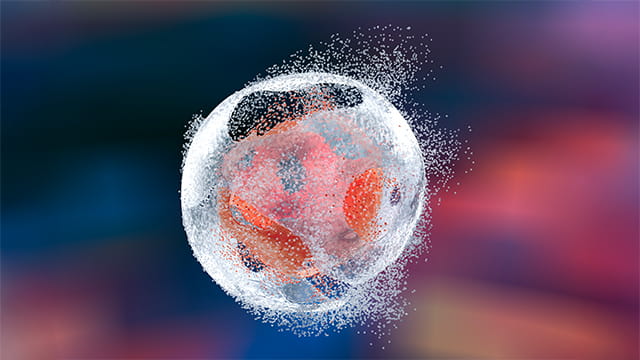
In their latest work, Drs. Chan and Gao focused on a mechanism known as pyroptosis, wherein tumor cells perish in a manner that leads to release of pro-inflammatory signals. This is generally thought to be a good outcome in the context of immunotherapy, as such an environment can amplify a patient's anti-tumor immune response and put cancer cells on the defensive.
However, Dr. Chan's findings show that this may be a faulty assumption. "We found that in a chemotherapy setting, pyroptosis is not only not anti-tumor," he explains, "but it is actually pro-tumor."
Structural support
Researchers in this study examined the effects of the pyroptosis-inducing chemotherapy agent gemcitabine specifically on bladder tumors — in particular, on a subset of cells within the tumor known as cancer-associated fibroblasts (CAFs). CAFs are thought to provide supportive infrastructure for cancer cells and are known to interact with those cells in a way that influences progression. Although CAFs have historically been viewed as a fairly homogenous population, recent studies have revealed a hidden diversity.
When they examined tissue specimens from patients who do not respond to gemcitabine, Dr. Chan and colleagues noticed enrichment of a particular subset of "inflammatory CAFs." Closer analysis revealed that the signals released during pyroptosis were actively promoting the conversion of standard CAFs into inflammatory CAFs. These cells were, in turn, altering the tumor environment to create conditions that supported expansion of drug-resistant cancer stem cell populations, which subsequently drove tumor progression.
Dr. Chan's team has also observed similar mechanisms in other treatment scenarios, including for breast cancer. However, it remains unclear whether this is a common issue across all chemotherapies and cancer types. Dr. Chan is also examining whether the same effect occurs with alternative drug formulations, such as antibody-drug conjugates, which use tumor-protein-specific antibodies to selectively deliver chemotherapy to cancer cells while sparing healthy tissue.
Dr. Chan and colleagues are continuing to gather supporting evidence for their findings. His team has learned that pyroptosis-derived inflammatory signals can also penetrate to the bone marrow, where they act to further dampen activity of anti-tumor immune cells (the work is under review for publication).
The stakes are high enough to justify additional wariness in clinical researchers, explains Dr. Chan, and it is worth exploring new combination treatments that might mitigate these unintended consequences of chemotherapy. "We need to be careful when most investigators think that inducing pyroptosis during anti-cancer therapy is good."
Read the full paper in Science Advances.