

New Drug Shows First Evidence of Reversing Cirrhosis in Metabolic Liver Disease
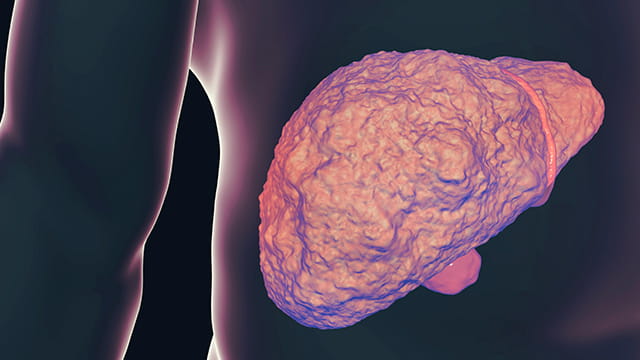
Dec. 31, 2025 - Eden McCleskeyTwo new studies led by Houston Methodist hepatologist Dr. Mazen Noureddin provide the strongest evidence to date that cirrhosis caused by metabolic dysfunction–associated steatohepatitis (MASH) may be reversible — a milestone once considered unattainable in hepatology.
The phase 2 trials, published in The New England Journal of Medicine and The Lancet, found the investigational drug efruxifermin had robust antifibrotic effects in patients with advanced metabolic liver disease. Efruxifermin is an engineered fibroblast growth factor 21 (FGF21) analogue.
Together, the studies position efruxifermin as one of the most promising therapeutic candidates yet for MASH. The drug showed benefit across both compensated cirrhosis (F4 fibrosis) and pre-cirrhotic disease (F2–F3).
"This is an important landmark for our field," said Dr. Noureddin, lead author of both studies. "For the first time in MASH, we've shown that even cirrhosis — which we long believed to be irreversible — can actually regress."
Reversing cirrhosis
The NEJM study, published in May, focused on patients with biopsy-confirmed compensated cirrhosis due to MASH, representing the most advanced stage of fibrotic liver disease short of decompensation. In this randomized, placebo-controlled phase 2b trial, patients received once-weekly subcutaneous efruxifermin at two dose levels or placebo and underwent serial liver biopsies at baseline, 36 weeks and 96 weeks.
While the trial narrowly missed its primary endpoint at 36 weeks, longer-term follow-up revealed statistically significant fibrosis regression at 96 weeks, particularly at the higher dose. Nearly a quarter of the patients receiving the 50-mg dose achieved at least a one-stage improvement in fibrosis without worsening of steatohepatitis — compared with 11% in the placebo group. Importantly, some patients improved from stage F4 to F3 fibrosis, effectively moving out of the cirrhosis category.
"The transition from F4 to F3 is what makes this study so revolutionary," Dr. Noureddin said. "It means these patients are no longer cirrhotic and may no longer face the need for liver transplantation down the line."
The drug was generally well tolerated, with mostly mild to moderate gastrointestinal side effects such as nausea, vomiting and diarrhea. There was no signal of drug-induced liver injury.
Exceptional efficacy in earlier disease
The second study, published in The Lancet in August, examined efruxifermin in patients with moderate to severe fibrosis (F2–F3), a population at high risk for progression to cirrhosis. Results from the 96-week HARMONY trial showed striking efficacy, particularly at the higher dose.
In paired biopsy analyses, up to 75% of patients receiving 50 mg of efruxifermin achieved at least a one-stage improvement in fibrosis without worsening of MASH — one of the highest response rates ever reported in this disease population. Significant improvements were also seen in steatohepatitis resolution and metabolic markers.
"These are some of the most robust antifibrotic responses we've ever seen," Dr. Noureddin said. "And they were achieved without meaningful weight loss, showing this is not simply a metabolic or weight-loss effect."
A new era for MASH treatment
MASH affects an estimated 6%–7% of U.S. adults and is now a leading cause of liver transplantation, particularly among women. While recent FDA approvals have expanded treatment options for earlier-stage disease, no therapies are currently approved for MASH-related cirrhosis.
Dr. Noureddin emphasized that efruxifermin's ability to inhibit fibrogenesis while promoting fibrolysis — the breakdown of scar tissue — represents a mechanistic advance that may change the treatment paradigm.
"We are entering what I would call the pre-golden age," he said. "The true golden age will be when we can reliably reverse or prevent cirrhosis — and these data suggest we are very close."
Phase 3 trials of efruxifermin are now underway, with investigators hopeful that the findings will soon translate into clinical practice.
"After decades of having nothing for these patients, this is real hope," Dr. Noureddin said. "And it's only the beginning."