
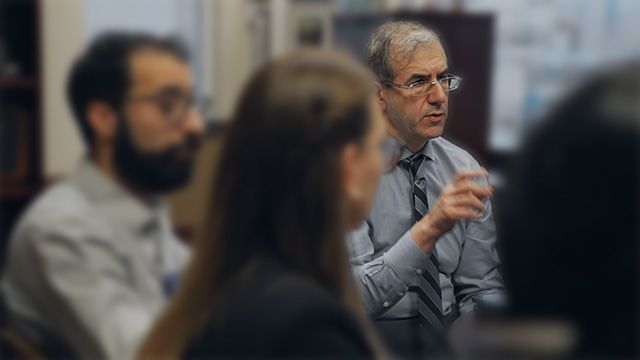

Studying the origins of pathogen virulence may help researchers develop better tools for diagnosing and treating drug-resistant bacterial infections.
Article Highlights
- Early, mechanistic identification of pathogens and infection pathways enables targeted intervention, reinforcing the clinical imperative for rapid, high-specificity diagnostics to improve outcomes and reduce inappropriate antimicrobial exposure.
- The concept that virulence factors evolved for environmental survival (e.g., interactions with amoebae, insects) reframes host-pathogen dynamics and supports the use of non-mammalian model systems to interrogate core pathogenic mechanisms and therapeutic targets.
- Resistance is driven not only by prescribing patterns but also by broader epidemiologic and environmental factors, including immunosuppressed populations, climate change, and global mobility — highlighting the need for interdisciplinary and population-level strategies.
- Convergence of medicine, engineering and AI enables development of narrow-spectrum therapeutics, advanced diagnostics and infection-resistant biomaterials — approaches aimed at preserving the microbiome and mitigating resistance selection pressure.
- Integrated research-clinical ecosystems (e.g., within a single institutional framework) facilitate more rapid evaluation and deployment of innovations, potentially shortening the traditional drug development timeline and expanding early patient access to novel therapies.
Antibiotic resistance is an escalating global health crisis, with bacterial infections ranking as the second leading cause of death worldwide. The increasing prevalence of drug-resistant bacteria has outpaced the development of new antibiotics, posing a significant threat to modern medicine.
Houston Methodist Hospital, under the leadership of Dr. Eleftherios Mylonakis, chair of the Department of Medicine, is playing a pivotal role in a groundbreaking $104 million initiative aimed at combating antibiotic resistance.
The multi-institutional effort, spearheaded by Harvard Medical School and funded by the U.S. Department of Health and Human Services' Advanced Research Projects Agency for Health, seeks to develop innovative technologies for diagnosing and treating bacterial infections.
In a video feature, Dr. Mylonakis discusses his involvement in the groundbreaking project and explains his long-standing fascination with the evolutionary mechanisms of pathogen virulence.
"Why did these pathogens develop their virulence mechanisms against humans," Dr. Mylonakis asks. "If we go back and we try to study those environmental microorganisms, study how insects, worms and amoebae are able to interact and control those pathogens, maybe that can give us some tools to better treat our patients and combat antimicrobial resistance."
Click on the video above to learn more about how this question is driving innovative diagnostic technologies and treatments to address the global crisis of antibiotic resistance.
Transcript
00:00–00:30
For infectious diseases, it's very important that we have a very narrow understanding of the infection process and the pathogen that causes the infection as early as possible, so we can intervene with optimal treatment. My name is Eleftherios Mylonakis. I'm the chair of medicine at Houston Methodist, and I also have a research lab and a group that studies antimicrobial drug discovery and new diagnostics.
00:30–01:00
What was fascinating to me is why those pathogens that are surviving in nature, why they developed their virulence mechanisms against humans? Those pathogens, those fungi in bacteria, they developed those traits of virulence when humans and mammals in general were a very small part of the biomass. It makes sense that they developed those virulence traits in order to survive
01:00–01:30
in the environment, to survive when they interact with amoebae, when they interact with insects or microscopic worms. And then it so happened that those same virulence factors can have an effect during the infection process of mammals and humans. My thinking was if I go back and we try to study those environmental microorganisms, then we can go to the core of their virulence and find this symbol, a symbol model host,
01:30–02:00
where we can study them and also study how insects and how worms and how amoebae are able to interact and control those pathogens. And maybe that can give us some tools in order to treat our patients. There is a lot of complexity
02:00–02:30
in understanding the nature of antimicrobial resistance. It has to do with overprescribing antimicrobials overusing antimicrobial agents. Also, with the human population, where we have a higher number of immunosuppressed individuals or individuals with immune systems that is manipulated medically, such as transplant recipients and climate change, that also could be contributing as a factor. Then we have other developments, such as the movement of population.
02:30–03:00
We saw that happening very quickly with the Covid-19 pandemic and we are probably witnessing it in a more slow but equally concerning manner to play out with the antimicrobial resistance. We want this new area of discovery to bring together the medicine and engineering in order to develop new diagnostic technologies, to develop new biomaterials that are more resistant to infection.
03:00–03:30
We want this treatment to be very narrow, so it doesn't affect the other microbes in the microbiome of our patient and doesn't promote resistance. Bioengineering will help answer a lot of those questions. It helps answer those challenges. At Houston Methodist, we have, the first class of bio engineers, medical students who graduate with an MD and also a master's in engineering.
03:30–04:00
The opportunity that we have is that engineering with AI, with in silico research, with new biomaterials is ready to flourish, is ready to grow. The challenge that we have is putting together engineers with biologists and clinicians and hopefully Houston Methodist will be an umbrella where those two disciplines can come together and develop the discoveries for tomorrow.
04:00–04:30
Texas Medical Center provides a unique opportunity to collaborate with different disciplines and especially Houston Methodist allows for the research institute and the hospital to be under one entity. If we take advantage of this efficiency, we can take discoveries from the bench to the bedside as soon as possible. That will have a meaningful effect to our patients,
04:30–05:00
because we can provide our patients with choices years before they go through all clinical trials and approvals. It takes about ten or more years for a lead compound to make it to clinical practice. We want to make Houston Methodist the place for outside discoveries to be evaluated. We want to provide a seamless transition between discovery to a clinical practice and provide those options to our patients.
05:00–05:30
I think that translational research environment is quite unique here, and it's a unique place to do research and to try to navigate discovery from a hypothesis all the way down to clinical trials in the same area. What happens a few times in a scientist’s career is that we have a complete understanding of of the phenomenon. You feel it in your heart.
05:30–06:00
You feel the experiment. You feel the process. You have a feeling and an understanding of the next step and you can see it through.