
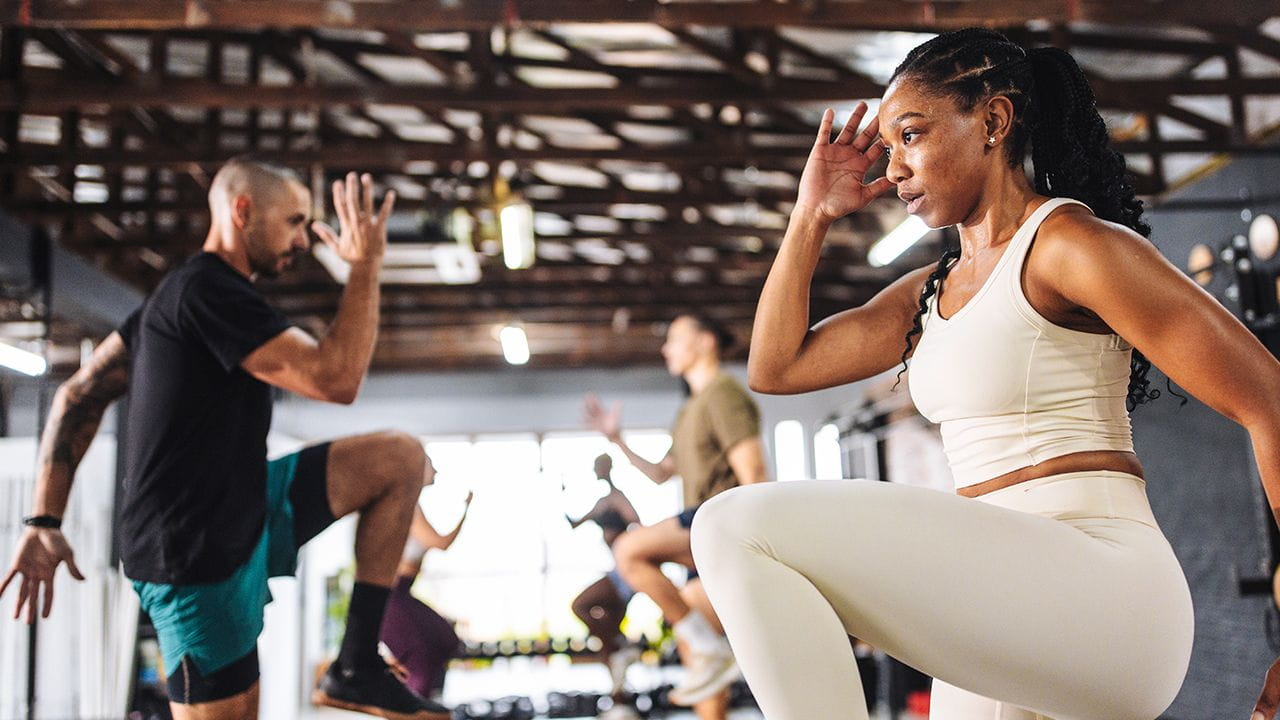

Leaking, urgency or other pelvic floor issues can make you question exercise — but is stepping away really the right call?
Maybe it happened during a set of jumping jacks or halfway through your morning jog — a little leak, followed by an urgent dash to the restroom. Now, you’re questioning whether your workouts are making your pelvic floor symptoms worse.
According to Dr. Sarah Rozycki, a urogynecologist and pelvic floor specialist at Houston Methodist, the instinct to avoid exercise is understandable, but it's usually the wrong call. Instead, she encourages people to understand how the pelvic floor works so they can stay active with confidence.
"I want my patients to be able to lead the lives that they live," says Dr. Rozycki. "That doesn't mean every workout will feel comfortable right away, but stepping away from physical activity can ultimately do more harm than good."
Plus, the exercises you're worried about probably aren't the biggest threat to your pelvic floor…
The biggest source of pelvic floor strain may not be what you expect
"The most harm you can do for your pelvic floor is sitting on the toilet on your phone, straining through bowel movements," says Dr. Rozycki.
Although pelvic floor injury can be out of your control (injury at childbirth, genetics, aging — to name a few), several common habits can put unnecessary pressure on the pelvic floor, including:
Pushing or straining to urinate, rather than letting urine flow naturally
Straining during bowel movements
Sitting on the toilet for long periods while scrolling your phone
Holding your breath while pushing during bowel movements
"You should just sit on the toilet and let it flow. Don't push," Dr. Rozycki says. "The pelvic floor isn't supposed to work against excess pressure, so we want to do everything we can to limit straining."
She recommends gentler techniques, such as pretending you're blowing bubbles during a bowel movement rather than holding your breath and bearing down. It’s also important to take steps to prevent constipation so you can reduce the need to strain in the first place. Using a step stool at the base of your toilet to elevate your feet and flex your hips can also optimize your anatomy for less strenuous bowel movements.
(RELATED: When to See a Doctor for Constipation)
5 myths and facts about exercising with pelvic floor symptoms
Strenuous activities might seem risky when you're dealing with leaking, urgency or other pelvic floor issues, but exercise plays an important role in managing these symptoms — not making them worse.
Physical activity supports bowel regularity, which reduces the tendency to strain and put excess pressure on the pelvic floor. Strengthening your core, back and hip muscles also supports your pelvic floor indirectly, since all of these muscle groups work together.
Additionally, physical activity helps with weight loss, which relieves significant pressure on the pelvic floor and can improve bladder function and control.
That said, when it comes to pelvic floor health and exercise, there's no shortage of advice and misconceptions. Here are some of the biggest myths out there, along with the facts you should know.
Myth: Certain workouts are off-limits
Is running worse than walking? Is yoga better than weightlifting? Dr. Rozycki says a holistic exercise approach works best for pelvic floor health because multiple muscle groups contribute — including your abdominal, back and hip muscles.
"You really can't go wrong when it comes to the types of workouts you do. There's no list of workouts I would tell patients to avoid."
Dr. Sarah Rozycki, urogynecologist
High-impact exercises like running, jumping and HIIT workouts may frustrate people with stress incontinence because these movements can trigger leaking. But avoidance isn't the answer.
"I don't want someone to shy away from the activities they enjoy, but instead learn how to adjust to where your body is at currently," Dr. Rozycki says. Working with a pelvic floor physical therapist to adapt your breathing and technique or exploring treatment options that directly address the leaking can help you stay active without worsening your symptoms.
[Related Content]
Fact: Breathing properly can reduce pelvic floor strain
Whether you're doing a crunch or lifting a barbell, breathing properly during lifting movements is one of the best ways to reduce pressure on your pelvic floor. (RELATED: How to Avoid Common Breathing Mistakes While Exercising)
"Rather than holding your breath, which literally presses all the pressure down on your pelvic floor, you want to exhale while you're lifting," says Dr. Rozycki. "That is the biggest piece of advice that I could give in terms of minimizing damage or strain during a workout."
This principle applies beyond exercise, by the way. Carrying groceries, picking up a child, moving furniture — these are all scenarios where exhaling during moments of effort can help reduce the strain on your pelvic floor.
Myth: Pelvic floor problems are a sign of weak muscles
You might think pelvic floor dysfunction is synonymous with having a weak pelvic floor, but that's not always the case. Muscle tightness, poor coordination and structural changes (like vaginal prolapse) can also contribute to symptoms.
"Pelvic health isn't just about pelvic floor strength — it's also about control and coordination, knowing when to let those muscles relax and when to engage them," says Dr. Rozycki.
(RELATED: What Strong Really Means for Your Pelvic Floor)
For instance, muscles that seem "weak" may actually be overly tight. "If a muscle is already contracted and you push it to work even harder, you're not going to get more power out of it because it's already operating at max capacity," she explains
Fact: Pilates can help you focus on control and coordination
There's a good reason this type of workout has become so popular. While strength and resistance training often encourages a mentality of pushing your body to its limits, Pilates emphasizes control and building a mind-body connection.
"Pilates instructors often guide participants to focus on engaging and relaxing their pelvic floor muscles during class — building awareness of these muscles that many people overlook," adds Dr. Rozycki.
That focus on control and coordination may make Pilates a useful complement to other forms of exercise, especially for people trying to better understand how their pelvic floor functions.
[Engagement Card]
Myth: Everyone with pelvic floor symptoms should do Kegels
Often the first pelvic floor exercise that comes to mind, you might be surprised it took this long for Kegels to come up. While this can be an important part of pelvic floor physical therapy, it's not the first-line treatment some people might have you believe.
In fact, Dr. Rozycki points out that Kegels can actually be counterproductive if you have a tight pelvic floor, making symptoms like leaking, urgency and pelvic pain worse. A pelvic floor specialist should evaluate you before you begin an exercise program targeting these muscles.
Don't give up on exercise — get help
One of the biggest mistakes Dr. Rozycki sees is people getting discouraged and avoiding exercise altogether. If pelvic floor symptoms are affecting your workouts or daily life, a specialist can pinpoint your specific issue and build a plan that keeps you moving safely.
Pelvic floor symptoms can stem from muscle weakness, tightness, poor coordination or structural changes like prolapse. A pelvic floor specialist can identify the cause and recommend the right treatment approach.
Dr. Rozycki also emphasizes the value of pelvic floor physical therapists, calling them "the MVPs." These specialists teach you how to properly engage and relax your pelvic floor muscles, a skill that requires patience and consistent practice.
"It takes time to learn how to engage a body part that you can't physically see," Dr. Rozycki says. "You have to work those muscles, which takes practice — and maybe some failure along the way — in order to see the outcome."

