
Most ears are designed to clean themselves, but when earwax causes problems, cotton swabs aren't your safest or most effective option. An ENT explains what to use instead.
One of the most notorious sayings among ear, nose and throat doctors is that you shouldn’t put anything smaller than your elbow in your ear. But that’s not technically true, according to Dr. Jeffrey Vrabec, an ENT at Houston Methodist.
While that’s generally a good rule of thumb if you’re reaching for cotton swabs, bobby pins, paperclips, toothpicks, pen caps or even your pinky finger, there are things smaller than your elbow that can help soften or clear earwax without damaging your ears.
Many of them are liquid.
The problem with cotton swabs and tools alike isn’t just that they can go too far, though that certainly can happen. They’re just not that good at removing earwax in the first place.
“They’re the wrong tool for the job,” says Dr. Vrabec. “In clinic, when I want to remove something from the ear canal, I use a scoop. A cotton swab is more like a plunger.”
In other words, cotton swabs may feel like they’re cleaning your ears, but they may also push wax deeper into the ear canal.
That’s why safe ear cleaning begins with knowing when to step in — and when to leave well enough alone.
Do you actually need to clean your ears?
For most people, no — at least not the inside part.
“The ear is supposed to clean itself,” says Dr. Vrabec. “The wax will naturally work its way out, and then you just wipe it away when it gets to the opening.”
That’s because earwax is made in the outer part of the ear canal, and your ear has a built-in system for moving it out. As skin cells in the ear canal naturally migrate outward, they help carry old wax with them. Chewing and other jaw movements also help nudge things along.
So, for everyday ear cleaning, a washcloth is usually enough to wipe away wax that has made its way to the opening of the ear. There’s usually no need to go any deeper than that.
Earwax becomes a problem when that self-cleaning system gets interrupted or can’t keep up. That can happen for several reasons, including ear canal shape, skin conditions, aging, frequent use of hearing aids or earbuds, or repeated attempts to remove wax with cotton swabs, which can push it deeper instead of pulling it out.
You may need to address your earwax if you’re having symptoms such as:
-
A clogged or blocked feeling in the ear
-
Muffled hearing or hearing loss
-
Ear fullness or pressure
-
Ear discomfort or pain
-
Itching
-
Ringing in the ear
-
Water that seems trapped after swimming or showering
-
One earbud sounding quieter than the other
“If you’re feeling like the ear is blocked, or you put in your AirPod on one side and you can’t hear it on one side but can hear it on the other, then you probably need to try to clean it out,” says Dr. Vrabec.
(Related: What Type of Headphones Are Best for Your Hearing?)
Still, removing earwax should be an occasional thing for most people, not a daily or weekly routine. That said, Dr. Vrabec says some people do need regular cleanings, especially if they have structural differences in the ear canal or skin conditions that affect how wax moves out. But that is not the norm.
Safer ways to deal with earwax at home
For most people, earwax only needs attention when it's causing symptoms like muffled hearing, ear fullness or a blocked sensation. If that happens, Dr. Vrabec says there are several safer options to try before reaching for a cotton swab.
Start with an over-the-counter earwax removal kit
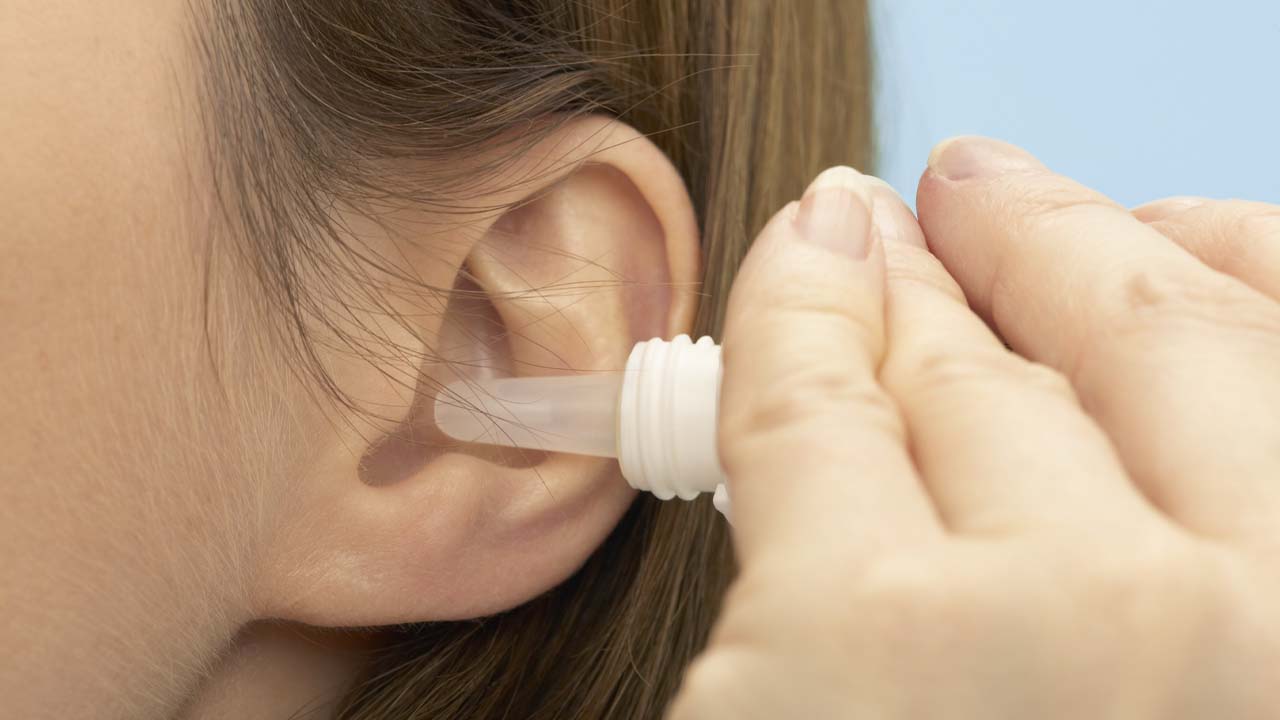
If your ear feels plugged and you suspect wax is the culprit, Dr. Vrabec says a standard earwax removal kit from the pharmacy is generally a reasonable place to start. Most kits use drops to soften the wax followed by a gentle rinse with a bulb syringe.
“The standard wax removal kits are pretty safe,” he says. “Obviously, nothing's 100% effective. But you're not likely to cause problems with one of those wax removal kits.”
Many of the products use carbamide peroxide or similar ingredients to help loosen wax so it can move out of the ear more easily.
Mineral oil or baby oil can help soften hard wax
Sometimes the issue isn't the amount of wax but its consistency. As wax gets harder or drier, it may have a tougher time making its way out of the ear naturally.
Earwax can vary quite a bit from person to person. Some people have softer, wetter wax, while others have wax that's drier, flakier or harder — and, according to Dr. Vrabec, harder wax tends to have a tougher time working its way out of the ear on its own. In those situations, Dr. Vrabec says oil can help soften it.
“If the wax is too hard, then we use oil to loosen the wax,” Dr. Vrabec says.
His preference is usually mineral oil or baby oil.
“Mineral oil, baby oil is fine, and that's usually what I'd suggest to people,” he continues.
What about olive oil?
This is one of the most common earwax-removal questions online. While mineral oil or baby oil are typically preferred, Dr. Vrabec says olive oil is generally safe for most people.
“I don't think olive oil is unsafe at all,” Dr. Vrabec says. “If it's something that you would otherwise put on your skin, it's fine to go into your ear, but I'd rather eat the olive oil and put the mineral oil in my ear.”
What about those viral ear-cleaning services?
Ear-cleaning services have become increasingly popular online, with customers paying to have their ears flushed using specialized irrigation devices. According to Dr. Vrabec, these services appear to rely on a basic technique called irrigation, which uses water to help remove earwax from the ear canal.
"I think that's what that device is kind of doing," says Dr. Vrabec. "It looks like it's kind of irrigating your ear canal."
That doesn't necessarily make these oddly satisfying services to watch unsafe. But it also doesn't mean they're necessary for most people.
"Ultimately, that's kind of what you're trying to do with a wax removal kit also," he adds.
For people with occasional earwax buildup, Dr. Vrabec says a standard over-the-counter earwax removal kit is often a simpler and less expensive place to start.
"It's probably OK to use that type of device," says Dr. Vrabec. "But again, probably only if you're feeling like your ear is blocked. It's not something I would tell somebody to do all the time."
Hydrogen peroxide can also help loosen wax
Hydrogen peroxide-based drops are another common option for earwax buildup. The bubbling action many people notice isn't actually removing the wax by itself. Rather, it's helps separate the wax from the ear canal so it can move more easily.
Whether you choose hydrogen peroxide, carbamide peroxide or another commercially available preparation, Dr. Vrabec says the products are generally very similar in how they're used.
“Most of the commercial preparations are very, very similar,” says Dr. Vrabec. “You're just trying to separate the wax from the canal so it'll move easier.”
As with any earwax treatment, these products should be used according to package directions and only when earwax is causing symptoms.
[Related Content]
Still planning to use cotton swabs? Here's what to know
Even after years of warnings from doctors, cotton swabs remain one of the most common tools people use to clean their ears. To be fair, some people use them for years without ever causing an injury. Still, that doesn’t make them the right tool for the job.
"Even if somebody is pretty good and they don't put it too deep in their ear, if I really want to get something out of there, I would use a different tool," says Dr. Vrabec.
Occasionally, however, Dr. Vrabec sees more serious injuries caused by people inserting cotton swabs and other objects too deeply into their ears.
"We've seen issues where somebody went too deep and scratched their ear canal and made it bleed, or they tore their eardrum or broke the little bones in their ears," he says.
These types of injuries are uncommon, but they can be painful and may require medical treatment. According to Dr. Vrabec, symptoms such as severe pain, bleeding, dizziness or sudden hearing changes after putting something in your ear should be taken seriously.
If you're determined to use a cotton swab anyway, remember that it's best suited for cleaning wax that has already made its way to the outer opening of the ear. Once you're putting the swab into the ear canal, you're far more likely to be pushing wax around than removing it.
When to see a doctor for earwax
"If you think you have to clean your ear all the time, that's probably a reason to see the doctor," says Dr. Vrabec. "There might be some other skin condition in your ear or something that needs a different treatment."
Those situations often require a different approach than repeatedly treating symptoms at home. You should also make an appointment if you experience:
-
Persistent hearing loss or muffled hearing
-
A blocked sensation that keeps coming back
-
Ear pain
-
Drainage from the ear
-
Bleeding from the ear
-
Dizziness or balance problems
-
Symptoms that don't improve after using an earwax removal kit or other at-home options
(Related: Earaches in Adults: What You Need to Know)
The good news? Most people will never need regular ear cleanings or complicated ear-care routines.
"I think the thing to understand the most is that earwax is not just a nuisance," says Dr. Vrabec. "It has a purpose. It's there to help protect your ear canal."