
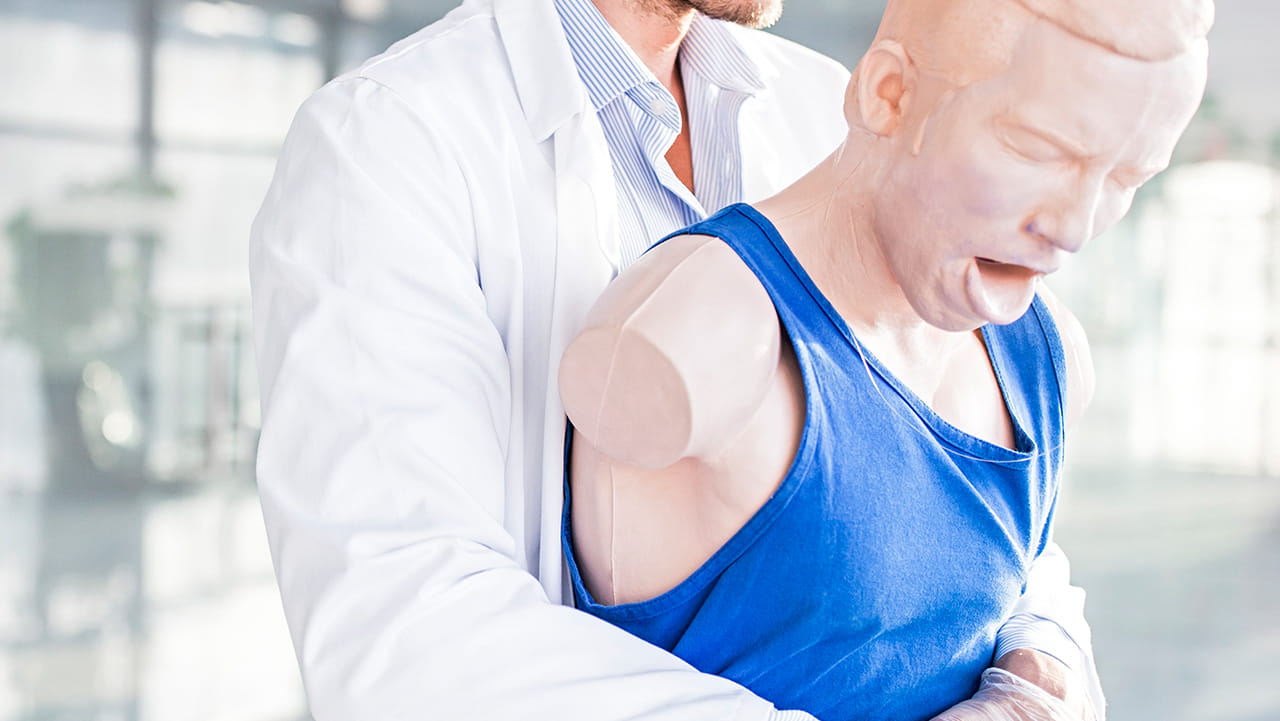

Community-based CPR education efforts are helping improve survival chances for cardiac arrest by preparing people to act quickly.
Out-of-hospital cardiac arrest (OHCA) is a time-critical medical emergency where the survival of the patient depends on the ability and willingness of bystanders to perform cardiopulmonary resuscitation (CPR). Each year, over 356,000 people in the United States suffer from OHCA, and nearly 90% of those instances result in death. Patient survival varies widely between counties. According to the American Heart Association, patient survival is correlated with rates of bystander CPR which, in turn, is correlated with CPR training.
Although about 69% of OHCA occurs at home, 21% occurs in public. OHCA is defined as the stoppage of cardiac activity with the absence of signs of circulation. Cardiac causes account for the majority of OHCA cases; however, OHCA can also occur due to non-cardiac causes such as drowning, trauma, overdose, asphyxiation and electrocution.
According to the Centers for Disease Control and Prevention, about 50% of cardiac arrest events are witnessed. Most patients experiencing an OCHA event do not receive bystander CPR. Hence, initiatives to train the community on CPR are of critical importance and urgency. Towards this end, Ebun O. Ebunlomo, PhD, MPH, assistant professor of Education in Cardiovascular Surgery at Houston Methodist led the systematic implementation and evaluation of a free, annual health education program that offered Hands-Only CPR training to Houston communities. This Save a Life (SAL) training program was a 5-year collaboration between the Houston Methodist DeBakey Heart and Vascular Center, DeBakey CV Education and the American Heart Association that focused on high-OCHA neighborhoods in Houston. It successfully trained a total of 2,792 people in basic CPR skills, infant CPR, choking relief and automated external defibrillator (AED) awareness. Assessments indicated a 51% increase in the proportion of respondents who could accurately identify the steps for Hands-Only CPR.
“Our results show that Save a Life was an effective method of training lay people in the community how to perform CPR. The SAL program is an effective model to train Greater Houston community members in CPR, Hands-Only CPR, choking relief, and AED use. Similar programs could be effective in other locations. Public health practitioners should partner with local authorities and community organizations to evaluate if a similar program could benefit their local communities,” said Ebunlomo.
Acronyms
- OHCA: Out-of-hospital Cardiac Arrest
- CPR: Cardio Pulmonary Resuscitation
- SAL: Save A Life
- AED: Automated External Defibrillator
Article Citations
- Ebun O Ebunlomo, Laura Gerik, Rene Ramon. Save a Life: Implementation and Evaluation of a Community-Focused CPR Education Program in Houston, Texas. J Prim Care Community Health. Jan-Dec 2021;12:2150132721998249. doi: 10.1177/2150132721998249.
- The author(s) disclosed receipt of the following financial support for the research, authorship, and/or publication of this article: This program was supported by the DeBakey Medical Foundation, the American Heart Association, Boston Scientific-Close the Gap and NRG.