
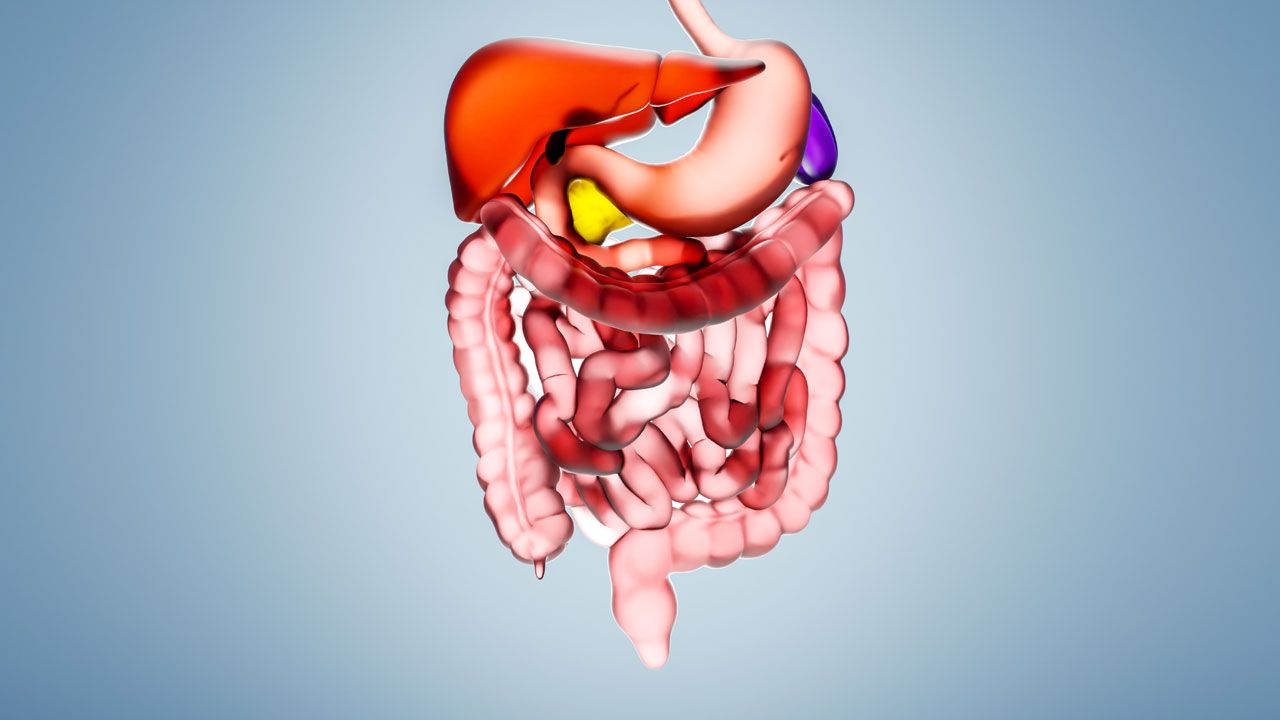

Houston Methodist researcher discusses how the Atmo capsule from Atmo Biosciences can shed light on the effects of diet and how that relates to the field of gastrointestinal motility disorders.
While gastrointestinal (GI) motility disorders are on the rise, their assessment is difficult.
The Atmo gas capsule, designed by Atmo Biosciences, is emerging as a transformative tool that can revolutionize the assessment of GI motility as well as the influence of additional factors on GI motility and health. It is an ingestible, FDA-approved wireless motility device that provides real-time data on the gases released inside various parts of the patient’s GI tract.
Interestingly, diet influences GI motility via multiple pathways, including neurohormonal signaling, luminal distension and microbial fermentation. The macronutrient composition of the diet plays a key role in regulating GI motility.
Dr. Eamonn Martin Quigley is the David M. Underwood Chair of Medicine in Digestive Health and investigates how various GI diseases and conditions affect the functions of the gut. In the following Q&A, Dr. Quigley discusses how the Atmo capsule can shed light on the effects of diet and how that relates to the field of GI motility disorders.
Q: There is a lot of talk about the low FODMAP diet and how some foods produce higher amounts of gases as compared to other foods, which can cause stomach upsets. Can the Atmo capsule evaluate diets?
A: By changing the diet, you can certainly change the pattern of gas production. It is possible for the Atmo capsule to evaluate diets such as the FODMAP diet and several other diets. The implications can include more precise, personalized dietary interventions for gut disorders, insights into how different foods affect microbiome metabolism and a shift away from reliance on subjective, symptom-based dieting. However, the food itself may interfere with the signal from the capsule. There is a lot of interest in investigating diet and gases in a different technology as well in which I am also involved. This is a handheld device from the company Food Marble that can detect gases in the breath.
Q: What is the relationship between diet and gastrointestinal motility disorders?
A: The relationship between diet and gastrointestinal motility disorders is significant, particularly from the standpoint of digestive disease research and neurogastroenterology. Diet affects how the GI tract moves, contracts, how the stomach empties and how much fermentation occurs. For example, high-fat and high-fiber foods delay gastric emptying. Specifically, diet is thought to play an important role in the pathophysiology of irritable bowel syndrome (IBS), although its etiology is not completely understood.
Q: Can the Atmo capsule potentially identify hidden triggers for IBS symptoms?
A: Patients suffering from IBS can have triggers that are unrelated to food. These may include stress, alcohol intake and anxiety. Currently, the Atmo capsule is used to diagnose and evaluate GI motility disorders. However, its potential to study small intestinal bacterial overgrowth (SIBO), which has been linked to IBS and other microbiome-related conditions, continues to be studied. The Atmo gas capsule may help identify physiological patterns associated with triggers for IBS and symptom flares. Profiling intestinal gases using the Atmo capsule can be a powerful tool in IBS therapy.
Q: How can the Atmo capsule lead to patient care improvements in the context of diet adjustments?
A: Since the Atmo capsule is noninvasive, it allows patients to eat, work and move about normally while it records data wirelessly. Instead of generic diets, the Atmo capsule can help create a customized diet plan. This can be based on data on how different diets are correlated with gas-related symptoms and what that means for the patient’s unique biology, and treatment goals. Diet-microbiome-host interactions are complex. Patients with motility disorders frequently demonstrate heterogeneous responses to the same foods. Hence, the Atmo capsule can aid in advancing personalized nutrition and accelerating research into precision nutrition approaches.
For further information on gut health and Dr. Quigley’s work on this topic, please see the following papers:
Article Citations
Maria L Marco, Marla Cunningham, Stephan C Bischoff, Gerard Clarke, Nathalie Delzenne, James D Lewis, Marlies Meisel, Daniel Merenstein, Paul W O'Toole, Heidi M Staudacher, Hania Szajewska, Jerry M Wells, Eamonn M M Quigley. The International Scientific Association for Probiotics and Prebiotics (ISAPP) consensus statement on the definition and scope of gut health. Nat Rev Gastroenterol Hepatol. 2026 May;23(5):432-448. doi: 10.1038/s41575-026-01176-x.
Madhusudan Grover, Giovanni Barbara, William Chey, Bruno P Chumpitazi, Christine Feinle-Bisset, Harriett Schellekens, Eamonn M M Quigley. The Intestinal Microenvironment and Disorders of Gut-Brain Interaction. Gastroenterology. 2026 May;170(6):1133-1151. doi: 10.1053/j.gastro.2026.02.015.
Eamonn M M Quigley. Dyspepsia-Is the Stomach Half Empty? Dig Dis Sci. 2025 Aug;70(8):2593-2594. doi: 10.1007/s10620-025-09038-3.