
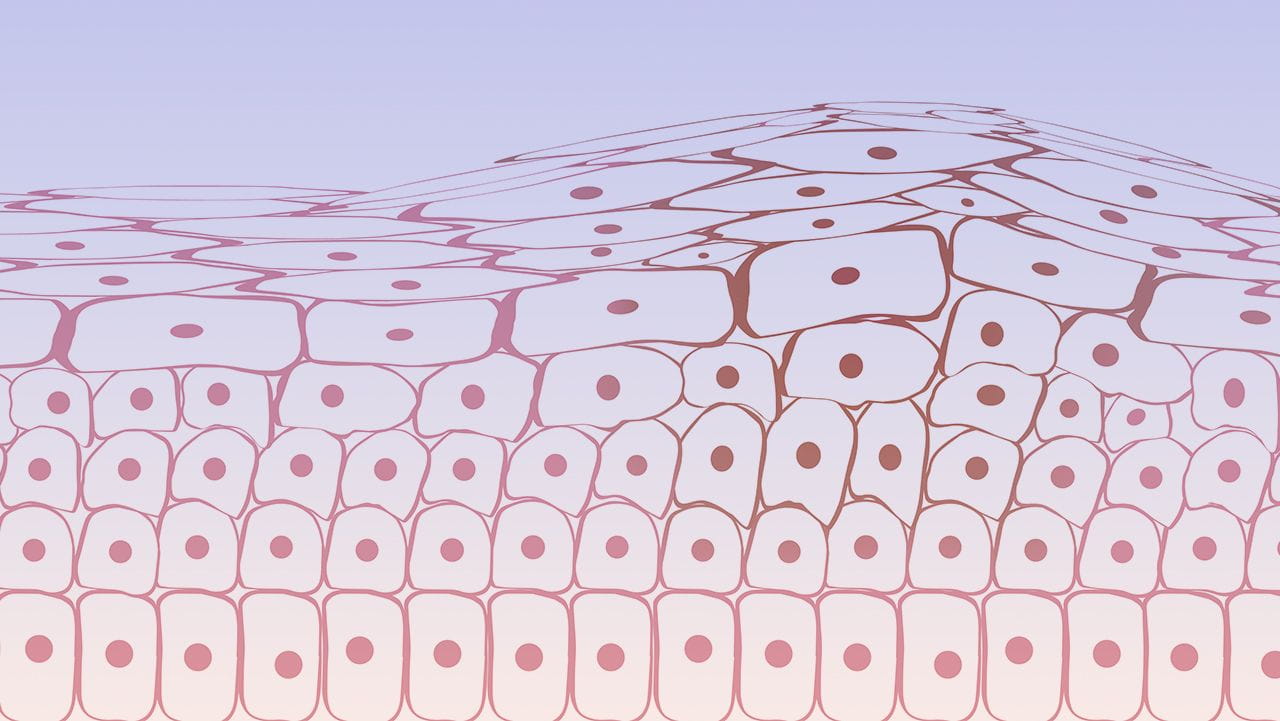

What if cancer’s earliest warning sign isn’t a tumor, but aging cells quietly reshaping tissue and offering a chance to intercept disease before it begins?
For decades, cancer research has largely focused on treating advanced disease. But an intriguing new commentary in Cancer Cell may help shift that paradigm upstream — to the early, difficult-to-detect stages of tumor development.
In Cellular Senescence in Precancer Lesions and Early-Stage Cancers, Houston Methodist scientist Keith Syson Chan, PhD, and collaborators across a national consortium reframe a familiar biological process as a powerful — and potentially actionable — signal of cancer risk.
At the center of the work is cellular senescence, a state in which damaged or stressed cells stop dividing. Long viewed as a protective mechanism, senescence prevents cells with DNA damage or oncogenic mutations from progressing into cancer. But the new analysis highlights a more nuanced reality: senescence is not simply a brake on cancer — it can also help set the stage for it.
A double-edged sword
The commentary emphasizes that senescence plays a dual role in the earliest phases of cancer development. In its early or transient state, senescence acts as a tumor suppressor. Cells enter a growth-arrested state, signal for immune clearance and are ultimately removed, restoring tissue health.
But when this process breaks down — due to aging, immune dysfunction or other factors — senescent cells can accumulate and persist. At that point, they begin secreting a complex mix of inflammatory signals known as the senescence-associated secretory phenotype (SASP).
- Happening In Cancer Research:
- B Cells Drive Resistance
- Unintended Chemotherapy Consequences
- TDP43 Regulates DNA Mismatch Repair
These signals don’t act in isolation. Instead, they create a feedforward loop across multiple cell types — epithelial cells, fibroblasts and immune cells — that reshapes the surrounding tissue into a pro-inflammatory, tumor-permissive environment known as the precancer tissue microenvironment (PreTME).
“That’s one of the key conceptual shifts,” says Dr. Chan. “Senescence is not just happening in epithelial cells. It’s a coordinated, multicellular process that can either suppress cancer or, if it becomes chronic, help drive it.”
Moving beyond an epithelial-centric view
Historically, most studies of senescence have focused on epithelial cells — the origin of most solid tumors. This paper expands that lens, showing how stromal and immune cells also undergo senescence and actively contribute to cancer risk.
Senescent fibroblasts, for example, can remodel the extracellular matrix and secrete growth factors that promote tumor initiation. Meanwhile, senescent immune cells may lose their ability to eliminate abnormal cells, weakening one of the body’s earliest defenses against cancer.
Together, these changes transform senescence from a localized cellular event into a system-wide driver of early tumor biology — one that unfolds long before a tumor is detectable on imaging.
Detecting risk before cancer forms
Perhaps the most forward-looking aspect of the work is its focus on early detection and “interception.”
Rather than waiting for cancer to develop, researchers are now asking: What if we could identify high-risk tissue states — like chronic senescence — and intervene before malignancy occurs?
A major barrier is the lack of reliable biomarkers. Currently used markers of senescence — such as p16 or p21 — are inconsistent and not specific enough across tissues.
The consortium proposes moving toward integrated biomarker panels, combining tissue-based signals with circulating indicators such as SASP factors or extracellular vesicles.
The long-term goal is ambitious but clinically intuitive: a liquid biopsy–style test that could be incorporated into routine care.
“In an ideal world, you could detect a high senescence burden through a blood test — similar to checking cholesterol. That would allow us to identify individuals at risk and intervene before cancer develops.”
Keith Syson Chan, PhD
Intervening earlier: from drugs to lifestyle change
The paper also outlines emerging strategies to target senescence directly — a concept known as precision interception.
These include:
-
Senolytics, which eliminate senescent cells
-
Senomorphics, which suppress harmful SASP signaling
-
Lifestyle interventions, such as exercise and dietary modification, shown to reduce senescent cell burden
Importantly, the authors caution that senescence is context-dependent. Eliminating senescent cells indiscriminately could disrupt normal tissue repair, underscoring the need for precision approaches.
A collaborative model for a complex problem
Underlying the science is another key innovation: the collaborative structure of the Translational and Basic Science Research in Early Lesions (TBEL) Consortia. By pooling samples and expertise across cancer types — including colon, prostate, bladder and breast — the group is tackling a problem too complex for any single lab.
“This is not something one institution can solve alone,” says Dr. Chan, who co-led the research alongside co-authors Ming Yu, Ph.D., of Fred Hutchinson Cancer Center in Seattle and Jimin Min, Ph.D., of NYU Langone Health. “We need shared data, shared models and a coordinated effort to understand early lesions across cancers.”
Ultimately, the commentary argues for a fundamental shift in how cancer is understood — not as a disease that begins when a tumor appears, but as a continuum that starts years earlier at the cellular and microenvironmental level.
By illuminating the role of senescence in that earliest window, the research opens the door to a new clinical frontier: detecting and disrupting cancer before it fully takes hold.
“If we get it right, this approach may not eliminate cancer entirely, but it could significantly reduce the number of patients who ever reach advanced, harder-to-treat disease,” says Dr. Chan. “That shift alone would have a massive, transformative impact on a global scale.”