
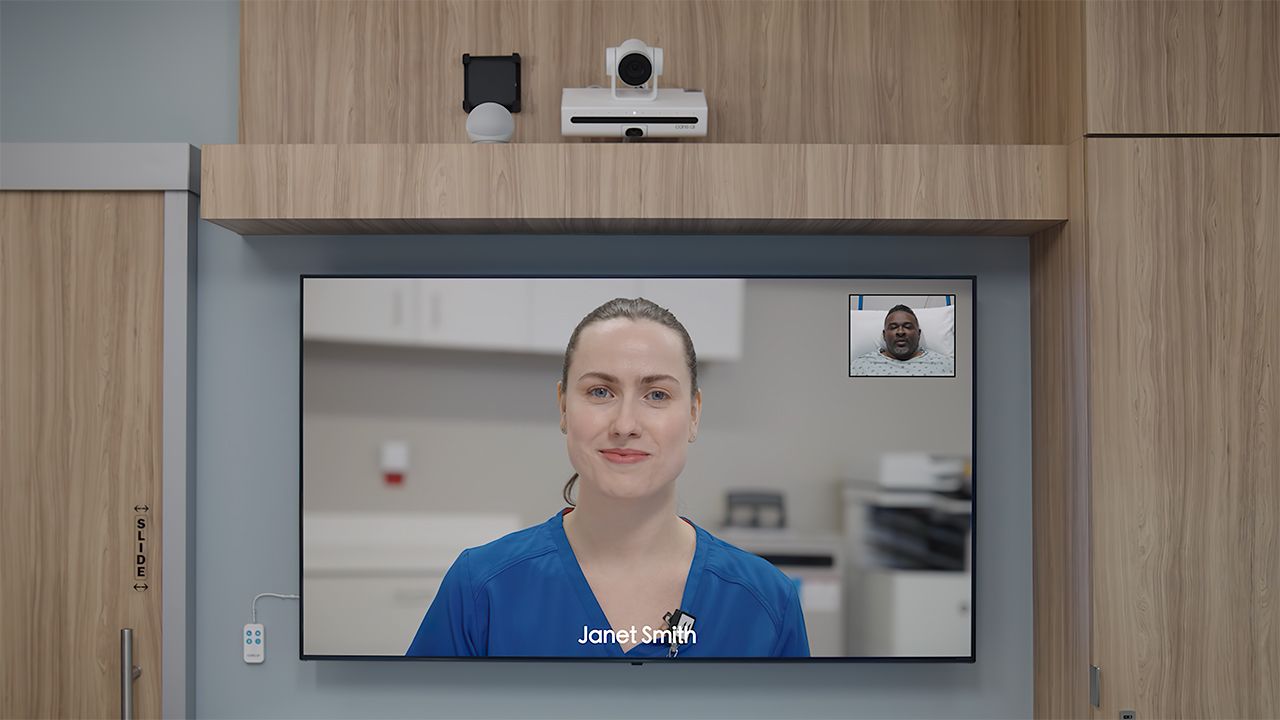

Houston Methodist is transforming healthcare delivery through virtual nursing, AI-powered tools, smart patient rooms and continuous monitoring. Learn how its innovation strategy is improving patient outcomes, supporting clinicians and redefining the future of care.
Healthcare innovation is often defined by sensational advances like robotic surgery, precision medicines and AI-powered diagnostics. However, the most significant and slow-moving change in hospitals is how care is given, recorded and perceived.
At Houston Methodist, the change is deliberate and applies across the organization, driven by a commitment to enhancing the patient experience, supporting clinicians and building operational resilience. By using virtual care models, implementing intelligent monitoring, carrying out ambient documentation and adopting a strict methodology when testing new technologies, the organization is defining what an intelligent healthcare system of the future might look like. Here, innovation is not just a buzzword; it is a disciplined, strategic initiative aimed at redesigning the way care is delivered, raising the level of the patient experience and supporting clinicians in this increasingly complicated healthcare environment.
Michelle Stansbury, who is the Associate Chief Innovation Officer and Vice President of IT Applications, says that her method combines vision with pragmatism. She identifies real problems, tests out effective solutions and then expands those that actually improve care.
Virtual care as a clinical force multiplier
One of the most transformative advancements is the Virtual Operations Command Center, which supports virtual nursing and remote clinical monitoring throughout the system. Virtual nurses handle admissions, discharges and rounding, giving patients dedicated time that bedside teams often struggle to provide during busy shifts.
Continuous monitoring technologies have amplified this impact. Instead of Q4 vital checks, patients now benefit from uninterrupted rest while clinicians receive real‑time data streams. Stansbury shared an example in which a virtual nurse noticed subtle changes in a patient’s wearable device. Although the bedside nurse had recently checked on the patient, the virtual nurse insisted on a second look — catching a developing issue before it escalated.
“No one likes to be woken up in the middle of the night,” she says. “And they don’t need to.”
The command center can monitor up to 500 patients at once, enabling earlier intervention and reducing unnecessary admissions, especially for rural hospitals seeking remote support.
Smart rooms and the rise of MyChart Bedside
Houston Methodist’s smart room strategy centers on MyChart Bedside, which turns in‑room TVs into digital whiteboards. Patients can view care team information, discharge milestones, educational videos and even request virtual nurse visits.
The technology hub was critical to refining this solution. Initially, the team considered a high-end digital whiteboard from an external vendor, but the cost was prohibitive. When a current vendor introduced its own version, Houston Methodist partnered with engineers to enhance the product, adding features clinicians deemed essential, such as pain-medication timing and clearer discharge criteria.
Scaling MyChart Bedside across the system has required significant change management. Nurses accustomed to writing on physical boards had to adopt new workflows, including pulling up the digital board during shift changes. Stansbury notes that the West campus excelled in adoption, providing a model for other hospitals.
The Technology Hub: a real‑world testbed
The 3,500‑square‑foot Technology Hub has become the engine of Houston Methodist’s innovation pipeline. Opened just before the pandemic, it allowed the system to rapidly deploy virtual care tools when COVID‑19 hit.
The hub’s purpose is simple: test technologies in a realistic clinical environment before they reach patients. Clinicians, patients and technology partners collaborate to evaluate usability, workflow fit, and clinical value.
Sometimes the most impactful solutions are unexpected. The team wasn't actively seeking a malnutrition detection tool, but its ability to identify malnutrition within the critical first 48 hours (a reimbursement requirement) made it a high‑value addition.
AI as a clinical and operational accelerator
AI is woven throughout Houston Methodist’s innovation strategy, supporting radiologists by flagging concerning findings. Ambient listening tools reduce the documentation burden for physicians and, now, nurses, who are piloting voice-driven charting at Cypress.
Stansbury is clear-eyed about AI’s promise and limitations. While some studies claim AI outperforms clinicians, others show the opposite. She emphasizes that AI should augment — not replace — clinical judgment.
“A clinician is going to ask more questions about travel, symptoms, recent surgeries. AI doesn’t always do that.”
Still, she acknowledges that patients increasingly turn to AI chatbots for first opinions, a trend she expects to grow.
Meeting patients and clinicians where they are
Stansbury's initiatives center on three key pillars. First and foremost, the focus is on patients. The goal is to provide care in the format that best suits their preferences, whether by phone, text, virtual consultations or in-person visits. Additionally, the emphasis is on ensuring that technology enhances the hospital experience rather than complicating it.
The second pillar addresses clinicians’ needs. Stansbury aims to reduce the documentation burden, improve workflows and equip healthcare professionals with tools that enhance their practice, making their work more efficient and effective.
The final pillar is operational efficiency. This involves leveraging technology to improve financial sustainability, streamline processes and support staff across the organization. Together, these three pillars create a comprehensive approach to enhancing patient care, supporting clinicians and ensuring operational efficiency.
Looking ahead
As some technology platforms embed AI more deeply, Stansbury anticipates even greater transformation. Agent‑builder tools may soon automate configuration tasks typically handled by IT analysts, freeing teams to focus on higher‑value work.
The pace of change is accelerating.
“In one year, AI has drastically changed the way we do business,” she says. “It’s a fascinating world we’re living in now, and I can’t wait to see where we are in two to three years.”
At Houston Methodist, the future of healthcare is not theoretical. It is already unfolding in patient rooms, command centers, and innovation labs across the system. At the center is a commitment to making care better, safer and more human.