

Sometimes the next medical breakthrough isn't a brand-new drug — it's an old one with an unexpected talent.
One of medicine's greatest challenges is not simply discovering new antibiotics — it's staying ahead of bacteria that have learned to outsmart them.
In a new study by Dr. Eleftherios Mylonakis and first author Dr. Nagendran Tharmalingam, researchers found that an established blood pressure medication could become an unexpected new weapon against one of the world's most dangerous superbugs.
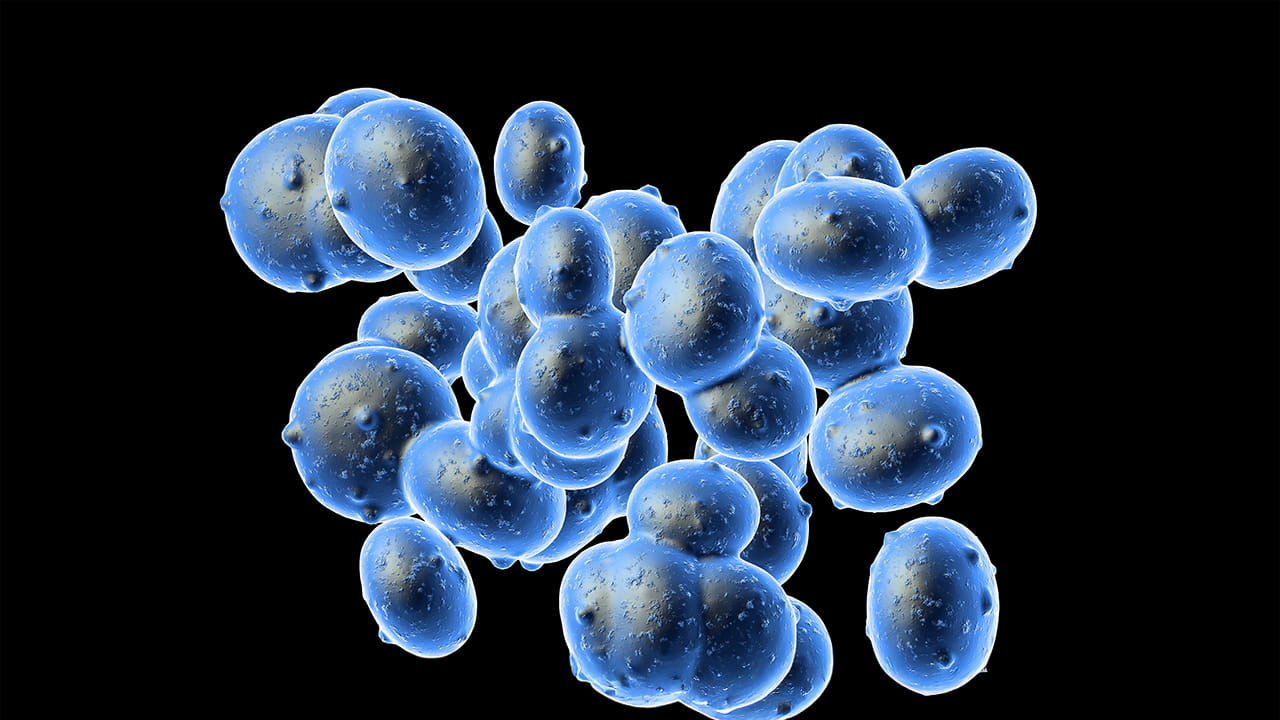
Published in Nature Communications, the study found that candesartan cilexetil, a widely prescribed and inexpensive antihypertensive medication, demonstrated potent activity against methicillin-resistant Staphylococcus aureus (MRSA), one of the leading causes of antibiotic-resistant infections worldwide.
Rather than developing entirely new antibiotics — a process that can take more than a decade and cost hundreds of millions of dollars — the research highlights the growing potential of drug repurposing, using FDA-approved medications with well-established safety profiles to accelerate the development of new antimicrobial therapies.
According to the CDC, antibiotic-resistant bacteria cause more than 2.8 million infections and over 35,000 deaths each year in the United States. MRSA alone is responsible for more than 300,000 serious infections and more than 10,000 deaths annually, remaining a major cause of life-threatening infections acquired in both hospitals and the community.
"Scientists around the world are looking at various ways to provide treatment options outside of established antibiotics," said Dr. Mylonakis. "The high cost of developing new drugs, and the time it takes to do so, led our team to explore the possibility of using existing medications, approved for other uses, to treat bacterial infections."
The team's work goes far beyond identifying another compound with antibacterial activity. Using an integrated suite of advanced approaches — including multi-omics analyses, molecular dynamics simulations, cryo-computed tomography, high-resolution microscopy, and animal models — the researchers uncovered precisely how candesartan cilexetil attacks MRSA.
The medication disrupts the bacterial cell membrane, altering its physical properties and interfering with critical cellular functions, including cell wall biosynthesis and lipid metabolism. Importantly, the antimicrobial activity resides in candesartan cilexetil, the prodrug, rather than in candesartan, the active metabolite generated during routine treatment of hypertension.
Laboratory experiments showed that the drug rapidly killed MRSA during multiple stages of bacterial growth, reduced the formation of difficult-to-treat biofilms, and demonstrated potent activity against persister cells that often survive conventional antibiotic therapy.
Just as importantly, it enhanced the activity of existing antibiotics — including gentamicin and polymyxin B — raising the possibility that it could serve as an antibiotic potentiator alongside current antimicrobial therapies rather than replacing them.
The investigators also demonstrated efficacy in a mouse model of MRSA infection. When combined with gentamicin, candesartan cilexetil reduced bacterial burden by approximately 2.5 to 3 log units compared with untreated controls, providing encouraging evidence that the laboratory findings can translate beyond the bench.
While additional preclinical and clinical studies will be needed — including strategies to overcome the pharmacokinetic challenges of delivering the prodrug to sites of infection — the findings provide compelling proof of concept for antimicrobial drug repurposing.
"At a time when antibiotic resistance continues to accelerate worldwide while the pipeline of new antibiotics remains limited, identifying unexpected antimicrobial properties in familiar medications could help expand treatment options far more rapidly than developing entirely new drugs."
Eleftherios Mylonakis, MD, PhD
For Houston Methodist, the study represents more than the discovery of a promising anti-MRSA candidate. It demonstrates how combining mechanistic biology, advanced imaging, computational approaches and translational science can uncover entirely new therapeutic opportunities from medicines that are already on pharmacy shelves, offering a faster and more cost-effective path toward addressing one of the world's most pressing infectious disease challenges.