
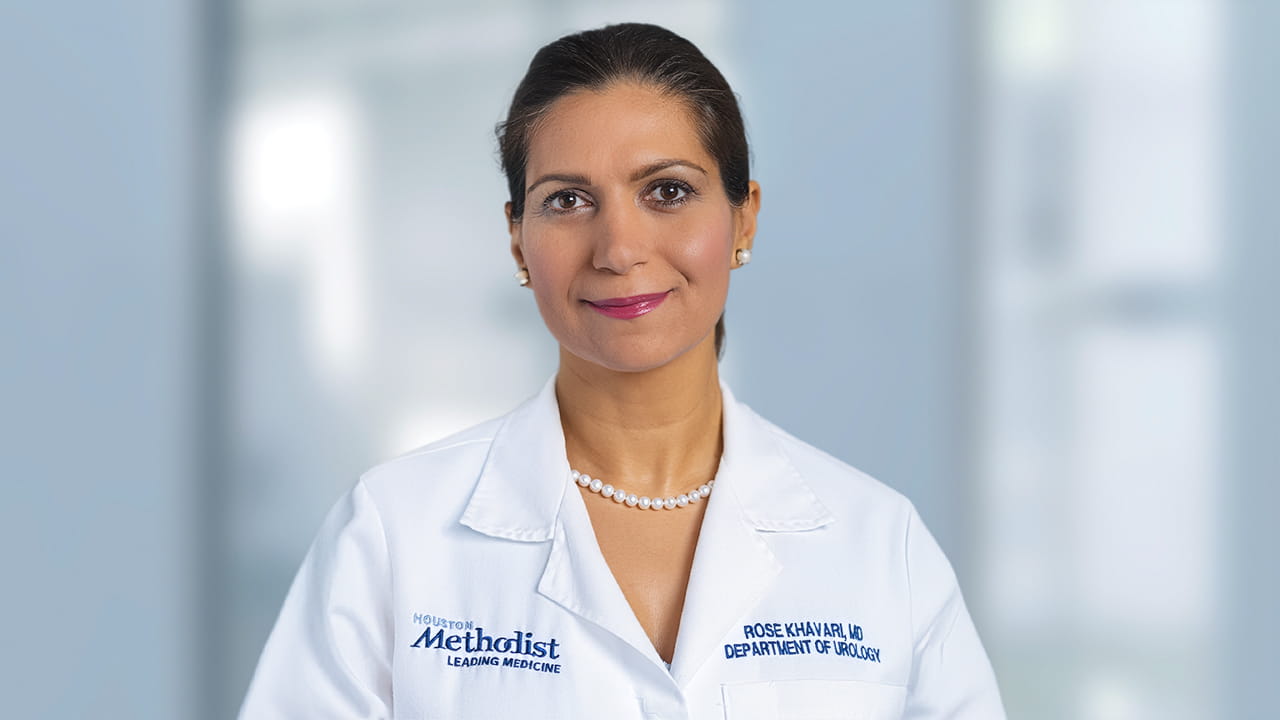

A physician's journey from trainee to surgeon-scientist and how interdisciplinary collaboration is shaping the future of neurourology research and care.
Video Highlights
After initially planning a career in orthopedic surgery, a formative experience with endoscopic kidney stone surgery led Dr. Khavari to pursue urologic surgery.
Founding the Houston Methodist urology residency program — and how Dr. Khavari views training future urologists as one of her most meaningful professional accomplishments.
With a research focus on neurourology, Dr. Khavari uses functional MRI to better understand the brain networks involved in bladder storage and emptying.
Houston Methodist researchers have studied one of the largest cohorts of patients with multiple sclerosis and overactive bladder to investigate brain activity associated with lower urinary tract dysfunction.
How collaboration across specialties, institutions and disciplines is essential for advancing surgical innovation, translational research and resident education.
The importance of ongoing leadership development and how formal training helped strengthen Dr. Khavari's understanding of healthcare operations, finance and organizational management.
In this episode of Women in Surgery, Dr. Shlomit Schaal sits down with Dr. Rose Khavari, Ben and Wendy Moreland Chair of Urology at Houston Methodist. Dr. Khavari recounts her path into urology, describing how early exposure to stone surgery and the immediate impact of surgical intervention on patients inspired her career choice. She discusses her residency training, the value of a strong general surgery foundation and her pivotal role in establishing Houston Methodist’s urology residency program. The conversation also explores her evolution into a surgeon-scientist, with a focus on neurourology research examining brain-bladder networks through functional MRI and neuromodulation approaches for overactive bladder and neurogenic bladder disorders. Throughout the discussion, Dr. Khavari emphasizes the importance of mentorship, collaboration, research literacy and leadership development in advancing patient care, scientific discovery and surgical education.