
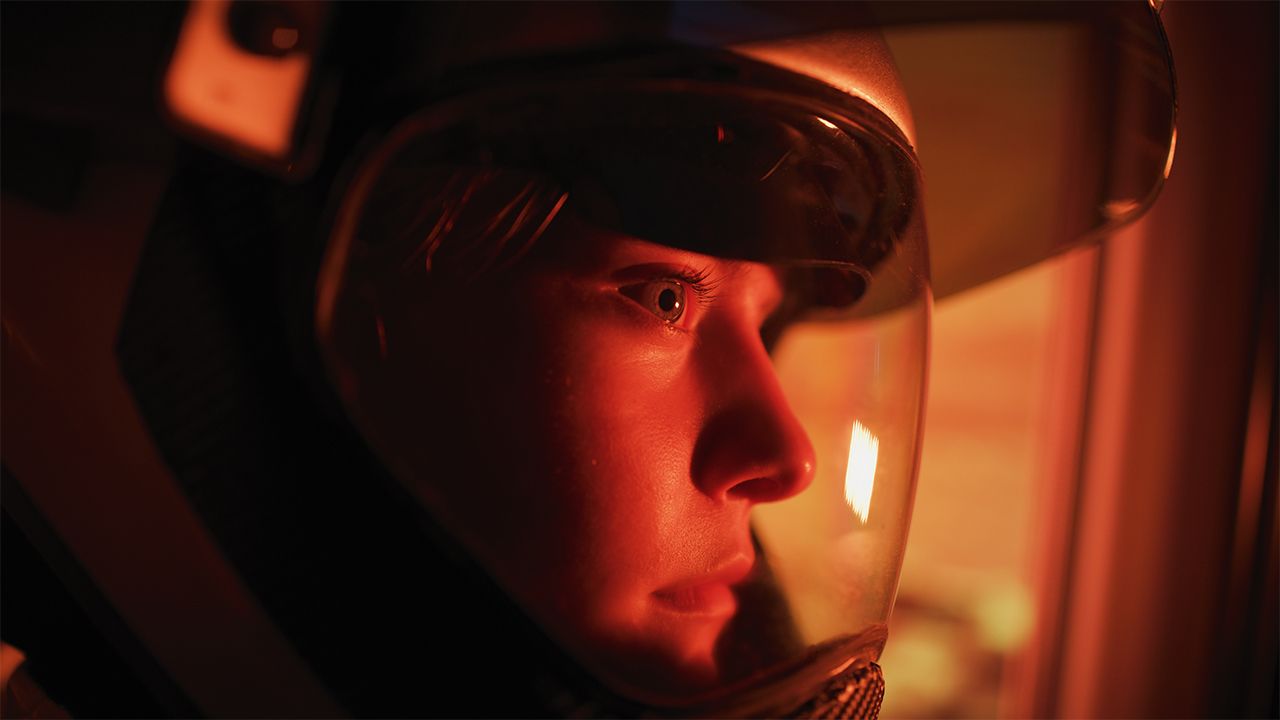

As human spaceflight moves toward longer missions, researchers are increasingly focused on developing countermeasures for SANS before the condition becomes a mission-limiting problem.
For years, space-flight-associated neuro-ocular syndrome (SANS) has been recognized as a known consequence of microgravity that may be a potential health threat to astronauts and mission success.
“We know these ocular changes — optic disc edema, retinal nerve fiber layer thickening, globe flattening — begin relatively early in flight and progressively worsen with continued exposure to microgravity,” explains Houston Methodist neuro-ophthalmologist Dr. Andrew Lee, an internationally recognized expert in SANS. “But we also know that returning to gravity reverses these effects. No astronaut has ever experienced any mission-impacting functional impairment of their vision or permanent vision loss in space or after return to Earth.”
Spaceflight, however, is entering a new and exciting era — one defined by long-duration missions aboard the International Space Station, space tourism, a planned lunar base and, eventually, human exploration of Mars.
As such, researchers are now focused on ways to prevent SANS during missions where returning to Earth can’t be relied upon as the primary treatment option.
“Novel technologies are going to be needed to address the challenges that come with spending longer periods of time in microgravity,” explains Dr. Lee.
Why study SANS countermeasures now?
In an in-depth review article, Dr. Lee and colleagues outline potential countermeasures of SANS. The hope is that experts across scientific disciplines can work together to integrate current findings into practical solutions, before SANS symptoms become a mission-limiting problem.
- Happening In Aerospace Medicine:
- Unique Health Risks Astronauts Face
- How SANS Impacts the Eye
- Spaceflight-associated Dry Eye
He adds that now is the ideal time to evaluate and prioritize potential countermeasures — before mission profiles evolve beyond the environments in which SANS has been observed to date.
“The definitive treatment right now is to return to Earth's gravitational field," says Dr. Lee. "This poses a challenge as missions move beyond low Earth orbit toward long-duration lunar and Martian operations."
Potential ways to counter microgravity-induced fluid shifts
Historically, SANS literature has focused on characterizing the syndrome itself. Dr. Lee's review signals a shift toward evaluating interventions that might ultimately prevent the condition.
"Now we're looking at ways of reversing or mitigating the cephalad fluid shift of microgravity," he adds. "From lower body negative pressure, venous thigh cuffs, impedance threshold devices and pressurized goggles to B vitamin supplementation and medications that lower intracranial pressure — the next step is to assess which strategies best combat the effects of long-term exposure to microgravity."
The current SANS countermeasure landscape is not defined by a single leading intervention. Rather, it reflects a growing portfolio of them. Dr. Lee’s review catalogs these countermeasures systematically, assessing both their effectiveness and practicality.
For instance, centrifugal artificial gravity is the approach most familiar from popular science, and the review article addresses it directly. "It's feasible — it's just very, very expensive," Dr. Lee says. In other words, the mechanism is sound; the economics are the barrier.
Risk stratification as a potential SANS countermeasure
Another approach to preventing SANS: assessing an astronaut’s individualized risk.
"Not every astronaut who leaves Earth's orbit develops SANS, and there's been some additional work looking at how to predict who is most likely to experience it."
Andrew Lee, MD
The review paper documents work done to identify risk factor associations with anthropometric characteristics, including body size and ocular anatomy. Smaller optic cup morphology, for example, has been linked to greater optic disc edema during long-duration spaceflight. Ocular axial length may also influence susceptibility to globe flattening and refractive changes.
Genetic factors are another important area of investigation. Variants within one-carbon metabolism pathways, including genes involved in folate and vitamin B12 metabolism, appear to influence susceptibility. Researchers have also identified associations between B-vitamin status and ophthalmic findings, creating interest in personalized nutritional approaches.
Even factors like sleep duration, environmental carbon dioxide exposure and exercise patterns are being studied as potential contributors to SANS risk and severity.
Will the SANS risk equation change on the moon and Mars?
A central unanswered question is whether partial gravity environments — such as the moon or Mars — may be sufficient to reduce or reverse SANS symptoms.
"It may be that there is enough gravitational effect on Mars to counteract SANS,” adds Dr. Lee. "But the reality is that we just don't know yet."
The possibility that partial gravity itself could function as a countermeasure may have important implications for future mission design. If even a limited gravitational field proves sufficient to mitigate SANS findings, the syndrome could look very different during sustained lunar or Martian habitation than it does aboard the International Space Station.
SANS research matters beyond spaceflight
For physicians caring for patients on Earth, one of the most relevant aspects of SANS research is its potential downstream application to how ophthalmology is practiced here on Earth.
“Studying how the eye behaves in extreme environments has provided fundamental insights into tear film biology, ocular inflammation, pressure dynamics and more,” adds Dr. Lee. “This work has been particularly helpful in relation to our glaucoma and ocular trauma research models.”
For now, no single intervention has emerged as the definitive solution for SANS. But as spaceflight expands beyond low-Earth orbit, researchers increasingly view the development of countermeasures as a necessity rather than a future consideration. The question is no longer whether SANS occurs in microgravity. It is how astronauts will manage it when missions extend months, years or even planets away from home.
Article Citations
Nguyen T, Ong J, Brunstetter T, Gibson CR, Macias BR, Laurie S, Mader T, Hargens A, Buckey JC, Lan M, Wostyn P, Kadipasaoglu C, Smith SM, Zwart SR, Frankfort BJ, Aman S, Scott JM, Waisberg E, Masalkhi M, Lee AG. Spaceflight Associated Neuro-ocular Syndrome (SANS) and its countermeasures. Prog Retin Eye Res. 2025 May;106:101340. doi: 10.1016/j.preteyeres.2025.101340. Epub 2025 Feb 17. PMID: 39971096; PMCID: PMC12103276