
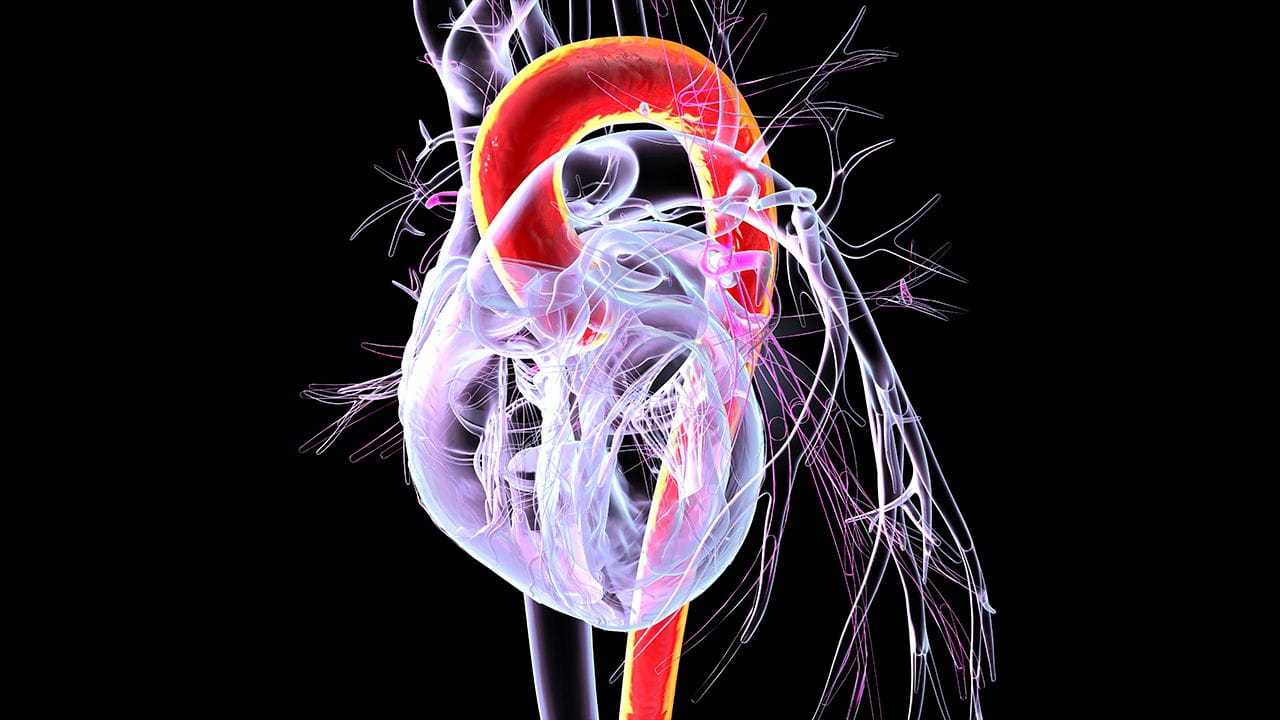

What if the valve itself isn't the whole story? Houston Methodist researchers are showing that the heart's response to valve disease may be the key to preventing damage.
For decades, physicians treating valvular heart disease have focused primarily on the valve itself: How severe is the narrowing or leakage? Has the patient developed symptoms? Is it finally time to intervene?
Researchers at Houston Methodist DeBakey Heart & Vascular Center believe those questions, while still important, don't tell the whole story.
Across a growing body of research led by Dr. Dipan Shah, Dr. William Zoghbi, Dr. Maan Malahafji, Dr. Neal Kleiman and colleagues, Houston Methodist investigators are demonstrating that what happens to the heart because of the diseased valve — known as adverse cardiac remodeling — may ultimately be one of the strongest predictors of patient outcomes.
By using advanced cardiac magnetic resonance (CMR) imaging to measure how the entire heart responds over time, the team is helping reshape how clinicians evaluate risk and determine the optimal timing for intervention.
Collectively, the studies point to a common conclusion: Cardiac remodeling, not valve severity alone, identifies which patients are beginning to decompensate and who may benefit most from early treatment before irreversible damage occurs.
"Historically, we're looking at how severe the valve damage is," says Dr. Shah, chief of Cardiovascular Imaging at Houston Methodist. "But two patients can have the exact same valve lesion and tolerate it very differently. What we're trying to understand is how the heart itself is adapting or maladapting. That's where advanced cardiac MRI gives us an entirely different level of insight."
Expanding the scope of investigation
Valvular heart disease is becoming increasingly common as the population ages. At the same time, rapidly expanding catheter-based therapies have created new opportunities to treat patients with less invasive procedures.
Those advances also raise an important question: When is the right time to intervene?
Operating too early exposes patients to unnecessary procedural risks and durability issues with prosthetic valves. Waiting too long may allow irreversible injury to develop within the heart muscle.
The Houston Methodist researchers believe the answers lie in understanding cardiac remodeling.
"Valve disease doesn't affect everyone the same way. MRI allows us to evaluate whether the heart is enlarging, whether the muscle is thickening, whether scar tissue is developing and how well the different chambers are functioning. Those changes tell us how well a patient is compensating."
Dipan Shah, MD
Unlike traditional imaging, CMR provides highly reproducible measurements of ventricular size, function and myocardial tissue characteristics, allowing physicians to identify subtle signs that the heart is beginning to fail under the stress of chronic valve disease before symptoms become obvious.
A roadmap for measuring cardiac damage
One of the group's landmark studies established a staging system for adverse cardiac remodeling in patients with moderate or severe aortic regurgitation.
Rather than focusing solely on the leaking valve, investigators classified patients according to how extensively remodeling had spread throughout the heart — from early left ventricular changes to involvement of the mitral valve and left atrium, and ultimately to remodeling of the right heart.
The results revealed a striking progression. Annual mortality increased from just 0.68% in patients with no remodeling to 7.25% among those whose disease had progressed to right-heart involvement. Each increase in remodeling stage raised mortality risk by 69%, even after accounting for valve severity and surgical risk.
Perhaps most importantly, the findings suggest physicians should not simply wait until remodeling becomes advanced.
"Our current treatment algorithms are mostly based on changes in the left ventricle," Dr. Shah admits. "But some patients may develop important changes elsewhere in the heart before those traditional markers appear. Our work raises the possibility that we may need to rethink how we determine the timing of intervention."
Double jeopardy
A second multicenter study challenged another longstanding assumption in valve disease management: that moderate lesions can safely be observed if neither valve abnormality is individually severe.
Examining the records of 915 patients with aortic regurgitation, Houston Methodist investigators found that patients who also had moderate mitral regurgitation experienced substantially greater ventricular enlargement, worse heart function and dramatically poorer outcomes than patients with isolated aortic regurgitation.
Patients with combined disease had nearly three times the risk of death and more than double the risk of death or heart failure hospitalization. Even asymptomatic patients demonstrated significantly worse outcomes when two moderate valve lesions were present together.
The findings reinforce the idea that physicians should assess the cumulative burden placed on the heart, not simply evaluate each valve independently.
“Clinicians have traditionally asked whether a patient has at least one severe valve lesion, but it remained unclear whether two moderate valve problems together create the same biological consequences as one severe lesion,” says Dr. Shah. “Our work in this area suggests the answer is often yes.”
Additionally, the team looked at the impact of concomitant mitral regurgitation in moderate aortic stenosis and found that outcomes in moderate AS with moderate or greater MR were worse than in isolated severe AS and comparable with severe AS populations meeting the criteria for intervention.
Emerging therapies
The Houston Methodist group is also examining how newer technologies themselves may influence cardiac remodeling.
In patients requiring temporary Impella percutaneous left ventricular assist devices, investigators found that aortic regurgitation following Impella support occurred in 13% of patients, while 3% progressed to clinically significant disease. Longer support duration and larger devices were associated with the greatest risk.
Although significant valve injury remained uncommon, the team's findings highlight the importance of monitoring structural heart changes as increasingly complex mechanical circulatory support devices become part of routine cardiovascular care.
Changing the conversation
Taken together, the recent studies represent more than a series of individual investigations. They reflect a broader research strategy at Houston Methodist DeBakey Heart & Vascular Center: using advanced imaging to better understand the biology of valve disease before permanent damage occurs.
Rather than asking if a valve has become damaged enough to warrant replacement, investigators are helping recenter the conversation around how the entire heart compensates when those adaptations begin to signal irreversible decline.
That shift has the potential to influence future clinical guidelines, improve patient selection for intervention and ultimately preserve heart function before remodeling becomes permanent.