
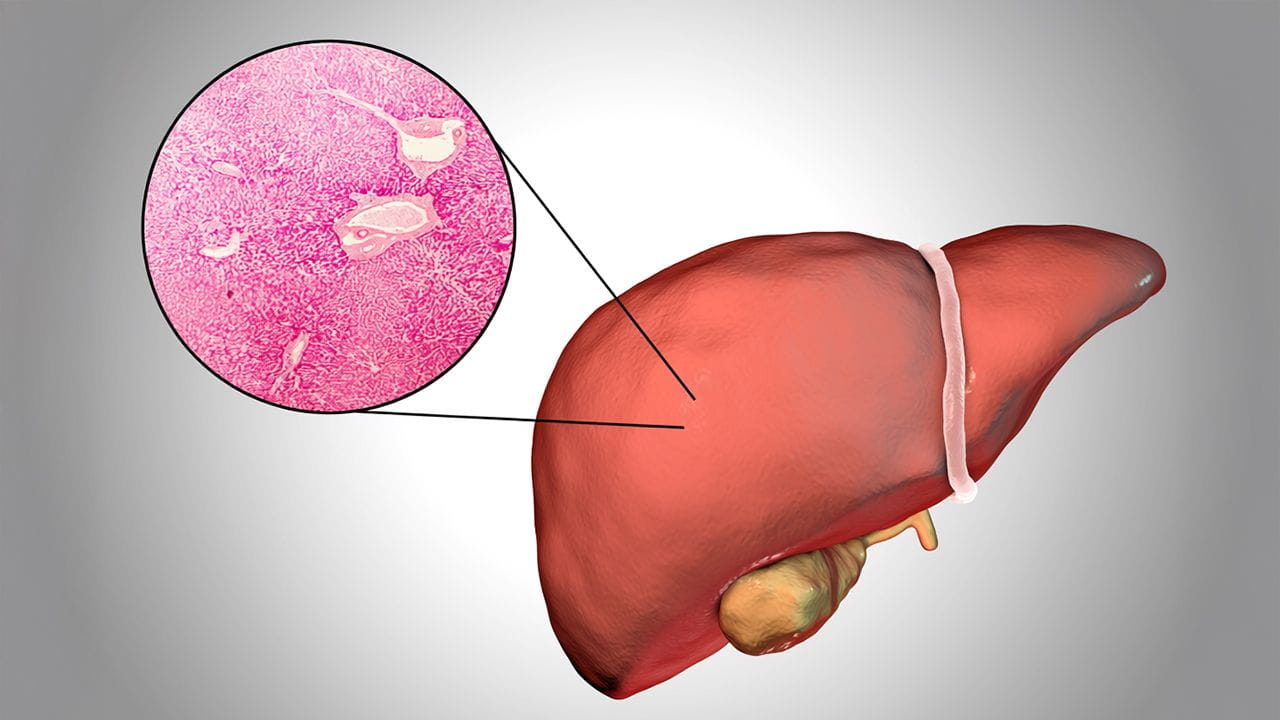

For decades, hepatologists have faced a frustrating reality: by the time significant liver fibrosis is detected, the disease process is often already well underway.
Recent research, including the landmark IMPACT trial, suggests we are on the cusp of an era of earlier and more effective intervention for metabolic dysfunction-associated steatohepatitis (MASH) — intercepting patients on the road to advanced liver disease before irreversible damage occurs.
In findings published in The Lancet, Houston Methodist hepatologist Dr. Mazen Noureddin and an international team of investigators reported that the investigational therapy pemvidutide achieved significant rates of MASH resolution in patients with stage F2 and F3 fibrosis after just 24 weeks of treatment.
The phase 2b IMPACT trial evaluated weekly pemvidutide — a dual GLP-1/glucagon receptor agonist — in 212 patients with biopsy-confirmed MASH and moderate-to-advanced fibrosis. The study met its primary endpoint for MASH resolution without worsening fibrosis, with response rates reaching as high as 58% in treated patients compared to 20% with placebo.
For liver specialists, the implications extend beyond another positive drug trial.
“This is technically the first ever GLP-1 glucagon dual agonist to hit a MASH primary endpoint at week 24, along with showing meaningful weight loss,” says Dr. Noureddin.
A new frontier in fibrosis treatment
Fibrosis has increasingly become the central focus in MASH management because it remains the strongest predictor of liver-related outcomes and mortality. Historically, however, advanced fibrosis has also been one of the most difficult disease features to reverse.
That challenge has helped define the field’s recent surge of therapeutic development.
“A decade ago, people were skeptical there would ever be successful MASH treatments,” explains Dr. Noureddin. “But once the first successful trials happened, it opened the door and revitalized the field.”
- Happening In Liver Disease:
- Efruxifermin for Cirrhosis
- DDW 26
- Short Sequence MRI
Pemvidutide represents one of a growing class of therapies attempting to move beyond weight loss alone by directly targeting liver biology.
Unlike GLP-1-only therapies, which primarily improve liver disease indirectly through metabolic effects and weight reduction, pemvidutide also activates glucagon receptors found within the liver itself. Researchers believe that glucagon signaling may exert more direct anti-fibrotic effects — an especially attractive mechanism for hepatologists focused on halting progression earlier in the disease course.
The study also produced substantial improvements across multiple noninvasive liver biomarkers. Patients receiving pemvidutide demonstrated marked reductions in liver fat content, liver stiffness measurements, alanine aminotransferase levels and enhanced liver fibrosis scores compared to placebo.
While the fibrosis endpoint itself did not achieve statistical significance at 24 weeks, investigators still observed fibrosis improvement in up to 36% of treated patients — a signal Dr. Noureddin believes remains highly encouraging.
“We've had multiple noninvasive tests related to fibrosis improvement that were statistically significant, which is a strong signal that this drug will show fibrosis improvement down the road.”
Mazen Noureddin, M.D.
Intervening earlier in liver disease
The findings arrive at a pivotal moment for hepatology.
Until recently, many patients with metabolic dysfunction-associated steatotic liver disease (MASLD) remained undiagnosed until late-stage fibrosis or cirrhosis emerged. But the rapid expansion of therapeutic options is beginning to reshape screening and referral patterns across primary care, endocrinology and gastroenterology.
“Now we have four or five drugs in phase 3 trials, which is amazing,” Dr. Noureddin said. “The awareness is increasing because we finally have approved therapies and real treatments coming.”
That evolution is also elevating the importance of earlier fibrosis detection tools such as the FIB-4 score — a simple calculation using routinely obtained laboratory values that can help identify patients at risk for advanced fibrosis before symptoms appear.
Dr. Noureddin said widespread adoption of these screening approaches could fundamentally alter the trajectory of liver disease management over the next decade.
“We’re trying to spread the message to primary care doctors and endocrinologists: If you have patients with two metabolic risk factors, prediabetes or type 2 diabetes, please do a FIB-4,” he said. “Find out if they have fibrosis and intervene early.”
Trials like IMPACT increasingly suggest clinicians may soon be able to intercept disease progression substantially earlier — potentially preventing many patients from ever reaching advanced liver disease at all.
Dr. Noureddin believes the long-term trajectory for MASH treatment could eventually resemble another major hepatology success story: hepatitis C.
“We struggled with hepatitis C for many years, and now it’s essentially disappeared from liver clinics because of effective therapies,” he said. “Hopefully, MASH will be next.”